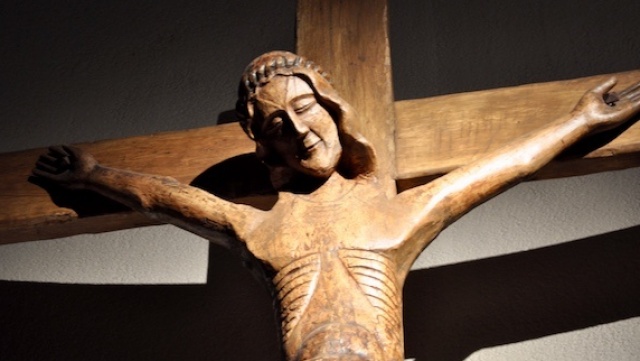
"Amen, amen, I say to you, unless a grain of wheat falls to the ground and dies, it remains just a grain of wheat; but if it dies, it produces much fruit. " (John 12)
Photo copyright : John R Portelli

Friday, 7 July 2017

Jesus is Gentle and humble in heart.


Fourteenth Sunday in Ordinary Time

L-Erbatax- il Ħadd matul is-Sena
Missalin A p 321


Reading 1
ZECHARIAH 9:9-10
Thus says the LORD: Rejoice heartily, O daughter Zion, shout for joy, O daughter Jerusalem! See, your king shall come to you; a just saviour is he, meek, and riding on an ass, on a colt, the foal of an ass. He shall banish the chariot from Ephraim, and the horse from Jerusalem; the warrior’s bow shall be banished, and he shall proclaim peace to the nations. His dominion shall be from sea to sea and from the River to the ends of the earth.

L-Ewwel Lezzjoni
Qari mil-Ktieb tal-Profeta Żakkarija 9, 9-10
Dan igħid il-Mulej:Ifraħ kemm tiflaħ, bint Sijon, għajjat bil-ferħ, bint Ġerusalemm. Ara, is-sultan tiegħek ġej għandek; ġust u rebbieħ, umli u riekeb fuq ħmar, fuq felu ta’ ħmara. Hu jeqred il-karru minn Efrajm. u ż-żiemel minn Ġerusalemm; jinqered il-qaws tal-gwerra. Hu jxandar il-paċi lill-ġnus, il-ħakma tiegħu tkun minn baħar sa baħar, u mix-xmara ta’ l-Ewfrat sat-trufijiet. Il-Kelma tal-Mulej

Responsorial Psalm
PSALM 145:1-2, 8-9, 10-11, 13-14
R. (cf. 1) I will praise your name for ever, my king and my God.

I will extol you, O my God and King,
and I will bless your name forever and ever.
Every day will I bless you,
and I will praise your name forever and ever. R.

The LORD is gracious and merciful,
slow to anger and of great kindness.
The LORD is good to all
and compassionate toward all his works.     R.

Let all your works give you thanks, O LORD,
and let your faithful ones bless you.
Let them discourse of the glory of your kingdom
and speak of your might.                                R.

The LORD is faithful in all his words
and holy in all his works.
The LORD lifts up all who are falling
and raises up all who are bowed down          R.

Salm Responsorjali
Salm 144 (145)
R/ Mulej, inbierek ismek għal dejjem.

Ħa nkabbrek, Alla tiegħi, sultan,
u nbierek ismek għal dejjem ta’ dejjem.
Kuljum irrid inbierkek,
u nfaħħar ismek għal dejjem ta’ dejjem. R/

Twajjeb u ħanin il-Mulej,
idum biex jagħdab u kollu tjieba.
Twajjeb ma’ kulħadd il-Mulej,
tjubitu fuq kull ma għamel.                              R/

Kull ma għamilt iroddlok ħajr, Mulej;
iberkuk il-ħbieb tiegħek kollha.
Is-sebħ tas-saltna tiegħek, ixandru,
fuq is-setgħa tiegħek jitkellmu.                        R/

Ta’ kelmtu l-Mulej fil-wegħdiet tiegħu kollha,
twajjeb f’dak kollu li għamel.
Iwieżen il-Mulej lil kull min se jaqa,
iqajjem lil kull minhu mitluq. R/

Reading 2
ROMANS 8:9, 11-13
Brothers and sisters: You are not in the flesh; on the contrary, you are in the spirit, if only the Spirit of God dwells in you. Whoever does not have the Spirit of Christ does not belong to him. If the Spirit of the one who raised Jesus from the dead dwells in you, the one who raised Christ from the dead will give life to your mortal bodies also, through his Spirit that dwells in you. Consequently, brothers and sisters, we are not debtors to the flesh, to live according to the flesh. For if you live according to the flesh, you will die, but if by the Spirit you put to death the deeds of the body, you will live.

It-Tieni Lezzjoni
Qari mill-Ittra lir-Rumani 8, 9-11,13
Ħuti, intom ma intomx taħt il-ħakma tal-ġisem, imma ta’ l-Ispirtu, ladarba hemm l-Ispirtu ta’ Alla jgħammar fikom. Jekk xi ħadd ma għandux fih l-Ispirtu ta’ Kristu, dan m’huwiex tiegħu. Jekk l-Ispirtu ta' dak li qajjem lil Ġesu mill-imwiet jgħammar fikom, Alla stess li qajjem lil Kristu mill-imwiet iqajjem għall-ħajja wkoll il-ġisem mejjet tagħkom, bis-saħħa ta' l-Ispirtu li jgħammar fikom. Hekk mela, ħuti, aħna maħniex midjunin mal-ġisem biex ngħixu skond il-ġisem. Għax jekk tgħixu skond il-ġisem, tmutu; imma jekk tmewtu l-għemil tal-ġisem bl-Ispirtu, tgħixu. Il-Kelma tal-Mulej

Gospel
MATTHEW 11:25-30
At that time Jesus exclaimed: “I give praise to you, Father, Lord of heaven and earth, for although you have hidden these things from the wise and the learned you have revealed them to little ones. Yes, Father, such has been your gracious will. All things have been handed over to me by my Father. No one knows the Son except the Father, and no one knows the Father except the Son and anyone to whom the Son wishes to reveal; Come to me, all you who labor and are burdened, and I will give you rest. Take my yoke upon you and learn from me, for I am meek and humble of heart; and you will find rest for yourselves. For my yoke is easy, and my burden light.”

L-Evanġelju
Qari skond San Mattew 11, 25-30
F’dak iż-żmien, Ġesu qabad u qal: “Infaħħrek, Missier, sid tas-sema u l-art, għax inti dawn il-ħwejjeġ ħbejthom lil min għandu l-għerf u d-dehen u wrejthom liċ-ċkejknin. Iva, Missier, għax lilek, hekk għoġbok. Kollox kien mogħti lili minn Missieri, u ħadd ma jagħraf lill-Iben jekk mhux il-Missier, kif ħadd ma jagħraf lill-Missier jekk mhux l-Iben u dak li lilu l-Iben irid jgħarrafhulu. Ejjew għandi, intom ilkoll li tinsabu mħabbtin u mtaqqlin, u jiena nserraħkom. Ħudu fuqkom il-madmad tiegħi u tgħallmu minni, għaliex jiena ta' qalb ħelwa u umli, u intom issibu l-mistrieħ għal ruħkom. Għax il-madmad tiegħi ħelu u t-toqol tiegħi ħafif.” Il-Kelma tal-Mulej
//////////////////////////////

Easy Yokes, Light Burdens and a Gentle, Smiling Lord

A reflection on Sunday’s Gospel by Fr. Thomas Rosica, CSB

During one of my summer undergraduate study programs in France, I recall visiting the Abbey of Saint-Honorat on the Îles de Lérins in southern France. I was particularly struck by a medieval figure of the crucified Christ in the Abbey Church. The Crucified One, hanging on the Cross with his eyes closed and head tilted to the right, was smiling. The old monk who showed us around that day told us that this was Christ souriant (“Christ smiling”). Several of my classmates from various countries, especially those of other faiths, were quite perplexed in seeing the crucified Christ with a peaceful smile on his face and asked the monk how this could be possible.

I have often wondered why we in our own time don’t depict Jesus smiling or laughing. Yes, there are some well-known prints or depictions of a smiling Christ, but they are few and far between. I dare say that many of our depictions of Christ specialize in capturing the rather bleak, serious, and sad images of Christ that are reflective of the late Middle Ages – a period when the Dance of Death and the Black Plague haunted Europe.

While it is true that the New Testament is silent about Jesus smiling, laughing, or enjoying himself and those around him, the Scriptures are not afraid to tell us that he did express other human emotions. We know that he wept bitter tears at his friend Lazarus’ death. He was not afraid to show his anger in the Temple when people turned it into a shopping mall. He expressed irritation at the traps being set for him by some religious leaders of his time. How many times did he get frustrated with his disciples’ inability to grasp the situation and meaning of his words, parables, predictions of the passion and imminent departure from them? We must ask ourselves: how is it that the Scriptures don’t mention anything about Jesus smiling or his humorous responses to his slow disciples? How could he not have laughed and smiled when he was swarmed by children who obviously loved his company?

What did Jesus look like when he stared at Zacchaeus hiding in that Jericho sycamore tree? I am certain that there were smiles, laughter, and humour. When the crowds took leave of him on that Galilean hillside, having eaten their fill, how could Jesus not have smiled in relief? When Jesus spoke about the hypocrites’ gloomy looks in Matthew’s Gospel, he was also revealing something about himself. Yet there are many in the Church today who have difficulty in the image of a smiling, happy Jesus. They would prefer a stern, dour, tragedy-stricken figure who doesn’t seem to offer much hope!

Jesus’ prayer of rejoicing

Throughout his life, Jesus experienced that the humble of heart found it easier to accept his revolutionary doctrine than did those who were full of their own self-importance. In today’s Gospel, Matthew’s Jesus offers an exultant prayer of praise that defines for us more clearly who he is and with whom he wishes to be identified (11:25-30).

There are three movements in Sunday’s section of Matthew’s Gospel (11:25-30). In the first movement, Jesus addresses himself to the Father, rejoicing that the Father’s special love for the poor and lowly is being manifested in his ministry. In the second movement, Jesus addresses himself in a kind of self-definition. Jesus is the Son to whom full knowledge of the Father is given. The heart of the Son’s mission is to reveal the Father to us. Finally in the third movement, Jesus speaks directly to all those who long for relief, consolation, and refreshment. I cannot help but think that in each moment, Jesus smiled, breathed deeply, and was filled with joy at what was happening among his own disciples. He smiled with compassion as he invited the broken and lowly to find peace.

Priority over relationships

Though this particular message does provide rest and encouragement to the downtrodden, Matthew’s Gospel as a whole is not always so comforting or easy to receive. In Matthew 10:37 we read: “They who love father and mother, son or daughter, more than me are not worthy of me.” Jesus takes priority over the relationships between even parents and children! These texts must be understood in their original context – the losses incurred by first-century Christians who joined the Christian movement and who, in doing so, left behind everything that had given them comfort and strength – parents, siblings, children, indeed all family ties and all possessions, however great or meagre.

Today’s Gospel responds directly to those who lost everything or gave up everything – it is Jesus, the great comforter, the one who opens his arms in welcome to those beaten down by their experience, those who find themselves ostracized and rejected, overburdened and crushed. The saying found in 11:25-26 is identical with Luke 10:21-22 except for minor variations, and introduces a joyous note into this section, so dominated by the theme of unbelief. While the wise and the learned, the scribes and Pharisees, have rejected Jesus’ preaching and the significance of his mighty deeds, the childlike have accepted them.

Accepting the Lord’s yoke

To accept the yoke of Christ upon our shoulders is to be assured of a gentle and humble master; any burden given and accepted in mutual love will seem light. Today’s Gospel also contains one of the most well-known and popular passages from all of the Christian Scriptures. Who of us cannot be moved in some way by the consolation that Jesus offers when he says (11:28-30):

Come to me, all you that are weary and are carrying heavy burdens, and I will give you rest. Take my yoke upon you, and learn from me; for I am gentle and humble in heart, and you will find rest for your souls. For my yoke is easy, and my burden is light.

The word “yoke” is used metaphorically to describe those things that control the lives of people. Peasants always had a yoke. For the most part, their lives as tenant farmers were governed by the wills and whims of the landowners. Their lives were also controlled by religious leaders who grew fat on tithes that they hoarded in the Temple instead of redistributing them to the needy. Pharisees laid the yoke of their 613 commandments upon the followers and others who sought their advice about how to please God. For all Israelites, reciting and living according to Deuteronomy 6:4: “Hear, O Israel! The Lord is our God, the Lord alone. You shall love the Lord your God with all your heart, and with all your soul, and with all your might,” was known as “bearing the yoke of the reign of God.”

In today’s Gospel, Jesus gives himself as a model for his listeners and invites them to “learn from me” (11:29). His invitation echoes that offered by Wisdom in Sirach (51:23, 26): “Draw near to me, you who are uneducated, and lodge in the house of instruction […] Put your neck under her yoke, and let your souls receive instruction.” In place of the yoke of the law, complicated by scribal interpretation, Jesus invites the burdened to take the yoke of obedience to his word, under which they will find rest (cf. Jeremiah 6:16).

Jesus demonstrates a way of life, a yoke, that differs markedly from the one taught by the other religious leaders of his day. He promises a yoke that is easy and a burden that is light. No wonder many poor people found his words enormously appealing! Spiritual elitism repels many more than it attracts. The best guides are those who practice what they preach. Jesus walked his talk, and gives us a wonderful and challenging example to embrace and imitate each day. And I cannot help but imagine Jesus uttering these words of consolation with a gentle smile.

Why Jesus is still attractive today

Jesus was attractive then, and still is attractive now, to millions upon millions. The Messiah came among us, not as a conquering warrior, but in lowliness and peace. Not like the last kings of Judah, who rode in chariots and on horses (Jeremiah 17:25; 22:4), but like the princes of old (Genesis 49:11; Judges 5:10; 10:4), the Messiah will ride on an ass. The evangelists see a literal fulfilment of this prophecy, contained in today’s first reading from Zechariah (9:9-10), in the Saviour’s triumphant entry into Jerusalem (Matthew 21:4-5; John 12:14-15).

Jesus of Nazareth attracted townspeople and country people, poor and rich, fishermen and tax collectors, women like Mary of Magdala and her cohort who provided for him and so many others. He had the ability to wow simple and sophisticated souls alike. I am sure he did it with his powerful words, but also with a gentle smile, with humour, kindness, and just plain love. His divine origins, despite the utter seriousness of his mission towards his Cross and Resurrection, made him an extraordinary human being who was able to bond with others. How could he not have smiled when he uttered the words of today’s Gospel: “Come to me. Take my yoke upon you, and learn from me. For my yoke is easy, and my burden is light.” These are hardly admonitions that necessitate a stern gaze and heavy voice! They are words that flow from one who is a lover and a friend.

Constant challenge of Christian living

After his warning in Romans 7 against the wrong route to fulfilling the objective of holiness expressed in Romans 6:22, Paul points his addressees to the correct way. Christians still retain their flesh, but it is alien to their new being, which is life in the spirit, namely the new self, governed by the Holy Spirit (Romans 8:9; 11-13). Under the direction of the Holy Spirit, Christians are able to fulfil the divine will that formerly found expression in the law (Romans 8:4). The same Spirit who enlivens Christians for holiness will also resurrect their bodies at the last day (8:11). Christian life is therefore the experience of a constant challenge to put to death the evil deeds of the body through life of the spirit (8:13). This life in the spirit is a life lived “bearing the yoke of the reign of God.” It is living life with the easy yoke, light burden, and great affection of a gentle, smiling Lord.

///////////////////////////////////////

Friday, 30 June 2017

The need of the Church

Thirteenth Sunday in Ordinary Time
 It-Tlettax-il Ħadd taż-Żmien ta’ Matul is-Sena             
Missalin A  p 316Ġ 

Il-Ħtieġa tal-Knisja
One day Elisha came to Shunem, where there was a woman of influence, who urged him to dine with her. Afterward, whenever he passed by, he used to stop there to dine. So she said to her husband, "I know that Elisha is a holy man of God. Since he visits us often, let us arrange a little room on the roof and furnish it for him with a bed, table, chair, and lamp, so that when he comes to us he can stay there." Sometime later Elisha arrived and stayed in the room overnight. Later Elisha asked, "Can something be done for her?" His servant Gehazi answered, "Yes! She has no son, and her husband is getting on in years."Elisha said, "Call her." When the woman had been called and stood at the door, Elisha promised, "This time next year you will be fondling a baby son." This is the Word 0f the Lord.

1 Qari
Qari mit-Tieni Ktieb tas-Slaten 4, 8-11.14-16a
Ġurnata waħda Eliżew kien għaddej minn Sunem. Hawn kienet toqgħod mara għanja, u din ġagħlitu joqgħod jiekol għandha; u kull meta kien jgħaddi minn hemm kien idur għal għandha biex jiekol hemm. U hi qalet lil żewġha: “Ara, jien żgura li dan ir-raġel, li jgħaddi għandna sikwit, hu raġel qaddis ta’ Alla. Ħa ntellgħulu għorfa fuq is-setaħ, u nqegħdulu fiha sodda, mejda, siġġu u mnara, u meta jgħaddi għandna, ikun jista’ jidħol fiha”.U ġurnata waħda wasal hemm, u daħal fl-għorfa, u raqad hemm. U Eliżew qal lil Ġeħażi, il-qaddej tiegħu: “X’nistgħu nagħmlulha lil din il-mara?”. U Ġeħażi wieġbu: “Jaħasra, ma għandhiex tfal, u żewġha xiħ!”. U wieġbu: “Sejħilha”. U dak sejħilha u ġiet fil-bieb. U Eliżew qalilha: “Bħal dan iż-żmien sena, int tkun tħaddan iben”.Il-Kelma tal-Mulej  

Responsorial Psalm                                 
R. (2a) For ever I will sing the goodness of the Lord.

The promises of the LORD I will sing forever,
through all generations my mouth shall proclaim your faithfulness.
For you have said, "My kindness is established forever;"
in heaven you have confirmed your faithfulness                     R.

Blessed the people who know the joyful shout;
in the light of your countenance, O LORD, they walk.
At your name they rejoice all the day,
and through your justice they are exalted.                              R

You are the splendor of their strength,
and by your favor our horn is exalted.
For to the LORD belongs our shield,
and the Holy One of Israel, our king.                                       R.

Salm Responsorjali                                
Salm 88 (89), 2-3.16-17.18-19
R/. (2a): It-tjieba tal-Mulej irrid dejjem ngħanni
It-tjieba tal-Mulej irrid dejjem ngħanni;
f’kull żmien ixandar fommi l-fedeltà tiegħek.
Għax jien għedt: “Tjubitek tibqa’ sħiħa għal dejjem;
bħas-smewwiet int wettaqt il-fedeltà tiegħek”.            R/.

Hieni l-poplu li jaf jgħajjat bil-ferħ,
li jimxi, Mulej, fid-dawl ta’ wiċċek.
B’ismek jithennew il-jum kollu,
u bil-ġustizzja tiegħek jifirħu.                                       R/.

Għax inti l-foħrija tal-qawwa tagħhom;
għal tjubitek nerfgħu rasna fl-għoli.
Għax il-Mulej it-tarka tagħna,
il-Qaddis ta’ Iżrael is-sultan tagħna.                           R/.

Reading 2                                                                
Brothers and sisters: Are you unaware that we who were baptized into Christ Jesus were baptized into his death? We were indeed buried with him through baptism into death, so that, just as Christ was raised from the dead by the glory of the Father, we too might live in newness of life. If, then, we have died with Christ, we believe that we shall also live with him. We know that Christ, raised from the dead, dies no more; death no longer has power over him. As to his death, he died to sin once and for all; as to his life, he lives for God. Consequently, you too must think of yourselves as dead to sin and living for God in Christ Jesus.  This is the Word 0f the Lord.

Qari II -
mill-Ittra lir-Rumani  6, 3-4.8-11
Ħuti, ma tafux li aħna lkoll li tgħammidna fi Kristu Ġesù, tgħammidna fil-mewt tiegħu? Indfinna miegħu fil-mewt permezz tal-magħmudija sabiex kif Kristu kien imqajjem mill-imwiet permezz tal-qawwa glorjuża tal-Missier, hekk aħna ngħixu ħajja ġdida. Jekk aħna mitna ma’ Kristu, nemmnu wkoll li għad ngħixu ma’ Kristu. Nafu li Kristu qam mill-imwiet u ma jmutx aktar; il-mewt ma għadhiex taħkem fuqu. Hu li miet, miet darba għal dejjem għad-dnub; u issa li qiegħed jgħix, qiegħed jgħix għal Alla. Hekk ukoll intom għandkom tqisu lilkom infuskom mejtin għad-dnub, iżda ħajjin għal Alla fi Kristu Ġesù. Il-Kelma tal-Mulej

Gospel                                                                                              
Jesus said to his apostles: "Whoever loves father or mother more than me is not worthy of me, and whoever loves son or daughter more than me is not worthy of me; and whoever does not take up his cross and follow after me is not worthy of me. Whoever finds his life will lose it, and whoever loses his life for my sake will find it.  "Whoever receives you receives me, and whoever receives me receives the one who sent me. Whoever receives a prophet because he is a prophet will receive a prophet's reward, and whoever receives a righteous man because he is a righteous man will receive a righteous man's reward. And whoever gives only a cup of cold water to one of these little ones to drink because the little one is a disciple— amen, I say to you, he will surely not lose his reward."  This is the Word 0f the Lord.

Evanġelju
Qari skond San Mattew 10, 37-42
F’dak iż-żmien, Ġesù qal lill-appostli tiegħu:  “Min iħobb lil missieru jew lil ommu iżjed minni ma jistħoqqlux li jkun miegħi; min iħobb lil ibnu jew lil bintu iżjed minni ma jistħoqqlux li jkun tiegħi. U min ma jerfax salibu u jimxi warajja ma jistħoqqlux li jkun miegħi. Min isib lil ħajtu, jitlifha; u min jitlef lil ħajtu minħabba fija jsibha. Min jilqa’ lilkom jilqa’ lili, u min jilqa’ lili jkun jilqa’ lil dak li bagħatni. Min jilqa’ profeta għax hu profeta, ħlas ta’ profeta jieħu; u min jilqa’ bniedem ġust għax hu ġust, ħlas ta’ wieħed ġust jieħu. U kull min jagħti mqar tazza ilma frisk lil xi ħadd minn dawn  z-iżgħar għax hu dixxiplu, tassew ngħidilkom li ma jitlifx il-ħlas tiegħu”. Il-Kelma tal-Mulej 

///////////////////////////////////

Jesus on parental and family love


A reflection on Sunday's Gospel by Larry Gillick, S.J.

Creighton University's Deglman Center for Ignatian Spirituality

Rewards and rewarding are not concepts which fit easily the image we humans have of an infinitely loving God. Prizes go to the winner and the winners are crowned because of their great efforts of physical or intellectual powers.

There are wonderful pictures of wives welcoming home their heroic husbands from the terrors of war. You may have seen runners crossing the finish line after a demanding marathon run and being gathered into the arms of friends and fellow finishers. Welcoming has a dual reward; for the welcomed and the welcomer.

In Sunday’s First Reading, we hear just a wonderful story of the welcomer receiving a blessing for her reverence and care. Elisha is a holy man and a childless woman, who still trusts the Holy One though being barren was seen as kind of a curse, still hoped. Each year the prophet would pass her house and apparently, she kept the light on for him in welcome. 

One time upon leaving, Elisha asked his servant Gehazi what might be done for her having been so kind and receptive. He told Elisha that she had no son, and now you already know the rest of the story.

We are sure that the woman fondling her son within the following year loved that boy and the God Who sent him. The Gospel needs a good listening to, because Jesus, finishing His talk to His Apostles before they head out, is saying some difficult things about parental and family love. We hear the word “worthy” mentioned several times during this reading. Worthy is similar to winning or receiving a prize. If I had a son or daughter, I would feel greater love for that gift than I would have loving feelings for God, Jesus and the Holy Spirit all together and our Blessed Mother as well. I remember the love I felt for my first girlfriend in high school and how shocked I was when I realized that I loved her more than my two parents who had loved me through my first sixteen years. That was quite a conflict, but needless to say, I did not stop dating her nor obeying my mom and dad.

The heart is not where we love God, nor the head either. We love God by taking a position towards all created gifts, as gifts. We take a position towards everything else which only makes sense if there is a loving Giver Who does not reward us, but “wards” us, guards, cares for and is more than any parents ever loved. 

Picking up our life as a gift, reverencing all the ways this God gives and takes, caring for all in a welcoming way, this is how love is shown, but first loving God means letting God love us, give to us, not as rewards or prizes, but as ways to be welcomed more deeply. 

Jesus loves His Disciples and is sending them out to be received, welcomed and in that way they will know even more deeply the love that goes with them. They in turn will bless those who are in turn open to their blessings. They are the new prophets and in our days these prophets continue to knock, enter, pass by, and ask for welcome. We are not rewarded nor do we win God’s love by doing this or that. We are made ready to receive God’s love, by our being receptive to the “prophetic moments” of each day which Jesus calls our “daily cross.” Loving God is so different from loving anything else that as I had to learn to love properly as a teenager, which was very different from loving family, so we learn slowly how to love God by allowing God to be welcomed and made pregnant in the births of our days.

///////////////////////

Friday, 23 June 2017

You are worth more than many sparrows

The Twelfth Sunday in Ordinary Time
Lectionary: 94

It-Tnax- il Ħadd taż-Żmien ta’ Matul is-Sena A

Reading 1 –
JEREMIAH 20:10-13

Jeremiah said: “I hear the whisperings of many: Terror on every side! Denounce! let us denounce him! All those who were my friends are on the watch for any misstep of mine. Perhaps he will be trapped; then we can prevail, and take our vengeance on him; But the LORD is with me, like a mighty champion: my persecutors will stumble, they will not triumph. In their failure they will be put to utter shame, to lasting, unforgettable confusion.  O LORD of hosts, you who test the just, who probe mind and heart, let me witness the vengeance you take on them, for to you I have entrusted my cause. Sing to the LORD, praise the LORD, for he has rescued the life of the poor from the power of the wicked! This is the Word of the Lord.

QARI I
Qari mill-Ktieb tal-Profeta Ġeremija 20, 10-13
F’dak iż-żmien, Ġeremija qal: Ma nismax ħlief taqsis il-kotra; biża’ madwari kollu!  “Ixluh! Ħa nixluh!”. Jgħajtu saħansitra ħbiebi kollha, ifittxu l-qerda tiegħi: “Għandu mnejn jitqarraq u negħlbuh; ta’ kollox nitħallsu minnu!”. Il-Mulej miegħi bħal raġel qalbieni, għalhekk dawk li jagħmlu għalija jogħtru, ma jagħmlu xejn, jitħawdu bis-sħiħ, għax ħsiebhom ma jseħħx; għajb għalihom li ma jintesa qatt. Int, Mulej tal-eżerċti, li ġġarrab il-ġust, li tara l-ġewwieni u l-qalb, ħallini nara l-vendetta tiegħek kontrihom, għax f’idejk ħallejt il-kawża tiegħi. Għannu lill-Mulej, faħħru lill-Mulej, għaliex ħajjet l-imsejken ħelisha minn id il-ħżiena. Il-Kelma tal-Mulej

Responsorial Psalm  –
PS 69:8-10, 14, 17, 33-35

R. (14c) Lord, in your great love, answer me.

For your sake I bear insult,
and shame covers my face.
I have become an outcast to my brothers,
a stranger to my children,
Because zeal for your house consumes me,
and the insults of those who blaspheme you fall upon me.  R/

I pray to you, O LORD,
for the time of your favour, O God!
In your great kindness answer me
with your constant help.                       
Answer me, O LORD, for bounteous is your kindness;
in your great mercy turn toward me.             R/

See, you lowly ones, and be glad;
you who seek God, may your hearts revive!
For the LORD hears the poor,
and his own who are in bonds he spurns not.
Let the heavens and the earth praise him,
the seas and whatever moves in them!        R./

SALM RESPONSORJALI
Salm 68 (69), 8-10.14.17.33- 35

R/. (14ċ): Fil-kobor ta’ tjubitek weġibni, O Alla 

Minħabba fik qiegħed nilqa’ t-tmaqdir,
u l-mistħija tiksili wiċċi.
Sirt barrani għal ħuti,
ulied ommi ma jagħrfunix.          
Għax il-ħeġġa għal darek fnietni,
it-tagħjir ta’ min jgħajjar lilek waqa’ fuqi.    R/.

Imma jien lilek nitlob, Mulej;
meta jogħġbok, o Alla, weġibni,
fil-kobor ta’ tjubitek
u skond il-wegħda tas-salvazzjoni tiegħek.
Weġibni, Mulej, għax mill-aħjar tjubitek;
dur lejja fil-kobor tal-ħniena tiegħek.          R/.

Hekk jaraw l-imsejkna u jifirħu;
u tagħmlu l-qalb, intom li tfittxu lil Alla.
Għax jisma’ l-fqajrin il-Mulej,
ma jistmellx l-imjassrin tiegħu.
Ifaħħruh is-sema u l-art,
l-ibħra u kull ma jitħarrek fihom.                 R/.

Reading –
ROMANS 5:12-15
Brothers and sisters: Through one man sin entered the world, and through sin, death, and thus death came to all men, inasmuch as all sinned— for up to the time of the law, sin was in the world, though sin is not accounted when there is no law. But death reigned from Adam to Moses, even over those who did not sin after the pattern of the trespass of Adam, who is the type of the one who was to come. But the gift is not like the transgression. For if by the transgression of the one the many died, how much more did the grace of God and the gracious gift of the one man Jesus Christ overflow for the many. This is the Word of the Lord.

QARI II
Qari mill-ittra ta’ San Pawl Appostlu lir-Rumani 5, 12-15
 Ħuti, kien permezz ta’ bniedem wieħed li fid-dinja daħal id-dnub, u permezz tad-dnub il-mewt, u hekk il-mewt laħqet il-bnedmin kollha, għax kollha dinbu. Kienet għadha ma waslitx il-Liġi, id-dnub kien ġa fid-dinja: imma d-dnub ma kienx magħdud, ladarba Liġi ma kienx hemm.  Madankollu l-mewt saltnet ukoll minn Adam sa Mosè, mqar fuq dawk li ma waqgħux fid-dnub li fih kien waqa’ Adam, li kien xbieha ta’ dak li kellu jiġi. Imma d-don mhuwiex bħall-ħtija. Għax jekk permezz ta’ ħtija waħda mietet il-kotra, aktar u aktar issa l-grazzja ta’ Alla u d-don mogħti bil-grazzja ta’ bniedem wieħed li hu Ġesù Kristu, xterdu bil-bosta fuq il-kotra. Il-Kelma tal-Mulej

Gospel  –
MATTHEW 10:26-33
Jesus said to the Twelve: Fear no one. Nothing is concealed that will not be revealed, nor secret that will not be known. What I say to you in the darkness, speak in the light; what you hear whispered, proclaim on the housetops. And do not be afraid of those who kill the body but cannot kill the soul; rather, be afraid of the one who can destroy both soul and body in Gehenna. Are not two sparrows sold for a small coin? Yet not one of them falls to the ground without your Father’s knowledge.  Even all the hairs of your head are counted. So do not be afraid; you are worth more than many sparrows. Everyone who acknowledges me before others I will acknowledge before my heavenly Father. But whoever denies me before others, I will deny before my heavenly Father. This is the Word of the Lord.

EVANĠELJU
Qari mill-Evanġelju skond San Mattew 10, 26-33
F’dak iż-żmien, Ġesù qal lill-Appostli tiegħu: “La tibżgħux millbnedmin. Għax xejn ma hu mgħotti li ma jinkixifx, u xejn ma hu moħbi li ma jsirx magħruf. Dak li jien ngħidilkom fid-dlam għiduh fid-dawl, u dak li ngħidilkom f’widnejkom xandruh minn fuq il-bjut. U tibżgħux minn dawk li joqtlu l-ġisem bla ma jistgħu joqtlu r-ruħ; imma aktar ibżgħu minn dak li jista’ jeqred kemm ir-ruħ u kemm il-ġisem flinfern.
Żewġ għasafar tal-bejt mhux b’ħabba jinbiegħu? U b’danakollu anqas wieħed minnhom ma jaqa’ fl-art mingħajr ir-rieda ta’ missierkom. Intom imbagħad sax-xagħar ta’ raskom kollu hu magħdud. Mela xejn la tibżgħu; intom aqwa minn ħafna għasafar tal-bejt. Kull min jistqarr quddiem il-bnedmin li hu miegħi, jien ukoll nistqarr li jiena miegħu quddiem Missieri li hu fis-smewwiet. Iżda min jiċħad lili quddiem il-bnedmin, jien ukoll niċħad lilu quddiem Missieri li hu fis-smewwiet”. Il-Kelma tal-Mulej
///////////////////////////////////

Reflection on next Sunday’s Gospel by Fr Andy Alexander, S.J. , Director of Creighton University's Collaborative Ministry Office

Taking away our fear

Jesus said to the Twelve: "Fear no one. ... And do not be afraid of those who kill the body but cannot kill the soul ... So do not be afraid; you are worth more than many sparrows. ... Everyone who acknowledges me before others I will acknowledge before my heavenly Father."

It is wonderful that the first thing Jesus does, after calling his apostles to follow him, is to try to take away their fear? Jesus knows that fear is the enemy of generous, heroic service. If Jesus is to call others to follow in the path before him, he must first en-courage them. He gives courage to replace fear. The courage he gives comes from a confidence in his promises. Isn't this the dynamic that's operative in our lives, too? When I reflect on what keeps me from a greater and deeper commitment to service of others, the answer is always: because of some fear. Fear is complicated. If I open up the various "excuses" or "things that keep me from" a greater surrender of myself in love and service of others, somewhere underneath I always discover some fear.

Self-preservation is a good instinct. Without it, we would have no natural defenses to predators or enemies. Self-care is a good thing. Without it, we risk squandering the gifts of life God has given us. However, in a world in which there is no transcendent reality - no reality beyond the day to day battle for survival - self becomes the ultimate concern. The ultimate imbalance in life is to see everything and everyone in relation what is best for me. Fear of losing oneself - or any part oneself - can lead one to wake up in the morning and go through the entire day wrapped up in self. 
How do I look? How am I coming across? How is this a slight to me? How can I win here? I'm not going to be the one to give in here. I really need to score here. I deserve a little attention that I'm not getting. What about me? Nobody's paying attention to my needs here. They're not going to get the best of me. Watch me manipulate my way around this. It's either him or me. I can't do that; I need to take care of myself. I'm already over-committed. I can only do so much. I don't have time. I have my priorities. I have my boundaries. You can't let people take advantage of you. I'm not my sister's keeper. 

This is not a happy way of life. Can this be what Jesus meant when he said, "If you try to save your life, you will lose it"?

When Jesus says, "Don't be afraid," he is telling us that we can place our lives in his hands. He is telling us that he has already taken care of the ultimate "self-preservation." No one can ever take that away. We will live forever. We are only here on this earth, in this life, for a brief time. In helping us keep our ultimate goal and meaning in perspective, Jesus is empowering us with great freedom. Our hearts need not be occupied with ourselves. If we are liberated from this debilitating self-pre-occupation, we are freed to give our lives away, in great and heroic acts of love and service.
Imagine how different our lives could be, if in the face of self-centering fear, we would pause and say, "Courage my soul; I don't need that fear; be brave; be free; trust in Jesus' care." Imagine if I "tuned out" or "turned off" the inner voice of self-absorption, and became absorbed in the needs of others today. Can this be what Jesus meant when he said, "If you lose your life for my sake, you will find it"?

/////////////////////////////

Saturday, 17 June 2017

One Bread, One Body - a real presence

Sunday, June 18, 2017

Solemnity of the Most Holy Body and Blood of Christ (Corpus Christi)

It-Tifkira  Solenni tal-Ġisem u d-Demm ta' Ġesu'
Messalin A pp 243


READING 1             
Deuteronomy 8:2-3, 14B-16A

Moses said to the people: "Remember how for forty years now the LORD, your God, has directed all your journeying in the desert, so as to test you by affliction and find out whether or not it was your intention to keep his commandments. He therefore let you be afflicted with hunger, and then fed you with manna, a food unknown to you and your fathers, in order to show you that not by bread alone does one live, but by every word that comes forth from the mouth of the LORD. "Do not forget the LORD, your God, who brought you out of the land of Egypt, that place of slavery; who guided you through the vast and terrible desert with its saraph serpents and scorpions, its parched and waterless ground; who brought forth water for you from the flinty rock and fed you in the desert with manna, a food unknown to your fathers."

 L-Ewwel Lezzjoni
Qari mill-Ktieb tad-Dewteronomju 8, 2-3, 14b-16a
 F'dak iż-żmien, Mose' kellem lill-poplu u qal: "Ftakar fil-mixja kollha li mexxiek il-Mulej, Alla tiegħek, matul  dawn l-erbgħin sena fid-deżert, biex iċeknek u iġarrbek, ħalli jkun jaf x'għandek f'qalbek, jekk tridx toqgħod għall-kmandamenti tiegħu jew le. Huwa ċekknek, ried li tbati l-ġuħ, imbagħad temgħek il-manna, li la int u lanqas missirijietek ma kontu qatt tafu biha, biex jurik li mhux bil-ħobż biss jgħix il-bniedem, imma b'dak kollu li joħroġ minn fomm il-Mulej, b'dan jgħix il-bniedem. Qis li ma titkabbarx qalbek u tinsa l-Mulej, Alla tiegħek, li ħarġek mill-art ta' l-Eġittu, mill-art tal-jasar. Hu li mexxiek fid-deżert kbir u tal-waħħax, mimli sriep velenużi u skorpjuni, art niexfa bla ilma  xejn, li ħariġlek l-ilma mill-blata taż-żied, li temgħek il-manna fid-deżert, li missirijietek ma kienu jafu biha xejn. Il-Kelma  tal-Mulej
 --------------------
RESPONSORIAL PSALM                       
Psalm 147:12-13, 14-15, 19-20

R/ (12) Praise the Lord, Jerusalem

Glorify the LORD, O Jerusalem;
praise your God, O Zion.
For he has strengthened the bars of your gates;
he has blessed your children within you.                    R/

He has granted peace in your borders;
with the best of wheat he fills you.
He sends forth his command to the earth;
swiftly runs his word!                                                  R/

He has proclaimed his word to Jacob,
his statutes and his ordinances to Israel.
He has not done thus for any other nation;
his ordinances he has not made known to them. Alleluia.     R/

Salm Responsorjali          
Salm 146(147)

R/  Sebbaħ, Ġerusalemm, lill-Mulej.

 Sebbaħ, Ġerusalemm, lill-Mulej;
faħhar lil Alla tiegħek, Sijon
Hu jseħħaħ l-istaneg tal-bibien tiegħek,
u jbierek ġewwa fik lil uliedek.             R/

Hu jqiegħed fis-sliem it-trufijiet ta' artek,
u lilek bl-aħjar qamħ ixebbgħek.
Hu jibgħat fuq l-art il-kmand tiegħu;
bil-ħeffa tiġri l-kelma tiegħu.                            R/

Hu jxandar kelmtu lil Ġakobb,
il-liġijiet u d-digrieti tiegħu lil Iżrael.
Ma għamel hemm ma' ebda poplu;
lil ħadd ma għarraf id-digrieti tiegħu.               `R/ 
--------------------
READING 2                         
1 COR 10:16-17
Brothers and sisters: The cup of blessing that we bless, is it not a participation in the blood of Christ? The bread that we break, is it not a participation in the body of Christ? Because the loaf of bread is one, we, though many, are one body, for we all partake of the one loaf.

 It-Tieni Lezzjoni
Qari mill-Ewwel Ittra lill-Korintin 10, 16-17
Ħuti, il-kalċi mbierek li fuqu ngħidu l-barka m'huwiex għaqda mad-demm ta' Kristu? U l-ħobż li naqsmu m'huwiex għaqda mal- ġisem ta' Kristu?   Għax la l-ħobża hi waħda, aħna, li aħna ħafna, aħna  ġisem wieħed; ilkoll  kemm aħna nieħdu seħem minn  ħobża waħda. Il-Kelma tal-Mulej
 --------------------------
SEQUENCE - LAUDA SION       

Laud, O Zion, your salvation,
Laud with hymns of exultation,
Christ, your king and shepherd true:

Bring him all the praise you know,
He is more than you bestow.
Never can you reach his due.

Special theme for glad thanksgiving
Is the quick’ning and the living
Bread today before you set:

From his hands of old partaken,
As we know, by faith unshaken,
Where the Twelve at supper met.

Full and clear ring out your chanting,
Joy nor sweetest grace be wanting,
From your heart let praises burst:

For today the feast is holden,
When the institution olden
Of that supper was rehearsed.

Here the new law’s new oblation,
By the new king’s revelation,
Ends the form of ancient rite:

Now the new the old effaces,
Truth away the shadow chases,
Light dispels the gloom of night.

What he did at supper seated,
Christ ordained to be repeated,
His memorial ne’er to cease:

And his rule for guidance taking,
Bread and wine we hallow, making
Thus our sacrifice of peace.

This the truth each Christian learns,
Bread into his flesh he turns,
To his precious blood the wine:

Sight has fail’d, nor thought conceives,
But a dauntless faith believes,
Resting on a pow’r divine.

Here beneath these signs are hidden
Priceless things to sense forbidden;
Signs, not things are all we see:

Blood is poured and flesh is broken,
Yet in either wondrous token
Christ entire we know to be.

Whoso of this food partakes,
Does not rend the Lord nor breaks;
Christ is whole to all that taste:

Thousands are, as one, receivers,
One, as thousands of believers,
Eats of him who cannot waste.

Bad and good the feast are sharing,
Of what divers dooms preparing,
Endless death, or endless life.

Life to these, to those damnation,
See how like participation
Is with unlike issues rife.

When the sacrament is broken,
Doubt not, but believe ‘tis spoken,
That each sever’d outward token
doth the very whole contain.

Nought the precious gift divides,
Breaking but the sign betides
Jesus still the same abides,
still unbroken does remain.

Sekwenza  - Lauda Sion

Faħħar, Sijon, lill-Feddej,
ir-ragħaj tiegħek u l-mexxej,
bl-innijiet u bl-għana.

Ibqa faħhru daqs kemm tista'
għax Hu 'l fuq minn kull tifħir,
qatt ma tfaħħru kemm jistħoqqlu.

Għat-tifħir ħaġa tal-għaġeb,
il-ħobż ħaj li jagħti l-ħajja,
hawn quddiemna f'dan il-jum.

Dak il-ħobż li fuq il-mejda,
lill-appostli fl-ikla mqaddsa,
kien ingħata biex jikluh.

Ikun sħiħ it-tifħir tiegħek,
b'qalb ferrieħa, b'leħen għoli,
ikun jixraq ferħ ir-ruħ.

Għax dal-jum ta' festa' kbira,
ta' dik likla hu t-tifkira,
meta saret l-ewwel darba.

F'dina l-ikla s-Sultan tagħna,
l-Għid il-ġdid tal-liġi l-ġdida,
temm għal kollox l-Għid qadim.

Il-qadim twarrab mill-ġdid,
dak li hu ġie flok ix-xbieha,
id-dawl biegħed dlam il-lejl.
Dak li twettaq fl-aħħar ċena,
Kristu ried jibqa' jiġġedded,
biex ikun tifkira tiegħu.

Imgħallmin b'tagħlim imqaddes,
nibdlu l-ħobż u l-inbid tagħna
b'sagrifiċċju għas-saħħa tagħna.

Twemmin ġdid lilna l-insara,
li dal-ħobż jinbidel f'Ġisem,
u l-inbid jinbidel f'Demm.

Dak li ma tarax jew tifhem,
it-twemmin isaħħu u jwettqu,
fuq kull ordni tan-natura.

Taħt xbihat fejn aħna nilmħu,
mhux il-ħajja, imma sinjali,
jinħbew ħwejjeġ hekk għeżież.

Ikel Ġismu, xorb hu Demmu;
iżda Kristu sħiħ hemm moħbi
taħt kull waħda mix-xbihat.
Sħiħ jittiekel Kristu kollu,
bla jitkisser, bla jitfarrak,
bla jinqasam minn min jieħdu.

Jieklu elf u jiekol wieħed,
kemm  ħa dan, hekk jieħdu huma,
bla jintemm meta jittiekel.

Jieklu t-tajba, jieklu l-ħżiena,
imma 'l dawk iġib il-ħajja,
lil dawn jixħet fit-telfien.

Mewt għall-ħżiena, ħajja għat-tajba,
ara kif jinbidel fihom,
għalkemm jieħdu l-istess ikel.

Meta l-Ostja tkun maqsuma,
la tibżax, imm'int ftakar,
taħt ix-xbieha ta' kull farka
hemm jinsab daqs fl-Ostja sħiħa.

Ebda ksur ma jsir fi Kristu;
biss ix-xbieha tkun miksura;
u b'dal ksur xejn ma jitnaqqas
Dak li hu taħt din ix-xbieha.
Dan ħobż l-anġli, magħmul ikel
għall-bnedmin fit-triq tal-ħajja,
ikel bnin għall-ulied kollha,
li m'għandux fix-xejn jintrema.

Bi xbihat kien ilu mħabbar,
f'dik l-offerta ta' Iżakk,
fil-ħaruf li nqatel fl-Għid,
u fil-manna tad-deżert.

Int ragħaj tajjeb, ħobż tassew,
Ġesu' tagħna, ħenn għalina;
Int itmagħna u ħarisna;
inti lilna l-ġid urina
fl-art imbierka tal-ħajjin.

Int li taf u tista' kollox,
li titmagħna hawn f'dil-ħajja,
hemm agħilna lkoll imsieħba,
f'għaqda waħda lkoll werrieta
mal-qtajjiet tal-qaddisin.

Amen Hallelujah.
 --------------------
GOSPEL                  
John 6:51-58
Jesus said to the Jewish crowds: "I am the living bread that came down from heaven; whoever eats this bread will live forever; and the bread that I will give is my flesh for the life of the world."  The Jews quarreled among themselves, saying, "How can this man give us his flesh to eat?"  Jesus said to them, "Amen, amen, I say to you, unless you eat the flesh of the Son of Man and drink his blood, you do not have life within you.  whoever eats my flesh and drinks my blood has eternal life, and I will raise him on the last day. For my flesh is true food, and my blood is true drink.  Whoever eats my flesh and drinks my blood remains in me and I in him.  Just as the living Father sent me and I have life because of the Father, so also the one who feeds on me will have life because of me. This is the bread that came down from heaven.  Unlike your ancestors who ate and still died, whoever eats this bread will live forever."

L-Evanġelju
Qari mill-Evanġelju skond San Ġwann 6, 51-58
F'dak iż-żmien, Ġesu' qal lin-nies  "Jiena hu l-ħobż il-ħaj, li niżel mis-sema.  Jekk xi ħadd jiekol minn dan il-ħobż jgħix għal dejjem.  U l-ħobż li jiena nagħti huwa ġismi għall-ħajja ta' dinja. Fuq hekk il-Lhud tlewmu bejniethom, u bdew jgħidu: "Kif jista' dan jagħtina ġismu biex nikluh?   Ġesu' mela qalilhom:  "Tassew, tassew, ngħidilkom, jekk ma tiklux il-ġisem ta' Bin il-bniedem u ma tixorbux demmu, ma jkollkomx il-ħajja fikom.  Min jiekol  ġismi u jixrob demmi għandu l-ħajja ta' dejjem, u jiena nqajmu mill-imwiet fl-aħħar jum.  Għax ġismu huwa tassew ikel, u demmi hu tassew xorb. Min jiekol ġismi u jixrob demmi jibqa' fija u jiena fih. Bħalma bagħatni l-Missier li  hu ħaj, u jiena ngħix  b'Missieri, hekk ukoll min jiekol lili, hu wkoll jgħix bija. Dan huwa l-ħobż li niżel mis-sema, m'huwiex bħal dak li kielu missirijietkom u mietu;  min jiekol dan il-ħobż jgħix għal dejjem. Il-Kelma tal-Mulej
   
////////////////////////////////////////

“Sacrament of piety, sign of unity, bond of charity"
Commentary by Fr. Thomas Rosica, CSB                          

Our three Scripture readings for Sunday’s solemnity of the Body and Blood of Christ describe three wonderful ways to talk about the gift of the Eucharist. Allow me to offer some reflections on each of readings and conclude with how we live out the Eucharistic mystery in our daily lives.

The Old Testament reading from Deuteronomy 8:2-3; 14b-16a presents Moses addressing the people of Israel as they neared the Promised Land after their forty years of wandering. Moses, Israel’s great architect, appeals to their memory, urging them to remember how God cared for them during their long pilgrimage. "Remember," "Remember your God." Moses does not invite them to a nostalgic or theoretical remembering. Rather he calls them to recall God’s concrete actions on their behalf. He reminds them exactly what God did for them and to what degree God sustained them in their desert sojourn by giving them manna.

The reference to manna connects us to this day’s gospel when Jesus’ hearers are initially repulsed by his reference to eating his flesh. In the Gospel text, Jesus mentions eating his flesh four times (Jn 6:51-58). Jesus is none other than God’s entrance into our lives as a human being – flesh and blood like us. Jesus’ listeners are not only having a difficult time thinking about eating his flesh and drinking his blood, but they are having trouble accepting that in Jesus, God has definitively entered the world.

One bread, one body
Sunday’s second reading is from St. Paul’s first letter to the fractured community in Corinth, (10:16-17). Though the Christians in Corinth may have had beautiful liturgies, they weren’t living as the body of Christ. The rich were not sharing with the poor, nor were the vulnerable being assisted. The deepest meaning of the Eucharist is denied when it is celebrated without taking into account the need for charity and communion. Paul is quite severe with the Corinthians because "when you meet together, it is not the Lord's supper that you eat (11:20) because of the divisions, injustices and selfishness. Paul challenges them to become the food they eat: the body of Christ.

In his commentary on John’s Gospel, St. Augustine’s expression: "Sacrament of piety, sign of unity, bond of charity!" (In Johannis Evangelium 26:13) summarizes well the words that Paul addressed to the Corinthians: "Because there is one bread, we who are many are one body, for we all partake of the one bread" (I Cor 10:17).

By our partaking of this food and drink, we are joined more closely to one another as the body of Christ. Paul’s challenge to the Christians of ancient Corinth is still valid for us today. We must continually heed Paul’s words. Is our faith community an obvious sign that we are the body and blood of Christ? What signs would convince other people that we are?

Enduring presence
The most important doctrines of our Catholic Christian faith remain the same through the ages and need to be approached again and again in order to rediscover their richness and experience their enduring significance for our daily lives. These doctrines are the deepest sense of what the Scriptures proclaim and that this deepest sense is discovered precisely when the Scriptures are proclaimed in the liturgical assembly and when the Scriptures become sacrament in the Eucharistic rite. From this source we draw our energy, our vision and our hope to foster a true civilization of love.

At every mass, the liturgy of the Word precedes the Eucharistic liturgy. There are two "communions," one with the Word and one with the Bread. One cannot be understood without the other. The Eucharist does not only provide inner strength, but also a certain way of life. It is a way of living that is passed from Jesus to the Christian. The celebration of the Eucharist has no meaning if it is not lived with love. Through the Eucharist we are challenged at the level of our history to realize as much as possible what we celebrate sacramentally: bread for all, salvation and liberation for all.

The Eucharistic Christ is truly present as bread for the poor, and not for the privileged. In order to keep the Eucharistic reality credible, we have to devote ourselves to a better, more just world. When we receive the Eucharist, we partake of the one who becomes food and drink for others. We, too, must become food and drink for the hungry. Faith in Jesus' resurrection can itself be an unproductive or dangerous ideology if it does not stimulate us actually to share bread with our brothers and sisters who are hungry.

Real Presence
In giving us the bread of life, Jesus does not offer temporary nourishment, he gives us the eternal bread of his word. It will not pass away. It will nourish and give life forever. Jesus is this bread, and in offering to share it with us he calls us to faith in him. Jesus invites us to “come to him,” “believe in him,” “look upon him,” “be drawn to him,” “hear him,” and to “learn of him.” All of these verbs invite the active response of our faith (cf. Jn 6:36, 37, 40, 44, 45). His word is nourishment for our faith.

Today’s feast of the Body and Blood of Christ is not a static occasion, a time to gaze in wonder on the eucharistic species for private devotion and communication with the Lord. The feast we celebrate together is not an invitation to just gaze and look, but to receive the body and blood of Christ and then, nourished by the divine life we receive, to become the body and blood of Christ to the world.

When we come to receive Communion and the Eucharistic ministers hold the sacred food and drink before us, they will say, “the Body of Christ; the Blood of Christ.” They are not only naming what they are offering us to eat and drink, they are also naming each one of us, for we are, “the body of Christ and the blood of Christ.” In other words, the real presence is not only to be found in church, but in each baptized Christian nourished by the Eucharist and becoming the real presence of Christ to the world.

Eucharistic obligations
To celebrate the Eucharist is to commit oneself to a discipleship that “remembers” Jesus, not only in the ritual breaking of the bread and sharing the cup, but also in the “imitation” of Jesus, in the ongoing breaking of one’s own body and spilling of one’s own blood “in remembrance” of Jesus.” For this reason, Paul adds: “You proclaim the Lord’s death until he comes” (I Cor 11:26). When we commemorate or “do this as a memorial,” the object of the memory is not an image or a replica of the Last Supper, but the Last Supper itself. Having received the body and blood of Christ today we must ask ourselves some questions. To worship in spirit and truth requires that our liturgy and ritual prayer be linked with our daily living. How do we bring our daily living into the Eucharistic celebration? What effect does the Eucharist have on our daily living? How does our devotion to the Eucharist and devotion to family and work enable us to be true disciples, in adoration before the Eucharistic presence of Jesus?

How are we to be like Christ and feed the hungry and heal the sick? How are we to be like Christ and lay down our lives for others? What is the relationship between Eucharist and Reconciliation? Who is excluded from our love at his moment? Who is crying out for our presence? What do we say to those who are unable to partake of the Lord’s supper?
In the words and imagery of St. Augustine, can we say that our reception of the Eucharist, on a daily or weekly basis, nourishes our piety, urges us to work for unity, and strengthens the bonds of charity that exist among us?

/////////////////////////////////