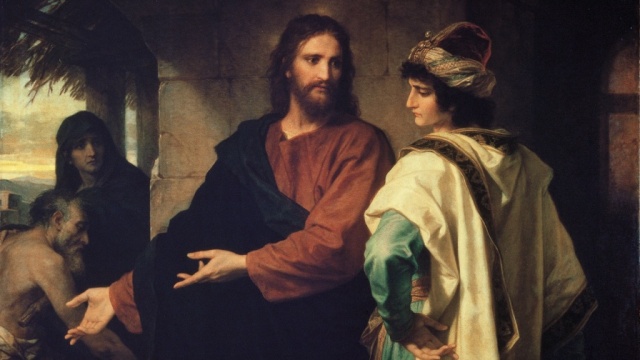
"Amen, amen, I say to you, unless a grain of wheat falls to the ground and dies, it remains just a grain of wheat; but if it dies, it produces much fruit. " (John 12)
Photo copyright : John R Portelli

Friday, 2 November 2018

Love: The Christian way of living.

The 31st Sunday during Year B
         
Il-31 Ħadd ta' Matul is-Sena  -  Sena 'B'   
Messalin 'B' pp 503


Reading 1 
Deuteronomy 6:2-6
Moses spoke to the people, saying: "Fear the LORD, your God, and keep, throughout the days of your lives, all his statutes and commandments which I enjoin on you, and thus have long life. Hear then, Israel, and be careful to observe them, that you may grow and prosper the more, in keeping with the promise of the LORD, the God of your fathers, to give you a land flowing with milk and honey. "Hear, O Israel! The LORD is our God, the LORD alone! Therefore, you shall love the LORD, your God, with all your heart, and with all your soul, and with all your strength. Take to heart these words which I enjoin on you today." This is the Word of the Lord.

L-Ewwel Lezzjoni
Qari mill-Ktieb tad-Dewteronomju  6, 2-6
Mose' kellem lill-poplu u qal:   "Ibża' millMulej, Alla tiegħek, billi int, ibnek u bin ibnek, tħarsu dejjem il-liġijiet u l-kmandamenti kollha tiegħu, li jien qiegħed nagħtik, biex ikollok għomor twil. Isma',  o  Iżrael,  u ħu ħsieb agħmilhom, biex ikollok il-ġid u toktor ħafna, bħalma wiegħed il-Mulej, Alla ta' misssierijietkom,  li jagħtik art tnixxi ħalib u għasel. Isma', o Iżrael:  Alla tagħna l-Mulej, il-Mulej waħdu. Ħo, mela, lill-Mulej, Alla tiegħek, b'qalbek kollha u b'saħhtek kollha.   Żomm f'qalbek dan il-kliem u dawn il-kmandamenti li qiegħed  nagħtik illum." Il-Kelma tal-Mulej.

Responsorial Psalm          
PSALM 18:2-3, 3-4, 47, 51
R. (2) I love you, Lord, my strength.
I love you, O LORD, my strength,
O LORD, my rock, my fortress, my deliverer.        R/

My God, my rock of refuge,
my shield, the horn of my salvation, my stronghold!
Praised be the LORD, I exclaim,
and I am safe from my enemies.                       R/

The LORD lives! And blessed be my rock!
Extolled be God my savior.
You who gave great victories to your king
and showed kindness to your anointed.                R/

Salm Responsorjali                                                                
Salm 17
          R/    Inħobbok, Mulej, qawwa tiegħi!
Inħobbok, Mulej, qawwa tiegħi!
Il-Mulej blata tiegħi,
fortizza u ħellies tiegħi!                            R/

Alla tiegħi, sur tal-kenn tiegħi u tarka tiegħi,
qawwa tas-salvazzjoni tiegħi, u kenn tiegħi!
Insejjaħ il-Mulej, li hu ta' min ifaħhru,
u nkun meħlus mill-għedewwa tiegħi.          R/

Ħaj il-Mulej!   Imbierek hu, il-blata tiegħi!
Ikun imfahhar Alla tas-salvazzjoni tiegħi!
Hu jkabbar ir-rebħ lis-sultan tiegħu,
juri mħabbtu mal-midluk tiegħu.                R/

Reading 2                
Hebrews 7:23-28
Brothers and sisters: The levitical priests were many because they were prevented by death from remaining in office, but Jesus, because he remains forever, has a priesthood that does not pass away. Therefore, he is always able to save those who approach God through him, since he lives forever to make intercession for them. It was fitting that we should have such a high priest: holy, innocent, undefiled, separated from sinners, higher than the heavens. He has no need, as did the high priests, to offer sacrifice day after day, first for his own sins and then for those of the people; he did that once for all when he offered himself. For the law appoints men subject to weakness to be high priests, but the word of the oath, which was taken after the law,  appoints a son, who has been made perfect forever. This is the Word of the Lord.

It-Tieni Lezzjoni
Qari mill-Ittra lill-Lhud 7, 23-28
Ħuti, dawk tal-imgħoddi kien  u jsiru qassisin f'għadd kbir, għax minħabba fil-mewt ma kinux jistgħu jibqgħu għal dejjem.Imma Ġesu', billi jibqa' għal dejjem, għandu saċerdożju li ma jintemm qatt.   Għalhekk ukoll huwa jista' jsalva għalkollox  'il dawk li bih jersqu lejn Alla, ladarba hu jibqa' għal dejjem  ħaj biex jidħol għalihom. Dan hu, tabilħaqq, il-qassis il-kbiri li kien jgħodd għalina: qaddis, innoċenti, safi, maqtugħ mill-midinbin, merfugħ 'il fuq  mis-smewwiet; li ma għandux  bżonn, bħall-qassisin il-kbar l-oħra, joffri kuljum is-sagrifiċċju, l-ewwel għad-dnubiet tiegħu stess, imbagħad għad-dnubiet tal-poplu.   Dan hu għamlu darba għal dejjem, meta offra lilu nnifsu.Għax il-Liġi tqiegħed bħala qassisin il-kbar bnedmin li huma dgħajfa; iżda l-kelma tal-ġurament, li ġiet wara  il-Liġi, tqiegħed Iben, li ġie magħmul perfett għal-dejjem.  Il-Kelma tal-Mulej

Gospel             
Mark 12:28b-34
One of the scribes came to Jesus and asked him, "Which is the first of all the commandments?" Jesus replied, "The first is this: Hear, O Israel! The Lord our God is Lord alone! You shall love the Lord your God with all your heart, with all your soul, with all your mind, and with all your strength. The second is this: You shall love your neighbor as yourself. There is no other commandment greater than these." The scribe said to him, "Well said, teacher. You are right in saying, 'He is One and there is no other than he.' And 'to love him with all your heart, with all your understanding, with all your strength, and to love your neighbor as yourself' is worth more than all burnt offerings and sacrifices." And when Jesus saw that he answered with understanding, he said to him, "You are not far from the kingdom of God." And no one dared to ask him any more questions. This is the Word of the Lord.

Evangelju
Qari skont San Mark 12,  28b-34
F'dak iż-żmien, wieħed mill-kittieba resaq fuq Ġesu' u staqsieħ: "Liema wieħed fost il-kmandamenti kollha huwa l-ewwel?" Ġesu' wieġbu:  "L-ewwel wieħed huwa dan:  Isma' Iżrael!  Il-Mulej, Alla tagħna, Mulej wieħedhu, u int għandek tħobb lill-Mulej, Alla tiegħek, b'qalbek kollha, b'ruħek kollha, b'moħħom kollu, u bil-qawwa tiegħek kollha.   U t-tieni hu dan:  "Ħobb lil għajrek bħalek innifsek.  Ma hemmx kmandament ieħor akbar minn dawn." Qallu l-kittieb;   "Sewwa qiegħed tgħid,  Mgħallem; għandek raġun tgħid li wieħed hemm, u li ma  hemmx ieħor ħliefu.  Iva, li tħobb lilu b'qalbek kollha, b'moħħok kollu, u bil-qawwa tiegħek kollha, u li tħobb lil għajrek bħalek innifsek, huwa aqwa minn kull sagrifiċċju tal-ħruq u mis-sagrifiċċji kollha." Ġesu', meta rah kemm kien wieġeb bil-għaqal, qallu: "M'intix 'il bogħod mis-Saltna ta' Alla. U ħadd ma kellu l-ħila jistaqsih iżjed.   Il-Kelma tal-Mulej

///////////////////////////////////////////////////


Our Priorities

Here is a translation of a commentary by the Pontifical Household preacher, Capuchin Fr Raniero Cantalamessa, on the readings from this Sunday’s liturgy.

One day one of the scribes came to Jesus asking him which was the first commandment of the law and Jesus answered, citing the words of the law: “Hear, O Israel, the Lord your God is one God. And you shall love the Lord your God, with your whole heart, and with your whole soul, and with your whole mind, and with your whole strength.” But Jesus immediately added that there is a second commandment similar to this, and it is to “love your neighbour as yourself.”

If we are to understand the meaning of the scribe’s question and Jesus’ response, we need to bear in mind the following. In the Judaism of Jesus’ time there were two opposite tendencies.
On the one hand there was a tendency to endlessly multiply the commandments and precepts of the law, creating norms and obligations for every minimal detail of life. On the other hand there was the desire to look underneath this suffocating congeries of norms to find those things that really count for God, the spirit of all the commandments.

The scribe’s question and Jesus’ response are situated in this approach to the essentials of the law, in this desire not to get lost in the thousand other secondary precepts. It is precisely this lesson about method that above all we must learn from today’s gospel. There are things in life that are important but not urgent (in the sense that nothing will happen if we let them slide); and vice versa, there are things that are urgent but not important. The danger is that we will systematically sacrifice the important things to pursue those that are urgent but often secondary.

How do we avoid this danger? A story will help us understand how. One day an old professor was asked to speak as an expert to some large North American corporations on personal time management. He decided to try an experiment. Standing before a group ready to take notes, he pulled out from under the table a large, empty glass vase. He placed a dozen tennis-ball-size rocks in the vase until it was full. When he was not able to add more rocks he asked those present: “Does the vase seem full to you?” and they all answered “Yes!” He waited a moment and then asked: “Are you sure?”

He again bent down and pulled a box full of pebbles from under the table and carefully poured the pebbles into the vase, moving the vase a little so that the pebbles could reach the rocks at the very bottom. He asked: “Is the vase full this time?”

His audience, having become more prudent, began to understand and said: “Perhaps not yet.” “Very good!” the old professor replied. Again he bent down and this time picked up a bag of sand and poured it into the vase with care. The sand filled all the spaces between the rocks and the pebbles.

He then asked again: “Is the vase full now?” And they all answered without hesitation: “No!” “Indeed,” the old professor said and, as they expected, took the pitcher of water from the table and poured it into the vase up to the brim.

At this point he looked up at his audience and asked: “What great truth does this experiment show us?” The bravest of the group, reflecting on the theme of the course — time management — replied: “This shows us that even when our schedule is full, with a little effort we can always add some other task, some other thing to do.”

“No,” the professor answered, “It’s not that. The experiment shows us something else. If you don’t put the big rocks in the vase first, then you will never be able to put them in afterward.”
There was a moment of silence and everyone took in the evidence for this affirmation.
The professor continued: “What are the big rocks, the priorities, in your life? Health? Family? Friends? Defending a cause? Accomplishing something that is close to your heart?

“The important thing is to put these big rocks on your agenda first. If you give priority to a thousand other little things — the pebbles, the sand — your life will be filled with meaninglessness and you will never find time to dedicate yourself to the truly important things.
“So, never forget to pose this question to yourself: ‘What are the important things in my life?’ Put these things at the head of your agenda.”

Then, with a friendly gesture the old professor bid farewell to his audience and left the room.
To the “big rocks” mentioned by the professor — health, family, friends — we need to add two others, which are the biggest of all, the two greatest commandments: love God and your neighbor.
Truly, loving God, more than a commandment, is a privilege, a concession. If one day we find him, we will not cease to thank God for commanding us to love him and we will not desire to do anything else but cultivate this love.
///////////////////////////////////////////

Friday, 26 October 2018

Master, I want to See


Thirtieth Sunday in Ordinary Time

Master, I want to see

                            
It-30 Ħadd matul is-Sena
Messalin B pp 498 

Reading 1                     
Jeremiah 31:7-9
Thus says the LORD: Shout with joy for Jacob, exult at the head of the nations; proclaim your praise and say: The LORD has delivered his people, the remnant of Israel. Behold, I will bring them back from the land of the north; I will gather them from the ends of the world, with the blind and the lame in their midst, the mothers and those with child; they shall return as an immense throng. They departed in tears, but I will console them and guide them; I will lead them to brooks of water, on a level road, so that none shall stumble. For I am a father to Israel, Ephraim is my first-born. This is the Word of the Lord.

L-Ewwel Qari
mill-Ktieb tal-Profeta Ġeremija 31, 7-9
Dan igħid il-Mulej: Għannu bil-ferħ għal Ġakobb, sellmu lill-ewlieni  fost il-ġnus!  Xandru, faħħru u niedu:"Il-Mulej  salva l-poplu tiegħu, il-fdal ta' Israel!" Arawni, se nġibhom minn art it-tramuntana, niġborhom mil-ibgħad art, ilkoll kemm huma, l-għomja u z-zopop, in-nisa bit-tfal u n-nisa fil-ħlas; kotra  kbira terġa' lura  hawn. Jiġu bil-biki ;imma nfarraġhom jiena u nġibhom lura.   Immex xihom lejn ilma ġieri, minn mogħdijiet watja  biex ma jitfixlux.. Għax jien  missier għal Iżrael, u Efrajm hu ibni l-kbir." Il-Kelma tal-Mulej

Responsorial Psalm 
PSALM 126:1-2, 2-3, 4-5, 6
R. (3) The Lord has done great things for us; we are filled with joy.
When the LORD brought back the captives of Zion,
we were like men dreaming.
Then our mouth was filled with laughter,
and our tongue with rejoicing.                                  R/

Then they said among the nations,
"The LORD has done great things for them."
The LORD has done great things for us;
we are glad indeed.                                                  R/

Restore our fortunes, O LORD,
like the torrents in the southern desert.
Those that sow in tears
shall reap rejoicing.                                                 R/

Although they go forth weeping,
carrying the seed to be sown,
They shall come back rejoicing,
carrying their sheaves.                                         R/

Salm Responsorjali                                                                                  
Salm 125 (126)
            R/  Kbir f'għemilu l-Mulej magħna!
Meta l-Mulej reġġa' lura l-imjassra ta' Sijon,
konna qisna mitlufa f'ħolma;
imbagħad bid-daħk imtela fommna,
u  b'għajjat ta' ferħ ilsienna.                          R/

Imbagħad bdew igħidu fost il-ġnus;
"Kbir f'għemilu l-Mulej magħhom!"
Kbir f'għemilu l-Mulej magħna!
U aħna bil-ferħ imtlejna.                                R/ 

Biddel, Mulej, xortina,
bħall-widien ta' Neġeb!
Dawk li jiżirigħu fid-dmugħ
jaħsdu bl-għana ta' ferħ.                               R/

Huma sejrin, imorru  jibku,
Iġorru  iż-żerriegħa għaż-żrigħ.
Iżda huma u ġejjin  lura, jiġu b'għana ta' ferħ,
Iġorru l-qatet f'idejhom.                                 R/


Reading 2                     
Hebrew 5:1-6
Brothers and sisters: Every high priest is taken from among men and made their epresentative before God, to offer gifts and sacrifices for sins. He is able to deal patiently with the ignorant and erring, for he himself is beset by weakness and so, for this reason, must make sin offerings for himself as well as for the people. No one takes this honor upon himself but only when called by God, just as Aaron was. In the same way, it was not Christ who glorified himself in becoming high priest, but rather the one who said to him: You are my son: this day I have begotten you; just as he says in another place: You are a priest forever according to the order of Melchizedek. This is the Word of the Lord.

It-Tieni Qari
mill-Ittra lil Lhud 5,1-6
Kull qassis il-kbir meħud minn  fost il-bnedmin, hu mqiegħed għall-bnedmin f'dak li għandu  x'jaqsam ma' Alla, biex joffri doni u sagrifiċċji għad-dnubiet. Hu dak li jista' jagħder 'il dawk li ma jafux u li jiżbaljaw, għax huwa mlibbes bid-dgħufija;   u  minħabba f'hekk  għandu joffri sagrifiċċji għad-dnubiet tiegħu ukoll, bħalma joffrihom għad-dnubiet tal-poplu. Ħadd ma għandu jieħu b'idejh dal-ġieħ għalih innifsu, imma biss min hu msejjaħ minn Alla, sewwasew  kif  kien imsejjajħ  Aron.  Għax hekk ukoll Kristu ma tax lilu  innifsu l-ġieħ li jkun qassis il-kbir, imma dan  tahulu Alla,  li qallu: "Ibni int; illum  jien nissiltek."U kif igħid ukoll band'oħra: 'Int qassis għal dejjem skond l-ordni ta' Melkisedek.' Il-Kelma tal-Mulej

Gospel                            
Mark 10:46-52
As Jesus was leaving Jericho with his disciples and a sizable crowd, Bartimaeus, a blind man, the son of Timaeus, sat by the roadside begging. On hearing that it was Jesus of Nazareth, he began to cry out and say, "Jesus, son of David, have pity on me." And many rebuked him, telling him to be silent. But he kept calling out all the more, "Son of David, have pity on me." Jesus stopped and said, "Call him." So they called the blind man, saying to him, "Take courage; get up, Jesus is calling you." He threw aside his cloak, sprang up, and came to Jesus. Jesus said to him in reply, "What do you want me to do for you?" The blind man replied to him, "Master, I want to see." Jesus told him, "Go your way; your faith has saved you." Immediately he received his sight and followed him on the way. This is the Word of the Lord.

L-Evanġelju
Qari skond San Mark.
F'dak iż-żmien,  waqt li Ġesu' kien ħiereġ minn Ġeriko, flimkien mad-dixxipli tiegħu u ma' kotra kbira ta'nies, kien hemm wieħed tallab agħma, jismu Bartilmew, bin Timew, bilqiegħda mal-ġenb tat-triq.  Dan, meta sama' li kien Ġesu' ta' Nazaret. qabad jgħajjat u jgħid "Ġesu',  bin David, ikollok ħniena minni!" Kien hemm ħafna li bdew jgħajtu miegħu biex jiskot imma hu aktar beda jgħajjat: "Bin David, ikollok ħniena minni!"  Ġesu' waqaf u qal:  "Sejħulu." Huma sejħu l-agħma u qalulu: "Agħmel il-qalb!  Qum, qiegħed isejjaħlek." Dak tajjar il-mantar minn fuqu, qabeż fuq riġlejħ u mar ħdejn Ġesu' . U Ġesu' kellmu u qallu:  "Xi  trid nagħmillek?" "Li nara, Rabbuni,"  wieġbu l-agħma.  U Ġesu': "Mur, il-fidi tiegħek fejqitek". U minnfih raġa' beda jara, u baqa' miexi warajh fit-triq. Il-Kelma tal-Mulej

////////////////////////////////

Master, I Want to See!

A reflection by Fr. Thomas Rosica, CSB

Mark's healing stories of the blind man of Bethsaida (8:22-26) and the healing of Bartimaeus, the blind man on the road to Jericho (10:46-52), were undoubtedly popular stories in the early Church, and they remain very significant stories for the contemporary Church.

These miracles have always fascinated me because I grew up with my father, who was an eye doctor. How frequently we spoke about sight impairments, eye diseases, stigmatisms, cataracts, and 20/20 vision! My father was also a member of a charitable society that assisted the blind, and I remember vividly volunteering as a child with my father and his doctor colleagues who hosted memorable Christmas parties for blind people.

Road to Jericho

Mark tells the story of Jesus' encounter with Bartimaeus, a blind man and a beggar (10:46-52), in the Gospel for the 30th Sunday in Ordinary Time (Year B). Jesus had made the long, arduous journey down the desert valley from Galilee in the north. He was on his way to Jerusalem, a daunting climb from an oasis on the desert floor to the hills of Judea.

As Jesus passed through Jericho, Bartimaeus heard the din of the crowd and knew that the chance of a lifetime was within his grasp. Bartimaeus was not about to miss this opportunity! From the roadside, he began to cry out, "Jesus, Son of David, have mercy on me!" Some people in Jesus' entourage were embarrassed to have this dirty, rude beggar bother the master, and they attempted to silence him.

What were they embarrassed about? Bartimaeus was simply trying to engage the culture around him and let the people know that he, too, had a right to see Jesus. If individuals in the crowd had heard the rumors about Jesus' healing powers, wouldn't they be kind to this poor beggar and bring him to Jesus for healing?  

Bartimaeus would not be denied - and neither would Jesus. As the shouts of the beggar reached his ears, Jesus brushed aside the restraints of his disciples and called to the blind man. Bartimaeus threw off his cloak and drew near to that welcoming voice, which responded to his pleas, "What do you want me to do for you?"

"Lord, that I may see." And Bartimaeus did see, not just with his eyes but, more importantly, with his heart. Though Bartimaeus was blind to many things, he clearly saw who Jesus is. Seeing "who Jesus is" is the goal of faith, and it leads to discipleship. At the end of the story, Bartimaeus regained his sight and followed Jesus on the way. Given that the very next verse in Mark narrates the entry into Jerusalem, we can be certain that Bartimaeus followed Jesus on the way to the cross.

Blindness metaphor

Compassion for the outcast was a hallmark of Jesus' ministry, and healing stories in the Gospels never seem to be simply a reversal of physical misfortune. In the stories of those who "once were blind, but now they see," the connections between seeing and believing are so strong that these miracles worked by Jesus are more about growing in faith than letting the scales of blindness fall away.

Disciples of Jesus have vision problems. How often do we use the metaphor of blindness to describe our inability to grasp the meaning of the suffering we endure? We sometimes describe our blindness as an inability to see the forest for the trees, but that is a rather simplistic analysis. More worrisome is the inherited blindness which so often assumes that there are no lessons left to learn. Arrogance is very often the root of our blindness. We need the miracle of restored sight each day.

What corners of the Church, of society, and of our culture need serious healing, restoration, and reformation in our time? Where are our blind spots? Where are the big problems with near-sightedness and far-sightedness? How often do we prefer monologue to dialogue, refusing to believe that we might learn from those who oppose us and disagree with us; refusing to engage the culture around us and preferring a narrow, obstinate and angry way of existing? How often do we say that there are no other ways to look at an issue than our way ... or the highway!
How often do we behave like those who tried to prevent Bartimaeus from seeing and meeting the Lord? Against the cries of the scoffers and cynics in our midst, do we dare to bring our friends, colleagues, and loved ones into the very presence of the Lord? How can we not, when we know the result of a lifetime without Christ?
//////////////////////////////////////

A Prayer for Sight

Origen (185-253)

May the Lord Jesus touch our eyes,   

As he did those of the blind.  

Then we shall begin to see in visible things. 

Those which are invisible. 

May He open our eyes to gaze not on present realities,  

But on the blessings to come.  

May he open the eyes of our heart to contemplate God in Spirit, 

Through Jesus Christ the Lord, To whom belong power and glory through all eternity.       

Amen.


/////////////////////////////////////////

Thursday, 18 October 2018

To serve and not to be served


Twenty-ninth Sunday in Ordinary Time

Id-29 Ħadd matul is-Sena
Messalin  B p 492

Reading 1          
Isaiah 53:10-11
The LORD was pleased to crush him in infirmity. If he gives his life as an offering for sin,
he shall see his descendants in a long life, and the will of the LORD shall be accomplished through him. Because of his affliction he shall see the light in fullness of days; through his suffering, my servant shall justify many, and their guilt he shall bear.  This is the Word of the Lord.

L-Ewwel Qari
Qari mill-Ktieb tal-Profeta Isaija 53, 10-11
Il-Mulej għoġbu jgħakksu bil-mard. Jekk joffri ruħu b'sagrifiċċju ta' riparazzjoni, huwa għad jara nisel u jtawwal jiemu; u r-rieda tal-Mulej isseħħ bih. Wara t-tbatija tiegħu għad jara d-dawl, jixba' bit-tagħrif tiegħu. Il-ġust jiġġustifika lill-qaddej tiegħu quddiem  il-kotra, u l-ħażen tagħhom jitgħabba bih hu. Il-Kelma tal-Mulej

Responsorial Psalm            
PSALM 33:4-5, 18-19, 20, 22
R. (22) Lord, let your mercy be on us, as we place our trust in you.

Upright is the word of the LORD,
and all his works are trustworthy.
He loves justice and right;
of the kindness of the LORD the earth is full.         R/

See, the eyes of the LORD are upon those who fear him,
upon those who hope for his kindness,
To deliver them from death
and preserve them in spite of famine.                  R/

Our soul waits for the LORD,
who is our help and our shield.
May your kindness, O LORD, be upon us
who have put our hope in you.                           R/

Salm Responsorjali                                                                
Salm 32 (33)
R/     Ħa tkun,   Mulej,  it-tjieba tiegħek fuqna, kif fik hi t-tama tagħna.

Sewwa hi l-kelma tal-Mulej,
kollox bil- fedelta' huwa  għamel;
Hu jħobb id-drit u s-sewwa;
bit-tjieba tal-Mulej mimlija l-art.                  R/

Ara, għajnejn il-Mulej fuq dawk li jibżgħu minnu,
fuq dawk li jittamaw fit-tjieba tiegħu.
Biex jeħilsilhom mill-mewt ħajjithom,
u jaħjihom fi żmien il-ġuħ.                        R/

Ruħna tixxennaq għall-Mulej,
hu l-għajnuna u t-tarka tagħna,
Ħa tkun, Mulej, it-tjieba tiegħek fuqna,
kif fik hi t-tama tagħna.                           R/

Reading 2                        
Hebrews 4:14-16
Brothers and sisters: Since we have a great high priest who has passed through the heavens, Jesus, the Son of God, let us hold fast to our confession. For we do not have a high priest who is unable to sympathize with our weaknesses, but one who has similarly been tested in every way, yet without sin. So let us confidently approach the throne of grace to receive mercy and to find grace for timely help. This is the Word of the Lord.

It-Tieni Qari                           
mill-Ittra lill-Lhud 4, 14-16
Ħuti,  meta aħna għandna l-qassis il-kbir, li hu tassew kbir, qassis li daħal fis-smewwiet, Ġesu' Bin Alla, ħa nżommu sħiħa l-fidi tagħna u nistqarruha. Għax aħna ma għandniex qassis il-kbir li ma jistax jagħder in-nuqqas ta' ħila tagħna, imma għandna wieħed li kien imġarrab  bħalna f'kollox, minbarra d-dnub. Ħa nersqu, mela, b'qalbna qawwija lejn it-tron tal-grazzja, biex naqilgħu ħniena u nsibu f'waqtha l-grazzja li neħtieġu. Il-Kelma tal-Mulej

Gospel             
Mark 10:35-45
James and John, the sons of Zebedee, came to Jesus and said to him, "Teacher, we want you to do for us whatever we ask of you." He replied, "What do you wish me to do for you?" They answered him, "Grant that in your glory we may sit one at your right and the other at your left." Jesus said to them, "You do not know what you are asking. Can you drink the cup that I drink or be baptized with the baptism with which I am baptized?" They said to him, "We can." Jesus said to them, "The cup that I drink, you will drink, and with the baptism with which I am baptized, you will be baptized; but to sit at my right or at my left is not mine to give but is for those for whom it has been prepared." When the ten heard this, they became indignant at James and John. Jesus summoned them and said to them, "You know that those who are recognized as rulers over the Gentiles lord it over them, and their great ones make their authority over them felt. But it shall not be so among you. Father, whoever wishes to be great among you will be your servant; whoever wishes to be first among you will be the slave of all. For the Son of Man did not come to be served but to serve and to give his life as a ransom for many."  This is the Word of the Lord.

L-Evanġelju
Qari skond San Mark 10, 35-46
F'dak iż-żmien, (Ġakbu u Ġwanni, ulied Żebedew, resqu lejn lejh u qalulu: "Mgħallem, dak li se nitolbuk irriduk tagħtihulna." "Xi triduni nagħmlilkom?" staqsiehom. U huma weġbuh:  "Ħallina noqogħdu wieħed fuq il-lemin tiegħek u l-ieħor fuq  ix-xellug fil-glorja tiegħek." Imma Ġesu' qalilhom:  "Ma tafux x'intom titolbu. Għandkom ħila tixorbu l-kalċi li se nixrob jien, u titgħammdu bil-magħmudija li biha se nitgħammed jien?" "Għandna", qalulu. Imbagħad  qalilhom Ġesu': "Il-kalċi li se nixrob jien tixorbuh, iva, u titgħammdu ukoll bil-magħmudija li biha se nitgħammed jien;    imma li wieħed joqgħod fuq il-lemin u x-xellug tiegħi, din mhix ħaġa tiegħi li nagħtiha jien, imma hi għal dawk li għalihom kienet imħejjija." Il-għaxra l-oħra, meta semgħu dan, saħnu għal Ġakbu u għal Ġwanni.) Imma Ġesu' sejħilhom  u qalilhom: "Tafu intom, dawk in-nies li l-bnedmin igħodduhom bħala  kapijiet tal-pagani, jaħkmu fuqhom, u l-kbarat tagħhom iħaddmu s-setgħa tagħhom fuqhom.  Fostkom ma għandux ikun hekk, imma min irid ikun kbir fostkom, għandu jkun qaddej tagħkom, u min irid ikun l-ewwel fostkom, għandu joqgħod ilsir ta' kulħadd.  Għax hekk  ukoll Bin il-bniedem, hu ma ġiex biex ikun moqdi, imma biex jaqdi u biex jagħti ħajtu b'fidwa għall-kotra."Il-Kelma tal-Mulej

/////////////////////////////////////////


The readings for the 29th Sunday in Ordinary Time of Cycle B invite us to prayerfully consider the priesthood and priestly ministry. The first reading is the passage of Isaiah's mysterious suffering servant who takes upon himself the people's iniquity (Isaiah 53:2-11).
The second reading speaks of Christ the high priest, tried in every way like us but sin, and the Gospel passage speaks of the Son of Man who has come to give his life in ransom for many (Mark 10:35-45.) These three passages bring to light a fundamental aspect of the heart of priestly ministry and one that we celebrate together as God's people in the Eucharistic mystery.

Knowing that many priests around the world are reading these reflections each week, I offer these thoughts on the priesthood that are particularly inspired by the second readings from this Sunday and next Sunday (Hebrews 4:14-16 and 5:1-5).

Isaiah's mysterious servant

First, allow me to offer a brief thought on Sunday's reading from the prophet Isaiah (53:10-11). Isaiah's mysterious figure of the "suffering servant" is not only a sign of God's love for us, but he also represents all human beings before God.

Only God appreciated his servant's true greatness. Because he suffered, he was regarded as a sinner and therefore as one to be spurned. Because the servant fulfilled the divine will by suffering for the sins of others, the servant will be rewarded by the Lord.

Jesus, our great High Priest

In the letter to the Hebrews 4:14-16, the author calls Jesus a great high priest (v 14). Jesus has been tested in every way, yet without sin (v 15); this indicates an acquaintance with the tradition of Jesus' temptations, not only at the beginning (as in 1:13) but throughout his public life (cf Luke 22:28). The similarity of Hebrews 4:16 to Hebrews 10:19-22 indicates that the author is thinking of our confident access to God, made possible by the priestly work of Jesus. Jesus' entire life is steeped in the Scriptures of Israel and he lived and acted out of God's Word.

Our "great high priest" is Jesus, the Child of Bethlehem who becomes the "Ecce Homo" of Jerusalem, not one distant from us and our condition, but he is the one who sympathizes with us, for he has experienced our weakness and pain, even our temptations (Hebrews 4:14-15). We must ask ourselves: Are we priestly people like he was? Do we live for others? Is the world any less violent, any less hostile, any more merciful, patient, kind and just, because of us?

In his very memorable and ever valid 1975 apostolic exhortation "Evangelii Nuntiandi" (On Evangelization in the Modern World), Pope St Paul VI rightly noted: "Modern man listens more willingly to witnesses than to teachers, and if he does listen to teachers, it is because they are witnesses."

Lest we experience emptiness, and the effectiveness of our ministry be compromised, we need to constantly ask ourselves: Are we truly inhabited by the Word of God? Is that Word truly the nourishment we live by, even more than bread and the things of this world? Do we really know that Word? Do we love it? Do we act upon it? Are we deeply engaged with this Word to the point that it really leaves a mark on our lives, shapes our thinking, and motivates and inspires others to act?


In Sunday's Gospel, Jesus asks the enigmatic question: "Can you drink the cup that I drink or be baptized with the baptism with which I am baptized?" (Mark 10:38-40): the metaphor of drinking the cup is used in the Old Testament to refer to acceptance of the destiny assigned by God.

In Jesus' case, this involves divine judgment on sin that Jesus the innocent one is to expiate on behalf of the guilty (Mark 14:24; Isaiah 53:5). His baptism is to be his crucifixion and death for the salvation of the human race. The request of James and John for a share in the glory (Mark 10:35-37) must of necessity involve a share in Jesus' sufferings, the endurance of tribulation and suffering for the gospel (Mark 10:39). The authority of assigning places of honor in the kingdom is reserved to God (Mark 10:40).

Whatever authority is to be exercised by the disciples must, like that of Jesus, be transformed into service to others (Mark 10:45) rather than for personal aggrandizement (Mark 10:42-44). The service of Jesus is his passion and death for the sins of the human race (Mark 10:45).
Sunday's Gospel passage concludes with one of the most important Gospel sayings that indicates Jesus' messianic mission: "For the Son of Man did not come to be served but to serve and to give his life as a ransom for many."

Jesus did not come into the world seeking personal gain, privilege or prestige. Rather, he came for service, and this entailed giving his life up as a ransom.

The Old Testament never explained how God could "pay a price" for his people. Only in the passion, suffering and death of his only Son does the price become clear. We become capable of salvation only by offering our flesh and blood.

All of the sinfulness and evil in the world around us must be borne on our shoulders and in our own flesh. In this way, we share the pain in our own flesh and bones, making it part of our very selves just as Jesus did. For as St. Paul tells us in his second letter to the Corinthian community: "He made Him who knew no sin to be sin on our behalf, that we might become the righteousness of God in Him (2 Cor. 5:21).

Difficult times

As priestly shepherds, we are given a share in arduous and awesome duties in difficult and trying times. We are ordained to gather God's people, to boldly proclaim the Word of the Lord, to baptize, to celebrate the breaking of the Bread, and to constantly give thanks to God for so many gifts.

We are also commissioned to assist those in need and to rouse generosity to the poor. Our ordained ministry demands that we lead by wholehearted example.

Nevertheless we remain unworthy servants, yet sent to do the work of Christ. Who of us can ever be worthy of such a great calling? As human beings, we priests can err, but the priestly gestures we carry out at the altar or in the confessional, are not invalid or ineffective because of our weakness and sinfulness.

God's people and ours are not deprived of divine grace because of our own unworthiness. After all it is Christ who baptizes, celebrates, reconciles and forgives; the priest is only the instrument.

Only if we are servant shepherds who suffer will people be stung by Jesus' call to tend one another, and to wash the feet of the world. Only if we allow our own hearts to be broken over and over again, in joyful service of God's people, will we be effective priests and good shepherds to the Lord's people.

It is this broken, wounded heart that lies at the heart of authentic ministry and shepherding today in the Church. Not a heart broken in a state of despair, but one opened in loving embrace to the world […] a broken heart that leads to ultimate joy because we have given it all to God and made place for the entire world in our own hearts.

Jesus is the perfect priest who burns, spends and consumes himself gladly for his brothers and sisters; one who lays down his life for others. The suffering servant of the Lord lives in union, communion and sympathy with the entire human family. Just as the Son of Man did not come to be served but to serve and to give his life as a ransom for many, so must it be for us.

Above and beyond eloquent words in homilies and written texts, we must know Christ and love him. Our friendship with him will be contagious to our contemporaries, and others might recognize the Lord's nobility, beauty and greatness though our faces, our smiles, our hands, our feet, our heart and our weaknesses. We cannot forget that people will fall in the love with the Lord in spite of us, and hopefully because of us.

/////////////////////////////////////////

Friday, 12 October 2018

Inheriting Eternal Life

Twenty-eighth Sunday in Ordinary Time

It-28 Ħadd matul is-Sena 
Messalin B p 487

Reading 1
Wisdom 7:7-11
I prayed, and prudence was given me; I pleaded, and the spirit of wisdom came to me.
I preferred her to scepter and throne, and deemed riches nothing in comparison with her,
nor did I liken any priceless gem to her; because all gold, in view of her, is a little sand,
and before her, silver is to be accounted mire. Beyond health and comeliness I loved her,
and I chose to have her rather than the light, because the splendor of her never yields to sleep. Yet all good things together came to me in her company, and countless riches at her hands. This is the Word of the Lord.

L-Ewwel Qari
mill-Ktieb tal-Għerf  7, 7-11
Jien tlabt u qlajt għaqal; Sejjaħt, u ġie  fuqi l-ispirtu tal-għerf. Dan  l-għerf qistu aqwa minn kull xettru u tron, u ntbaħt li l-għana m'hu xejn ħdejh. Ma  xebbaħtx miegħu l-ħaġra l-aktar prezzjuża, għax id-deheb kollu ħdejh mhuwiex ħlief ftit ramel, u l-fidda quddiemu qisha ftit  tajn. Aktar  mis-saħħa u s-sbuħija ħabbejtu, u għoġobni aktar mid-dawl; għax id-dija tiegħu ma tgħib qatt. Mal-għerf ġieni il-ġid kollu, u miegħu ġiebli għana bla qjies. Il-Kelma tal-Mulej

Responsorial Psalm             
pSALM 90:12-13, 14-15, 16-17
R. (14) Fill us with your love, O Lord, and we will sing for joy!

Teach us to number our days aright,
that we may gain wisdom of heart.
Return, O LORD! How long?
Have pity on your servants!                                                    R/
                                  
Fill us at daybreak with your kindness,
that we may shout for joy and gladness all our days.
Make us glad, for the days when you afflicted us,
for the years when we saw evil.                                             R/

Let your work be seen by your servants
and your glory by their children;
and may the gracious care of the LORD our God be ours;
prosper the work of our hands for us!
Prosper the work of our hands!                                              R/

Salm Responsorjali          
Salm 89 (90)
R/   Imliena bit-tjieba tiegħek, Mulej.

Għalliemna ngħoddu jiem ħajjitna,
sabiex aħna nimxu bil-għaqal.
Dur lejna, Mulej!  Kemm se ddum?
Ħenn għall-qaddejja tiegħek.                           R/

Imliena kmieni bit-tjieba tiegħek,
biex nifirħu u nithennew ħajjitna kollha.
Ferraħna daqskemm għakkistna,
għas-snin li fihom rajna l-ħsara.                     R/  

Ħa jidher għemilek quddiem il-qaddejja tiegħek,
u l-kobor tiegħek quddiem uliedhom.
Ħa tkun fuqna l-grazzja ta' Alla Sidna!
Wettqilna inti  x-xogħol ta' idejna,
Wettaq, iva,  xogħol idejna.                             R/

Reading 2                              
Hebrews 4:12-13
Brothers and sisters: Indeed the word of God is living and effective, sharper than any two-edged sword, penetrating even between soul and spirit, joints and marrow, and able to discern reflections and thoughts of the heart. No creature is concealed from him, but everything is naked and exposed to the eyes of him  to whom we must render an account. This is the Word of the Lord.

It-Tieni Qari
mill-Ittra lill-Lhud 4, 12-13
Ħuti,  l-Kelma ta' Alla hi ħajja u qawwija, taqta' aktar minn xabla b'żewġt ixfar; hija tinfed sa  jinfirdu minn xulxin ir-ruħ u l-ispirtu, u l-ġogi u l-mudullun;  u tgħarbel il-ħsibijiet u l-fehmiet tal-qalb.Xejn ma hemm fil-ħolqien li hu moħbi għalih, imma kollox hu miftuħ  għal għajnejn Alla, li lilu rridu nagħtu kont. Il-Kelma tal-Mulej.

Gospel                                   
Mark 10:17-30
As Jesus was setting out on a journey, a man ran up, knelt down before him, and asked him, "Good teacher, what must I do to inherit eternal life?" Jesus answered him, "Why do you call me good? No one is good but God alone. You know the commandments: You shall not kill; you shall not commit adultery; you shall not steal; you shall not bear false witness; you shall not defraud; honor your father and your mother."He replied and said to him, "Teacher, all of these I have observed from my youth."  Jesus, looking at him, loved him and said to him, "You are lacking in one thing. Go, sell what you have, and give to the poor and you will have treasure in heaven; then come, follow me." At that statement his face fell, and he went away sad, for he had many possessions. Jesus looked around and said to his disciples, "How hard it is for those who have wealth to enter the kingdom of God!" The disciples were amazed at his words.  So Jesus again said to them in reply, "Children, how hard it is to enter the kingdom of God! It is easier for a camel to pass through the eye of a needle than for one who is rich to enter the kingdom of God." They were exceedingly astonished and said among themselves, "Then who can be saved?" Jesus looked at them and said, "For human beings it is impossible, but not for God. All things are possible for God." Peter began to say to him, "We have given up everything and followed you." Jesus said, "Amen, I say to you, there is no one who has given up house or brothers or sisters or mother or father or children or lands for my sake and for the sake of the gospel who will not receive a hundred times more now in this present age: houses and brothers and sisters and mothers and children and lands, with persecutions, and eternal life in the age to come."  This is the Word of the Lord.

L-Evanġelju
Qari skont San Mark 10, 17-30
F'dak iż-żmien, Ġesu' kien se jaqbad it-triq lejn Ġerusalem, meta mar fuqu wieħed jgħaġġel, niżel għarkupptejh quddiemu u qallu: "Mgħallem tajjeb, x'għandi nagħmel biex nikseb il-ħajja ta' dejjem? Qallu Ġesu':  " Għaliex qiegħed issejjaħli tajjeb'?   Ħadd m'hu tajjeb ħlief Alla biss. Inti l-kmandamenti tafhom:  la toqtolx, la tiżnix, la tisraqx, la tixhedx fil-falz, la tiħux bil-qerq dak li hu ta' ħaddieħor; weġġaħ lil missierek u 'l ommok".U dak wieġbu u qallu:   "Mgħallem, jiena dan kollu  ili nħarsu minn żgħożiti."  Imbagħad Ġesu' xeħet fuqu ħarsa ta' mħabba u qallu:  "Ħaġa waħda tonqsok: mur  bigħ li għandek, agħtih lill-fqar, u  jkollok teżor fis-sema; imbagħad ejja u imxi warajja."   Imma għal dan il-kliem ir-raġel qarras wiċċu u telaq b'qalbu sewda, għaliex kellu bosta ġid.Ġesu' mbagħad ħares ħarsa madwaru u qal lid-dixxipli tiegħu:  "Kemm hi iebsa għall-għonja li jidħlu fis-Saltna ta' Alla!" Id-dixxipli stagħġbu għal din il-kelma, imma Ġesu' reġa' qalilhom:  "Kemm hi iebsa, uliedi, li wieħed jidħol fis-Saltna ta' Alla!  Eħfef li ġemel igħaddi minn għajn ta' labra milli wieħed għani jidħol fis-Saltna ta' Alla."  Huma stagħġbu wisq aktar, u bdew igħidu wieħed lil ieħor:  "Mela min jista' jsalva?"   Ġesu' ħares lejhom u qalilhom:  "Għall-bnedmin dan ma jistax ikun, imma għal Alla iva;  għax għal Alla kollox jista' jkun." Qabeż Pietru u qallu: "Tajjeb! Aħna ħallejna kollox, u ġejna warajk." Qallu Ġesu':  "Tassew ngħidilkom, li fost dawk kollha li minħabba  fija u l-Evanġelju jħallu lil darhom jew lil ħuthom jew lil ommhom jew lil missierhom jew lil uliedhom jew l-egħlieqi tagħhom, ma hemm ħadd  fosthom li minn issa, f'din id-dinja stess, ma jirċevix, għal mitt darba iktar, djar,  aħwa, subien u bniet, ommijiet, ulied u għelieqi flimkien ma' persekuzzjonijiet, u l-ħajja ta' dejjem fiż-żmien li ġej." Il-Kelma tal-Mulej

//////////////////////////   


How to Inherit Eternal Life

A reflection by Fr. Thomas Rosica, CSB

Mark's Gospel story of Jesus' encounter with the man seeking eternal life is essentially a vocation story (Mark 10:17-30). It is the only story in Mark in which the individual called responds not by following but by going away.

The story is narrated in all three Synoptic Gospel accounts. Matthew (19:16-22) tells us that the man was young; only Luke (18:18-23) tells us he was ruler. The three evangelists agree that the man was rich, and in Mark, this is the only description given. The rich man's concern is to "inherit eternal life."

Let us consider several aspects of Mark's account of the Gospel episode. First of all, Jesus repudiates the term "good" for himself and directs it to God, the source of all goodness, who alone can grant the gift of eternal life.

Is Jesus' directive to this man with many possessions a requirement for all who wish to inherit eternal life? Is it true that Jesus did not ask other disciples to sell their possessions (1 Tim 6:17-19)? Wasn't Peter able to keep his house and boat for a short period of time (Mark 1:29; John 21:3)? Didn't the women of Galilee continue to have access to their personal, material resources (Mark 15:41), just as Joseph of Arimathea did (15:43)?

It seems that in the case of this man with many possessions in Mark's story, Jesus issued a very personal invitation for very specific reasons. Why does this young man find the teaching of Jesus so difficult to accept? In the Old Testament, wealth and material goods are considered a sign of God's favor (Job 1:10; Psalm 128:1-2; Isaiah 3:10).

Religious Jews believed that wealth was a sign of God's blessing. Rich people were regarded as those God had blessed, and poor people were regarded as those God had cursed.

Power of possessions

The words of Jesus in Mark 10:23-25 provoke astonishment among the disciples because of their apparent contradiction with the Old Testament concept (Mark 10:24.26). Since wealth, power, and merit generate false security, Jesus rejects them utterly as a claim to enter the kingdom. The negative outcome of the man's choice to walk away strikes a note of realism.

It also attests the special power of possessions to hinder Christian discipleship. Jesus uses the rich man's departure as a teaching moment to instruct his disciples about the dangerous snare that earthly possessions, success, and prosperity can have. Total detachment from one's possessions is required of every authentic disciple. Jesus saw the danger of material possessions. They can fix our heart to the world and make us think of everything in terms of price rather than value.

Jesus was trying to completely overturn what the apostles and all other good Jews had been taught. But his teaching on wealth and richness was incomprehensible to the listeners. When Jesus said, "How hard it would be for rich people to enter the Kingdom of God," the Gospel says, "They, the disciples, were exceedingly astonished, and said to him, 'Then who can be saved?'" (v.26).

Any one of us would naturally ask the same question! Jesus reminded them that salvation is purely a gift from God. Grace is God's gift, and only those whose arms and hands are empty of self can stretch out to receive the gift of grace. The achievement of salvation is beyond human capability and depends solely on the goodness of God, who offers it as a gift (Mark 10:27).

A Christian contradiction

In many societies, wealth is a sign of God's approval, and poverty and hardship are the signs of God's disapproval. Every Christian is challenged by the teaching of Jesus and the values of the society which upholds the principle that worth really does come from material wealth: for example, from the number of cars we own, the size of our homes, the amount in our investment portfolios.

When capitalist systems are solely market-driven, heartless, and materialistic, they contradict the Gospel teachings of Jesus. The Gospel of Jesus challenges the "prosperity gospel mentality." Jesus is not speaking against material wealth but condemns being enslaved to and enchained by wealth. It becomes a blessing when it is shared with others, and it becomes an obstacle and a prison for those who do not have the wisdom to share it with others.

As Jesus looked at the rich young man, he looks at each one of us with love. He is reminding us to do "one thing more." We have to allow his loving gaze to penetrate us to the core, and unlike the young man we must open ourselves to transform our lives, upset our values, and rearrange our priorities.

When, considering his language too demanding, many of his disciples left him, Jesus asked the few who had remained: "Will you also go away?"

Peter answered him: "Lord to whom shall we go? You have the words of eternal life" (John 6:67-68).
And they chose to remain with him. They stayed because the Master had "the words of eternal life," words that promised eternity and also gave full meaning to life here and now.

Wisdom and happiness

King Solomon, as seen in the first reading (Wisdom 7:7-11), realized that only true wisdom could bring happiness. He prayed for it and it alone, rather than power, riches, health, or good looks. God gave him everything.

For us, wisdom has become a person, and his name is Jesus. Wisdom was born in a manger and died on a cross and in between said that our only shot at ever being filled up is if we follow him in the life of self-emptying love.

Looking at Jesus, we see what it means to be poor in spirit, gentle, and merciful, to mourn, to care for what is right, to be pure in heart, to make peace, to be persecuted. This is why he has the right to say to each of us, "Come, follow me!"

He does not say simply, "Do what I say." He says, "Come, follow me!"

In the end, Jesus looks intently and lovingly at each one of us and reminds us that life is to be had in its fullness not by accumulating things, honours, privileges, reputations, and prestige but by letting go of things.

Initially, his invitation might surprise, upset, shock, and grieve us. With God's grace, may we realize that Jesus' word is living and effective, sharper than any two-edged sword, penetrating even between soul and spirit, joints and marrow and able to discern reflections and thoughts of the heart (Hebrews 4:12-13). Hopefully, we will not go away sad.

Ordinary life

Following Sunday's Gospel, I encourage you to consider three important teachings of our Catholic tradition, from The Catechism of the Catholic Church and Benedict XVI's encyclical, Caritas in Veritate.

1) The Catechism of the Catholic Church teaches (2404-2405) that our material goods are entrusted to us by God not for our own personal advantage but for the privilege of using them for the good of others. "The ownership of any property makes its holder a steward of Providence, with the task of making it fruitful and communicating its benefits to others, first of all his family. Goods of production - material or immaterial - such as land, factories, practical or artistic skills, oblige their possessors to employ them in ways that will benefit the greatest number. Those who hold goods for use and consumption should use them with moderation, reserving the better part for guests, for the sick and the poor."

2) "The second truth is that ... authentic human development concerns the whole of the person in every single dimension. Without the perspective of eternal life, human progress in this world is denied breathing space. Enclosed within history, it runs the risk of being reduced to the mere accumulation of wealth; humanity thus loses the courage to be at the service of higher goods, at the service of the great and disinterested initiatives called forth by universal charity.
"Man does not develop through his own powers, nor can development simply be handed to him. In the course of history, it was often maintained that the creation of institutions was sufficient to guarantee the fulfillment of humanity's right to development" (No. 11, Caritas in Veritate).

3) "While the poor of the world continue knocking on the doors of the rich, the world of affluence runs the risk of no longer hearing those knocks, on account of a conscience that can no longer distinguish what is human. God reveals man to himself; reason and faith work hand in hand to demonstrate to us what is good, provided we want to see it; the natural law, in which creative Reason shines forth, reveals our greatness, but also our wretchedness insofar as we fail to recognize the call to moral truth" (No. 75, Caritas in Veritate).
///////////////////////////////