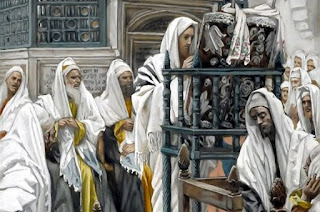
"Amen, amen, I say to you, unless a grain of wheat falls to the ground and dies, it remains just a grain of wheat; but if it dies, it produces much fruit. " (John 12)
Photo copyright : John R Portelli

Thursday, 24 February 2022

 Readings for Sunday, February 20, 2022

 
                                        Eighth Sunday in Ordinary Time
                                                                    Lectionary: 84

It-Tmien Ħadd taż-Żmien ta’ Matul is-Sena    
 

 Reading 1              Bin SIRAK 27:4-7

When a sieve is shaken, the husks appear; so do one’s faults when one speaks. As the test of what the potter molds is in the furnace, so in tribulation is the test of the just. The fruit of a tree shows the care it has had; so too does one’s speech disclose the bent of one’s mind. Praise no one before he speaks, for it is then that people are tested.

Qari 1              mill-Ktieb ta’ Bin Sirak 27:5-8


Meta jheżżu għarbiel jibqa’ fih l-iskart, hekk ukoll min jgħarbel lilu nnifsu jagħraf ħżunitu. Il-forn jgħaddi mill-prova xogħol il-fuħħari, hekk ukoll bniedem tagħrfu minn kliemu. Il-frott jikxef kemm bidwi jkun ħa ħsieb is-siġra, hekk ukoll kelma tikxef ħsieb qalb il-bniedem. Tfaħħarx bniedem qabel jitkellem, għax hekk jiġu ppruvati n-nies.  Il-Kelma tal-Mulej.

 Responsorial Psalm              PSALM 92:2-3, 13-14, 15-16

It is good to give thanks to the LORD,
to sing praise to your name, Most High,
To proclaim your kindness at dawn
and your faithfulness throughout the night.
R Lord, it is good to give thanks to you.

The just one shall flourish like the palm tree,
like a cedar of Lebanon shall he grow.
They that are planted in the house of the LORD
shall flourish in the courts of our God.
R Lord, it is good to give thanks to you.

They shall bear fruit even in old age;
vigorous and sturdy shall they be,
Declaring how just is the LORD,
my rock, in whom there is no wrong.
R Lord, it is good to give thanks to you.

 Salm Responsorjali              Salm 91(92):2-3,13-14,15-16

R/.(ara 2a): Tajjeb li nfaħħru l-Mulej.


Tajjeb li nfaħħru l-Mulej,
li ngħannu lil ismek, inti l-Għoli.
Inxandru filgħodu t-tjieba tiegħek,
u billejl il-fedeltà tiegħek. R/.

Il-bniedem ġust bħall-palma jħaddar,
bħal ċedru tal-Libanu jikber.
Imħawlin f’dar il-Mulej,
iħaddru fil-btieħi tat-tempju ta’ Alla tagħna. R/.

Sa fi xjuħithom il-frott jagħmlu,
kollhom ħajja u ħdura,
biex ixandru li ġust hu l-Mulej, blata tiegħi,
u ebda qerq ma jinsab fih. R/.

Reading 2            1 CORINTHIANS 15:54-58

Brothers and sisters: When this which is corruptible clothes itself with incorruptibility and this which is mortal clothes itself with immortality, then the word that is written shall come about:  Death is swallowed up in victory. Where, O death, is your victory? Where, O death, is your sting? The sting of death is sin, and the power of sin is the law. But thanks be to God who gives us the victory through our Lord Jesus Christ. Therefore, my beloved brothers and sisters, be firm, steadfast, always fully devoted to the work of the Lord, knowing that in the Lord your labor is not in vain.

Qari 2              mill-Ewwel Ittra lill-Korintin 15:54-58

Ħuti, meta dak li jitħassar jilbes in-nuqqas ta’ taħsir, meta dak li jmut jilbes l-immortalità, imbagħad iseħħ dak li hemm miktub: Inbelgħet il-mewt fir-rebħa. Fejn hi, ja Mewt, ir-rebħa tiegħek? Fejn hi, ja Mewt, in-niggieża tiegħek? In-niggieża tal-mewt hi d-dnub, u l-qawwa tad-dnub hi l-Liġi. Niżżu ħajr lil Alla li tana r-rebħa permezz ta’ Sidna Ġesù Kristu! Għalhekk, ħuti għeżież, żommu sħiħ, titħarrkux; ħabirku dejjem fil-ħidma tal-Mulej. Kunu afu li l-ħidma tagħkom fil-Mulej mhijiex għalxejn. Il-Kelma tal-Mulej.

Gospel              LUKE 6:39-45

Jesus told his disciples a parable, “Can a blind person guide a blind person? Will not both fall into a pit? No disciple is superior to the teacher; but when fully trained, every disciple will be like his teacher. Why do you notice the splinter in your brother’s eye, but do not perceive the wooden beam in your own? How can you say to your brother, ‘Brother, let me remove that splinter in your eye,’ when you do not even notice the wooden beam in your own eye? You hypocrite!  Remove the wooden beam from your eye first; then you will see clearly to remove the splinter in your brother’s eye. “A good tree does not bear rotten fruit, nor does a rotten tree bear good fruit. For every tree is known by its own fruit. For people do not pick figs from thorn-bushes, nor do they gather grapes from brambles. A good person out of the store of goodness in his heart produces good, but an evil person out of a store of evil produces evil; for from the fullness of the heart the mouth speaks.”

Evanġelju              Qari skond San Luqa 6:39-45

F’dak iż-żmien, Ġesù qal lid-dixxipli din il-parabbola: “Jista’ agħma jmexxi agħma ieħor? Mhux it-tnejn jaqgħu fil-ħofra? Id-dixxiplu mhuwiex aqwa mill-imgħallem tiegħu; imma kull min itemm it-taħriġ tiegħu jsir bħall-imgħallem tiegħu. Għax tara t-tibna f’għajn ħuk, u ma tarax it-travu li għandek f’għajnek int? Kif tista’ tgħidlu lil ħuk: ‘Ħi, ejja nneħħilek it-tibna li għandek f’għajnek’, meta m’intix tara t-travu li għandek f’għajnek int? Ja wiċċ b’ieħor! Neħħi l-ewwel it-travu minn għajnek int, ħalli mbagħad tara sewwa kif tneħħi t-tibna minn għajn ħuk. Ma hemmx siġra tajba li tagħmel frott ħażin, kif anqas ma hemm siġra ħażina li tagħmel frott tajjeb. Kull siġra mill-frott tagħha tingħaraf. Ħadd ma jiġbor it-tin mix-xewk, anqas l-għeneb mill-għolliq. Il-bniedem tajjeb mit-teżor tajjeb ta’ qalbu joħroġ it-tajjeb, u l-bniedem ħażin mit-teżor ħażin tiegħu joħroġ il-ħażin, għax mill-abbundanza tal-qalb jitkellem il-fomm”. Il-Kelma tal-Mulej.


///////////////////////////////////////////////

Eight-minute  Gospel reflection by Fr Antony Kadavil   

How to share our Christian life, love, and spiritual health 

 Central theme:

Jesus draws our attention to practical points of Christian living and challenges us to use our words as he used his in his preaching and healing ministry — to heal, to restore, and to bring back life, joy, and hope. This Sunday’s readings also instruct us to share our Christian life, love, and spiritual health by our words, and to avoid gossiping about and passing rash, thoughtless, pain-inflicting judgments on others, thus damaging their good reputation and causing them irreparable harm.

Scripture lessons:

The first reading, taken from the Book of Sirach, teaches that what is inside us is revealed through our conversation – as the grain and husks are separated in a farmer’s sieve, as the quality of the shaped clay is revealed in the potter’s fire, and as the size and quality of a tree’s fruit reveal the care it has received from the planter. 

Sirach’s teaching serves as an excellent preview for Sunday’s Gospel, which reminds us, when we’re feeling judgmental, to think before we speak because what comes out of our mouth reveals our heart. The Responsorial Psalm (Ps 92) advises us to spend our time praising and thanking God for all His blessings. 

In the second reading St. Paul advises the Corinthian Christians “to be firm, steadfast, always fully devoted to the work of the Lord, knowing that in the Lord your labor is not in vain,” instead of wasting time on useless and sinful conversations, which bring punishment instead of the victory of resurrection and eternal reward. 

In today’s Gospel passage, taken from the Sermon on the Plain given in Luke’s Gospel, Jesus condemns our careless, malicious and rash judgments about the behavior, feelings, motives, or actions of others by using the funny examples of one blind man leading another blind man and one man with a log stuck in his eye, trying to remove a tiny speck from another’s eye. 

Jesus does not mean that  we should not correct immoral behavior and sexual misbehavior or stop admonishing children and students  as parents and teachers or promote moral relativism. In both Matthew and Luke, the statements that follow the prohibition on judging indicate that it is an elaboration of the Golden Rule—the idea that we should treat others the way that we, ourselves, want to be treated. 

When Jesus says, “Judge not, lest ye be judged,” he means: “Don’t judge or God will judge you in your “particular” or “Last” judgment.”  

Life messages:


We should avoid judging others because ...

1)  No one except God is good enough to judge others because only God sees the whole truth, and only He can read the human heart. Hence, only He has the ability, right, and authority to judge us. 

2)  We do not see all the facts or circumstances or the power of the temptation which has led a person to do something evil.

 3)  We are often prejudiced in our judgment of others, and total fairness cannot be expected from us, especially when we are judging those near or dear to us. 

4)  We have no right to judge because we have the same faults as the one we are judging and often in a greater degree (remember Jesus’ funny example of a man with a log in his eye trying to remove the dust particle from another’s eye?). St. Philip Neri commented, watching the misbehavior of a drunkard: “There goes Philip but for the grace of God.” Abraham Lincoln said that the only one who has the right to criticize is the one who has the heart to help. 

5)  Hence, we should leave all judgment to God, practice mercy and forgiveness, and pray for God’s grace to get rid of all forms of hypocrisy in our lives. Let us remember the warning of saints: “When you point one finger of accusation at another, three of your fingers point at you.”

///////////////////////////////////   https://frtonyshomilies.com/


Thursday, 17 February 2022

DO TO OTHERS AS YOU WOULD HAVE THEM DO TO YOU

 Readings for Sunday, February 20, 2022

Seventh Sunday in Ordinary Time
Lectionary: 81

 Is-Seba’ Ħadd taż-Żmien ta’ Matul is-Sena
 

 Reading 1               1 SAMUEL 26:2, 7-9, 12-13, 22-23

In those days, Saul went down to the desert of Ziph with three thousand picked men of Israel, to search for David in the desert of Ziph. So David and Abishai went among Saul’s soldiers by night and found Saul lying asleep within the barricade, with his spear thrust into the ground at his head and Abner and his men sleeping around him. Abishai whispered to David: “God has delivered your enemy into your grasp this day. Let me nail him to the ground with one thrust of the spear; I will not need a second thrust!” But David said to Abishai, “Do not harm him, for who can lay hands on the LORD’s anointed and remain unpunished?” So David took the spear and the water jug from their place at Saul’s head, and they got away without anyone’s seeing or knowing or awakening. All remained asleep, because the LORD had put them into a deep slumber. Going across to an opposite slope, David stood on a remote hilltop at a great distance from Abner, son of Ner, and the troops. He said: “Here is the king’s spear. Let an attendant come over to get it. The LORD will reward each man for his justice and faithfulness.Today, though the LORD delivered you into my grasp, I would not harm the LORD’s anointed.”

Qari 1              mill-Ewwel Ktieb ta’ Samwel  26:2,7-9,12-13,22-23


F’dak iż-żmien, Sawl qam u niżel lejn id-deżert ta’ Żif, u miegħu ħa tlitt elef raġel magħżula minn Iżrael, ifittex lil David fid-deżert ta’ Żif. U ġie David u Abisaj ħdejn l-eżerċtu billejl, u Sawl kien mimdud u rieqed f’nofs il-kamp, u l-lanza tiegħu kienet imwaħħla fl-art in-naħa ta’ rasu; u Abner u n-nies tiegħu mimdudin madwaru. U Abisaj qal lil David: “Illum il-Mulej reħa l-għadu tiegħu f’idejk, ħa nsammru mal-art b’daqqa waħda bil-lanza tiegħu stess, bla ma nagħtih oħra”. Imma David wieġeb lil Abisaj: “La toqtlux! Għax min qatt medd idu fuq il-midluk tal-Mulej, u ħelisha?”. David ħa l-lanza u l-ġarra tal-ilma minn ħdejn ras Sawl u telqu, bla ma ħadd rahom jew intebaħ, u bla ma ħadd stenbaħ, għax kollha kienu reqdin, u ngħas tqil waqa’ fuqhom mingħand il-Mulej. David imbagħad qasam għan-naħa l-oħra u qagħad fuq il-quċċata tal-għolja fil-bogħod, b’wisa’ kbir bejniethom. U David għajjat: “Hawn hi l-lanza tas-sultan, ħa jiġi ’l hawn wieħed mill-qaddejja u jeħodha! Il-Mulej irodd lil kull wieħed skont il-ġustizzja tiegħu u l-lealtà tiegħu. Il-Mulej telqek f’idejja llum, imma jien ma ridtx immidd idejja fuq il-midluk tal-Mulej”. Il-Kelma tal-Mulej.


Responsorial Psalm              PSALM 103:1-2, 3-4, 8, 10, 12-13

Bless the LORD, O my soul;
 and all my being, bless his holy name.
and forget not all his benefits.
R The Lord is kind and merciful.

He pardons all your iniquities,
heals all your ills.
He redeems your life from destruction,
crowns you with kindness and compassion.
R The Lord is kind and merciful.

Merciful and gracious is the LORD,
slow to anger and abounding in kindness.
Not according to our sins does he deal with us,
nor does he requite us according to our crimes.
R The Lord is kind and merciful.

As far as the east is from the west,
so far has he put our transgressions from us.
As a father has compassion on his children,
so the LORD has compassion on those who fear him.
R The Lord is kind and merciful.

Salm Responsorjali               Salm 102(103):1-2,3-4,8,10,12-13

R/.(8a) Ħanin u twajjeb il-Mulej.


Bierek, ruħ tiegħi, il-Mulej!
B’qalbi kollha nbierek l-isem qaddis tiegħu.
Bierek, ruħ tiegħi, il-Mulej,
u la tinsiex il-ġid kollu li għamel miegħek. R/.

Hu li jaħfer dnubietek kollha;
ifejjaq il-mard tiegħek kollu;
jifdi lil ħajtek mill-qabar;
iħaddnek bit-tjieba u l-ħniena. R/.

Ħanin u twajjeb il-Mulej,
idum ma jagħdab u kollu mogħdrija.
Ma mexiex magħna skont ma ħaqqhom ħtijietna;
ma ħallasniex skont ma ħaqqha ħżunitna. R/.

Daqskemm hu mbiegħed il-Lvant mill-Punent,
hekk hu jbiegħed minna ħtijietna.
Bħalma jħenn il-missier għal uliedu,
hekk iħenn il-Mulej għal min għandu l-biża’ tiegħu. R/.

Reading 2              1 CORINTHIANS 15:45-49

Brothers and sisters: It is written, The first man, Adam, became a living being, the last Adam a life-giving spirit. But the spiritual was not first; rather the natural and then the spiritual. The first man was from the earth, earthly; the second man, from heaven. As was the earthly one, so also are the earthly, and as is the heavenly one, so also are the heavenly. Just as we have borne the image of the earthly one, we shall also bear the image of the heavenly one.

Qari 2              mill-Ewwel Ittra lill-Korintin 15:45-49

 Ħuti, l-ewwel bniedem, Adam, sar ruħ ħajja, l-aħħar wieħed sar spirtu li jagħti l-ħajja. Mhux l-ispiritwali ġie l-ewwel, imma l-ewwel in-naturali u mbagħad l-ispiritwali. L-ewwel bniedem, mit-trab, hu tal-art; it-tieni bniedem, mis-sema. Bħalma hu l-bniedem tal-art, hekk ukoll huma l-bnedmin tal-art; bħalma hu l-bniedem tas-sema, hekk ukoll huma l-bnedmin tas-sema. Bħalma aħna mlibbsa x-xbieha tal-bniedem tal-art, hekk ukoll għad nilbsu x-xbieha tal-bniedem tas-sema.
Il-Kelma tal-Mulej.

 Gospel              LUKE 6:27-38

Jesus said to his disciples:  “To you who hear I say, love your enemies, do good to those who hate you, bless those who curse you, pray for those who mistreat you. To the person who strikes you on one offer the other one as well, and from the person who takes your cloak, do not withhold even your tunic. Give to everyone who asks of you, and from the one who takes what is yours do not demand it back. Do to others as you would have them do to you. For if you love those who love you, what credit is that to you? Even sinners love those who love them. And if you do good to those who do good to you, what credit is that to you? Even sinners do the same. If you lend money to those from whom you expect repayment, what credit is that to you? Even sinners lend to sinners, and get back the same amount. But rather, love your enemies and do good to them, and lend expecting nothing back; then your reward will be great and you will be children of the Most High, for he himself is kind to the ungrateful and the wicked. Be merciful, just as your Father is merciful. “Stop judging and you will not be judged. Stop condemning and you will not be condemned. Forgive and you will be forgiven. Give, and gifts will be given to you; a good measure, packed together, shaken down, and overflowing, will be poured into your lap. For the measure with which you measure will in return be measured out to you.”

Evanġelju              Qari skont San Luqa 6:27-38

F’dak iż-żmien, Ġesù qal lid-dixxipli tiegħu: “Imma lilkom, li qegħdin tisimgħuni, ngħidilkom: Ħobbu l-għedewwa tagħkom, agħmlu l-ġid lil min jobgħodkom, bierku lil min jisħetkom, itolbu għal min iżeblaħkom. Min jagħtik bil-ħarta fuq naħa waħda, dawwarlu wiċċek ħalli jagħtik fuq in-naħa l-oħra; min jeħodlok il-mantar, anqas il-libsa ma għandek tiċħadlu. Agħti lil kull min jitolbok; u min jeħodlok xi ħaġa tiegħek, titlobhilux lura. Kif tridu li l-bnedmin jagħmlu lilkom, hekk ukoll agħmlu intom lilhom. Jekk intom tħobbu lil min iħobbkom, xi ħlas jista’ jkollkom? Għax il-midinbin ukoll iħobbu lil min iħobbhom. U jekk tagħmlu l-ġid lil min jagħmel il-ġid lilkom, xi ħlas jista’ jkollkom? Għax dan jagħmluh saħansitra l-midinbin. U jekk tisilfu xi ħaġa lil min tistennewh iroddhielkom lura, xi ħlas jista’ jkollkom? Il-midinbin ukoll jisilfu lill-midinbin, bil-ħsieb li jieħdu lura daqshekk ieħor mingħandhom. Imma intom ħobbu l-għedewwa tagħkom, agħmlu l-ġid, isilfu bla ma tistennew xi ħaġa lura, u l-ħlas tagħkom ikun kbir; u tkunu wlied Alla l-Għoli, li hu tajjeb mal-ingrati u l-ħżiena. Ħennu, bħalma hu ħanin Missierkom. Tiġġudikawx, u ma tkunux iġġudikati; tikkundannawx, u ma tkunux ikkundannati; aħfru, u ssibu l-maħfra; agħtu, u jingħatalkom. Kejl tajjeb, marsus, mheżżeż sewwa u mburġat iqegħdulkom f’ħoġorkom; għax bl-istess kejl li tkejlu intom jitkejjel lilkom”. Il-Kelma tal-Mulej.

/////////////////////////////////     

Eight-minute  Gospel reflection by Fr Antony Kadavil  


     OUR CHALLENGES TO LIVE BY GOD'S LOVE

Central theme:


Sunday’s Scripture readings challenge us to make three types of correct choices in life.First, we are advised to choose the love in the “golden rule” instead of selfishness and insensitivity to the feelings and needs of others. Second, we need to choose unconditional, agape love instead of jealousy and hatred in our relationships with others. Third, we must choose graceful forgiveness instead of harbouring revenge and planning retaliation.

Scripture lessons:

The first reading shows us how David made the right choice, respecting God’s anointed king by forgiving his offenses, while Saul continued to make the wrong choices, perpetuating his own misery in seeking his revenge. In the Responsorial Psalm, (Ps 103), the Psalmist reminds us of the mercy of God and His compassion which we should practice in our choices. 

In the second reading, St. Paul tells us how the “First Adam” made a wrong choice of disobedience, bringing death into the world, whereas Jesus, the “Second Adam,” made the right choice of fulfilling his Father’s saving plan for mankind by accepting acute suffering and heinous death. Sunday’s Gospel (Luke 6:27-38) gives us Jesus’ revolutionary moral teaching about correct choices in our human relationships, based on the necessity of our following the “Golden Rule” and our obligation to behave like the children of a loving, forgiving, merciful, and compassionate Heavenly Father. 

Our relationships in our communities become truly Christian when we follow the Golden Rule, “Do to others as you would have them do to you.” Jesus amplifies the golden rule by giving additional commands for us to follow as God’s children, by explaining Christian love: “Love your enemies…Do good to those who hate you; bless those who curse you and pray for those who maltreat you.” Jesus orders us to love our enemies and to be merciful and compassionate to everyone as God our Father is loving, merciful, and compassionate. He concludes by instructing us to stop judging others and start forgiving all who offend us.

Life Messages:

1) 
We need to practice the Golden Rule: The Golden Rule asks us to do to others what we would like them do to us. If we obey, loving others and expressing that love by loving words and deeds, we will start receiving the same love from others in higher intensity. Further, if we want others to forgive our offenses, our words of criticism, and our thoughtless judgments against them, then we should start forgiving their offenses against us and start appreciating their good qualities while encouraging them and supporting them in their needs.

2) We need to pray for the strength to forgive. At every Mass we pray the “Our Father”, asking God to forgive us as we forgive others. Our challenge is to overcome our natural inclination to hate family members, co-workers, neighbors and all who offend us. To meet that challenge, we need to ask God for the strength to forgive each other. We must forgive, because only forgiveness truly heals us. If we remember how God has forgiven us, it will help us forgive others. Let us start forgiving right now by curbing the sharp tongue of criticism, suppressing the revenge instinct and bearing patiently the irritating behavior of a neighbour.

///////////////////////////////////   https://frtonyshomilies.com/


Thursday, 10 February 2022

WE ARE BLESSED BY GOD!

 Readings for Sunday, February 13, 2022

 
Sixth Sunday in Ordinary Time

Lectionary: 78
Is-Sitt Ħadd taż-Żmien ta’ Matul is-Sena


Reading 1               JEREMIAH 17:5-8

Thus says the LORD: Cursed is the one who trusts in human beings, who seeks his strength in flesh, whose heart turns away from the LORD. He is like a barren bush in the desert that enjoys no change of season, but stands in a lava waste, a salt and empty earth. Blessed is the one who trusts in the LORD, whose hope is the LORD. He is like a tree planted beside the waters that stretches out its roots to the stream: it fears not the heat when it comes; its leaves stay green; in the year of drought it shows no distress, but still bears fruit.

QARI 1              mill-Ktieb tal-Profeta Ġeremija 17:5-8

Dan jgħid il-Mulej: “Misħut il-bniedem li jittama fil-bnedmin, li jfittex il-qawwa tiegħu fil-ġisem, u titbiegħed qalbu mill-Mulej. Ikun bħal siġra tal-għargħar fix-xagħri, li ma tara ebda ġid ġej, li tgħammar f’art tikwi fid-deżert, art mielħa fejn ħadd ma jgħammar. Imbierek il-bniedem li jittama fil-Mulej, u l-fiduċja tiegħu fil-Mulej. Ikun bħal siġra ħdejn l-ilma mħawla, b’għeruqha mxenxla lejn il-wied; ma tibżax meta tiġi s-sħana, il-weraq tagħha jibqa’ jħaddar; fis-sena tan-nixfa ma tinkeddx, u ma tehdiex milli tagħmel il-frott”. Il-Kelma tal-Mulej.

 Responsorial Psalm               PSALM 1:1-2, 3, 4 and 6

Blessed the man who follows not
the counsel of the wicked,
nor walks in the way of sinners,
nor sits in the company of the insolent,
but delights in the law of the LORD
and meditates on his law day and night.
R Blessed are they who hope in the Lord.


He is like a tree
planted near running water,
that yields its fruit in due season,
and whose leaves never fade.
Whatever he does, prospers.
R Blessed are they who hope in the Lord.


Not so the wicked, not so;
they are like chaff which the wind drives away.
For the LORD watches over the way of the just,
but the way of the wicked vanishes.
R Blessed are they who hope in the Lord.


SALM RESPONSORJALI              Salm 1:1-2,3,4,6

R/:  Hieni l-bniedem li jqiegħed fil-Mulej it-tama tiegħu.


Hieni l-bniedem li ma jimxix fuq il-pariri tal-ħżiena,
li ma jiqafx fi triq il-ħatjin,
li ma joqgħodx fil-laqgħat taż-żeblieħa;
imma fil-liġi tal-Mulej hi l-għaxqa tiegħu,
lejl u nhar jaħseb fil-liġi tiegħu. R/.

Hu bħal siġra mħawla ħdejn nixxigħat tal-ilma
li tagħmel il-frott fi żmienha,
u l-weraq tagħha ma jidbielx;
hu jirnexxi f’kulma jagħmel. R/.

Mhux hekk il-ħżiena, mhux hekk;
iżda huma bħal tibna li jtajjarha r-riħ.
Għax triq it-tajbin il-Mulej jafha;
imma triq il-ħżiena tintemm fix-xejn. R/.

Reading 2              1 CORINTHIANS 15:12, 16-20

Brothers and sisters: If Christ is preached as raised from the dead, how can some among you say there is no resurrection of the dead? If the dead are not raised, neither has Christ been raised, and if Christ has not been raised, your faith is vain; you are still in your sins. Then those who have fallen asleep in Christ have perished. If for this life only we have hoped in Christ, we are the most pitiable people of all. But now Christ has been raised from the dead, the firstfruits of those who have fallen asleep.

QARI 2               mill-Ewwel Ittra lill-Korintin 15:12,16-20

 Huti, jekk Kristu hu mxandar li qam mill-imwiet, kif jgħidu xi wħud minnkom li ma hemmx qawmien tal-mejtin? Għax jekk il-mejtin ma jqumux, anqas Kristu ma kien imqajjem. U jekk Kristu ma kienx imqajjem, fiergħa l-fidi tagħkom, u intom għadkom fi dnubietkom. U mitlufa wkoll huma dawk li raqdu fi Kristu. Jekk għandna tama fi Kristu għal din il-ħajja biss, aħna l-aktar nies imsejkna fost kemm huma l-bnedmin. Imma Kristu kien imqajjem tassew mill-imwiet, l-ewwel frott fost dawk li raqdu.
Il-Kelma tal-Mulej.

 Gospel              LUKE 6:17, 20-26

Jesus came down with the Twelve and stood on a stretch of level ground with a great crowd of his disciples and a large number of the people from all Judea and Jerusalem and the coastal region of Tyre and Sidon. And raising his eyes toward his disciples he said: “Blessed are you who are poor, for the kingdom of God is yours. Blessed are you who are now hungry, for you will be satisfied.  Blessed are you who are now weeping, for you will laugh. Blessed are you when people hate you, and when they exclude and insult you, and denounce your name as evil on account of the Son of Man. Rejoice and leap for joy on that day!  Behold, your reward will be great in heaven. For their ancestors treated the prophets in the same way. But woe to you who are rich, for you have received your consolation.Woe to you who are filled now, for you will be hungry. Woe to you who laugh now, for you will grieve and weep. Woe to you when all speak well of you, for their ancestors treated the false prophets in this way.”
 
 EVANGELJU               Qari skont San Luqa 6:17,20-26

 F’dak iż-żmien, Ġesù niżel mat-Tnax u waqaf f’wita, flimkien ma’ kotra kbira ta’ dixxipli u folla kbira ta’ nies minn kull naħa tal-Lhudija u Ġerusalemm u mix-xtajta ta’ Tir u Sidon. Ġesù rafa’ għajnejh lejn id-dixxipli tiegħu u qal: “Henjin intom il-foqra, għax tagħkom hija s-Saltna ta’ Alla. Henjin intom li għalissa bil-ġuħ, għax għad tkunu mxebbgħin. Henjin intom li għalissa tibku, għax għad tithennew. Henjin intom meta minħabba Bin il-bniedem in-nies jobogħdukom, jaqtgħukom minn magħhom, jgħajrukom u jwarrbu isimkom bħallikieku kien xi ħaġa ħażina. Dakinhar li jiġrilkom hekk, ifirħu u aqbżu bil-ferħ, għax araw, ħlaskom kbir ikun fis-sema. L-istess għamlu missirijiethom lill-profeti.Imma ħażin għalikom intom l-għonja, għax il-faraġ tagħkom ħadtuh. Ħażin għalikom intom li għalissa mxebbgħin, għax għad tkunu bil-ġuħ. Ħażin għalikom intom li għalissa tidħku, għax għad tnewħu u tibku. Ħażin għalikom meta kulħadd isemmikom fil-ġid. Għax l-istess għamlu missirijiethom lill-profeti foloz!”.Il-Kelma tal-Mulej.


///////////////////////////////////////////////

Eight-minute  Gospel reflection by Fr Antony Kadavil   


OUR TRUE HAPPINESS - FROM A GOD WHO LOVES US


Introduction:

Sunday’s readings teach us that true hap

piness, or beatitude, lies in the awareness that we are all children of a loving Heavenly Father and that we will be happy only when we share our blessings with our brothers and sisters in need, and when we work to uplift them, thus declaring our “option for the poor,” as Jesus did. Contrary to the popular belief, wealth, health, power, and influence are not the sources of true happiness. The word “beatitude” means “blessedness” in a double sense: both enjoying God’s favor and enjoying true or supreme happiness.(A homily starter anecdote may be added here)

Scripture lessons:

In the first reading, Jeremiah tells us that true happiness consists in our placing our trust in God and in putting our trust in His promises. The Responsorial Psalm (Ps 1) finds beatitude in keeping God’s Law. In the second reading St. Paul warns us that true beatitude is obtainable only in Heaven, and that Christ’s Resurrection gives us our assurance of reaching Heaven for an everlasting life of happiness. 

In today’s Gospel, Jesus instructs his disciples in the paradoxical blessedness of poverty, hunger, sorrow, and persecution. “Blessed are those who are poor, hungry, weeping, hated, excluded, insulted and denounced,” because in poverty, we recognize our dependence on God; in hunger, God’s providence; in sorrow for sins, reconciliation with God; and in persecution, the true joy of standing for the Faith with heroic convictions. 

What makes one blessed is not simply poverty or hunger or sadness or suffering for the Faith but living these in the context of one’s commitment to Jesus and his spirit of sharing. Beatitudes consist in humble selflessness and compassionate, generous sharing of our blessings with the needy. The beatitudes must be understood as eschatological statements which see and evaluate the present in terms of the future glory and everlasting happiness.

Life Messages:

1)
We need to respond to the challenge of the Beatitudes in our daily life. Millions are starving, persecuted, homeless, and leading hopeless lives. The only way the promises of the Beatitudes can become a reality for them is through the efforts of people like us. Hence, let us remember that each time we reach out to help the needy, the sick, or the oppressed, we share with them a foretaste of the promises of the Beatitudes here and now.

2) Let us light a candle instead of blaming the political set-up. God knows that 50% of His children are hungry, 80% live in substandard housing and 70% have no education. If over half our children were hungry, cold and uneducated, how would we respond to their suffering? God wants us to live as brothers and sisters who care for one another. 

3) We must take care to choose our way wisely. “There are two Ways, one of Life and one of Death, and there is a great difference between the two Ways.” These are the opening lines of the “Didache” a first century Christian catechism used to teach new Christians the essence of the Christian Faith. The way of life and true happiness is the way of Jesus, the way of the beatitudes, the way of rendering loving service to God by serving our brothers and sisters.

///////////////////////////////////   https://frtonyshomilies.com/

Wednesday, 2 February 2022

DO WE KNOW OUR LIFE CHANGING CALLS FROM GOD?

 READINGS FOR SUNDAY, FEBRUARY 6, 2022 

 Fifth Sunday in Ordinary Time
Lectionary: 75


Il-Ħames Ħadd taż-Żmien ta’ Matul is-Sena


Reading 1               ISAIAH 6:1-2a, 3-8

In the year King Uzziah died, I saw the Lord seated on a high and lofty throne, with the train of his garment filling the temple. Seraphim were stationed above. They cried one to the other, “Holy, holy, holy is the LORD of hosts! All the earth is filled with his glory!” At the sound of that cry, the frame of the door shook and the house was filled with smoke. Then I said, “Woe is me, I am doomed! For I am a man of unclean lips, living among a people of unclean lips; yet my eyes have seen the King, the LORD of hosts!” Then one of the seraphim flew to me, holding an ember that he had taken with tongs from the altar. He touched my mouth with it, and said, “See, now that this has touched your lips, your wickedness is removed, your sin purged.” Then I heard the voice of the Lord saying, “Whom shall I send?  Who will go for us?” “Here I am,” I said; “send me!”

Qari 1               mill-Ktieb tal-Profeta Iżaija 6:1-2a,3-8

Fis-sena li fiha miet is-sultan Għużżija, jien rajt lil Sidi bilqiegħda fuq tron għoli merfugħ ’il fuq; djul il-libsa tiegħu kienu jimlew it-tempju. ’Il fuq minnu kien hemm serafini, li kienu jgħajtu u jwieġbu lil xulxin: “Qaddis, qaddis, qaddis hu l-Mulej tal-eżerċti! L-art kollha mimlija bil-glorja tiegħu”. Bl-għajat tagħhom is-sisien tal-għetiebi theżżu, u t-tempju mtela bid-duħħan. Imbagħad jiena għedt: “Jaħasra għalija! Mitluf jien! Bniedem b’xufftejh imniġġsa jien! U f’nofs poplu b’xufftejh imniġġsa ngħammar; madankollu rajt b’għajnejja lis-Sultan, il-Mulej tal-eżerċti”. Wieħed mis-serafini ttajjar lejja, b’ġamra nar f’idu, li hu kien qabad bi mqass minn fuq l-altar, u messli fommi biha u qalli: “Ara, din messitlek xufftejk: ħżunitek għebet, u dnubek inħafer”. Imbagħad smajt leħen Sidi jgħid: “Lil min se nibgħat? Min se jmurilna?”. U jien weġibt: “Hawn jien: ibgħat lili!”. Il-Kelma tal-Mulej.

Responsorial Psalm                  PSALM 138:1-2, 2-3, 4-5, 7-8

I will give thanks to you, O LORD, with all my heart,
for you have heard the words of my mouth;
in the presence of the angels I will sing your praise;
I will worship at your holy temple
and give thanks to your name.
R. In the sight of the angels I will sing your praises, Lord.

Because of your kindness and your truth;
for you have made great above all things
your name and your promise.
When I called, you answered me;
you built up strength within me.
R. In the sight of the angels I will sing your praises, Lord.

All the kings of the earth shall give thanks to you, O LORD,
when they hear the words of your mouth;
and they shall sing of the ways of the LORD:
“Great is the glory of the LORD.”
R. In the sight of the angels I will sing your praises, Lord.

Your right hand saves me.
The LORD will complete what he has done for me;
your kindness, O LORD, endures forever;
forsake not the work of your hands.
R. In the sight of the angels I will sing your praises, Lord.

 Salm Responsorjali              Salm 137(138):1-2a,2bċ-3,4-5,7ċ-8

R/.(1ċ): Quddiem l-allat, Mulej, irrid ngħannilek.


Irroddlok ħajr, Mulej, b’qalbi kollha,
għaliex int smajt kliem fommi.
Quddiem l-allat irrid ngħannilek.
B’wiċċi fl-art ninxteħet quddiem is-santwarju tiegħek. R/.

Irroddlok ħajr għat-tjieba u l-fedeltà tiegħek,
għax int kabbart ismek u kelmtek fuq kollox.
Meta sejjaħtlek, int weġibtni,
kattarli l-qawwa f’ruħi. R/.

Iroddulek ħajr, Mulej, is-slaten kollha tal-art,
għaliex semgħu l-kliem ta’ fommok.
U jgħannu l-imġiba tal-Mulej,
għax kbir hu sebħ il-Mulej! R/.

Il-leminija tiegħek issalvani.
Il-Mulej iżomm kelmtu miegħi.
It-tjieba tiegħek, Mulej, tibqa’ għal dejjem;
la titlaqx għemil idejk. R/.
 

Reading 2               1 CORINTHIANS 15:1-11

I am reminding you, brothers and sisters, of the gospel I preached to you, which you indeed received and in which you also stand. Through it you are also being saved, if you hold fast to the word I preached to you, unless you believed in vain. For I handed on to you as of first importance what I also received: that Christ died for our sins in accordance with the Scriptures; that he was buried; that he was raised on the third day in accordance with the Scriptures; that he appeared to Cephas, then to the Twelve. After that, Christ appeared to more than five hundred brothers at once, most of whom are still living, though some have fallen asleep. After that he appeared to James, then to all the apostles. Last of all, as to one born abnormally, he appeared to me. For I am the least of the apostles, not fit to be called an apostle, because I persecuted the church of God. But by the grace of God I am what I am, and his grace to me has not been ineffective. Indeed, I have toiled harder than all of them; not I, however, but the grace of God that is with me. Therefore, whether it be I or they, so we preach and so you believed.

Qari 2                mill-Ewwel Ittra lill-Korintin 15:1-11

Ħuti, irrid infakkarkom fl-Evanġelju li xandarnielkom u li intom ilqajtu u li fih qegħdin iżżommu sħiħ. Bih intom salvi bil-kelma li jien ħabbartilkom, kemm-il darba żżommuha, jekk ma emmintux għalxejn. Qabelxejn, jien għallimtkom dak li tgħallimt jien, jiġifieri, li Kristu miet minħabba dnubietna, skont l-Iskrittura; difnuh u qam mill-imwiet fit-tielet jum, skont l-Iskrittura. U deher lil Kefa, u mbagħad lit-Tnax.Deher imbagħad lil aktar minn ħames mitt aħwa flimkien. Ħafna minnhom għadhom ħajjin sal-lum; xi wħud minnhom raqdu. Imbagħad deher lil Ġakbu u lill-appostli kollha. Fl-aħħar deher lili wkoll wara kulħadd, qisni twelidt mormi qabel il-waqt, għax jien l-inqas wieħed fost l-appostli, u ma jistħoqqlix nissejjaħ appostlu, għaliex kont naħqar il-Knisja ta’ Alla. Imma bil-grazzja ta’ Alla jien dak li jien u l-grazzja tiegħu fija ma sfatx fix-xejn, għax tħabatt ħafna iktar minnhom ilkoll; għad li mhux jien, iżda l-grazzja ta’ Alla li hi miegħi. Imma sew huma u sew jien, dan aħna xandarna, u dan emmintu intom.
Il-Kelma tal-Mulej.


Gospel               LUKE 5:1-11

While the crowd was pressing in on Jesus and listening to the word of God, he was standing by the Lake of Gennesaret. He saw two boats there alongside the lake; the fishermen had disembarked and were washing their nets. Getting into one of the boats, the one belonging to Simon, he asked him to put out a short distance from the shore. Then he sat down and taught the crowds from the boat. After he had finished speaking, he said to Simon, “Put out into deep water and lower your nets for a catch.” Simon said in reply, “Master, we have worked hard all night and have caught nothing, but at your command I will lower the nets.” When they had done this, they caught a great number of fish and their nets were tearing. They signaled to their partners in the other boat to come to help them.   They came and filled both boats so that the boats were in danger of sinking. When Simon Peter saw this, he fell at the knees of Jesus and said, “Depart from me, Lord, for I am a sinful man.” For astonishment at the catch of fish they had made seized him and all those with him, and likewise James and John, the sons of Zebedee, who were partners of Simon. Jesus said to Simon, “Do not be afraid; from now on you will be catching men.” When they brought their boats to the shore, they left everything and followed him.

Evanġelju             Qari skont San Luqa 5:1-11

Darba l-kotra bdiet tross fuq Ġesù biex tisma’ l-kelma ta’ Alla. Hu kien qiegħed f’xatt l-għadira ta’ Ġennesaret. U ra żewġ dgħajjes qegħdin max-xatt; is-sajjieda kienu niżlu minn fuqhom u kienu qegħdin jaħslu x-xbiek. Tela’ fuq waħda minnhom, li kienet ta’ Xmun, u talbu jaqla’ kemmxejn ’il barra mill-art; imbagħad qagħad bilqiegħda u beda jgħallem lin-nies mid-dgħajsa. Meta temm li kellu jgħid, qal lil Xmun: “Aqdef ’il barra fil-fond, u kalaw ix-xbiek tagħkom għas-sajd”. Wieġbu Xmun u qallu: “Mgħallem, għamilna lejl sħiħ nitħabtu u ma qbadna xejn. Imma, la qiegħed tgħid int, ħa nkala x-xbiek”. Hekk għamlu, u qabdu kotra hekk kbira ta’ ħut li x-xbiek tagħhom kien għoddu nqasam. Għalhekk għamlu sinjal lil sħabhom li kienu fid-dgħajsa l-oħra biex jiġu jgħinuhom. Dawk ġew, u mlew iż-żewġ dgħajjes hekk li għal ftit ma għerqux. Xmun Pietru, kif ra dan, inxteħet f’riġlejn Ġesù u qallu: “Tbiegħed minni, Mulej, għaliex jiena raġel midneb!”. Għax baqgħu tassew mistagħġba, kemm hu u kemm dawk kollha li kienu miegħu, għal dik il-qabda ħut li qabdu. U hekk ukoll ġralhom Ġakbu u Ġwanni, ulied Żebedew, li kienu sħab Xmun. Imbagħad Ġesù qal lil Xmun: “Tibżax; minn issa ’l quddiem tkun taqbad in-nies”. Meta mbagħad ressqu d-dgħajjes mal-art, telqu kollox u marru warajh. Il-Kelma tal-Mulej.


///////////////////////////////////////////////

Eight-minute  Gospel reflection by Fr Antony Kadavil   

DISCERNING GOD'S CALL FOR US

Introduction:


This Sunday’s Scripture readings challenge us to discern God’s call to each one of us to become His disciple with a mission. We are asked to recognize God’s holy presence and acknowledge our unworthiness, due to our sinfulness, to become humble instruments in His hands, as the prophet Isaiah did in the first reading, as St. Paul did in the second reading, and as St. Peter did in today’s Gospel. 

Today’s readings also teach us that God has His own criteria for selecting people to be His disciples, ministers and prophets. Presenting the special calls, or vocations, of Isaiah, Paul, and Peter as life-changing events, the readings challenge us to examine our own personal change of life and commitment to our discipleship.

Scripture lessons:


Isaiah, in the first reading, and Peter, in today’s Gospel, express their unworthiness to be in the presence of God’s great holiness, and Peter and Isaiah both immediately receive reassurance and their Divine calls. Today’s second reading describes the call of another great apostle, Paul, who judges himself to be unworthy of the name or the call, as he was a former persecutor of the Christians and as he was last apostle selected by the Risen Lord. 

Today’s Responsorial Psalm (Ps 138) offers a prayer of gratitude for just such a calling. For, it was by giving these three men a strong conviction of their unworthiness and of their need for total dependence on His grace that God prepared them for their missions. It was the miraculous catch of fish at Jesus’ command, described in today’s Gospel, which enabled Peter to find God in Jesus and prompted him to surrender his life fully to Jesus’ service as a full-time disciple.

 The Second Vatican Council teaches that we are all called to Christ’s ministry by virtue of our Baptism into Jesus Christ.

Life Messages:

1) We need to pray that our encounters with the holiness of God may lead us to recognize our sinfulness and accept His call. God, who calls us and commissions us for His service, wants us to realize His presence everywhere and in everyone, to repent of our sins, and to remain in readiness to speak and act for Him in our life circumstances, as He shall direct us through His grace and His Holy Spirit. 

2) We need to teach and practice expressions of reverence for the Lord. We need to express our reverence for God through appropriate bodily gestures. For example, when we come into Church, we need to show reverence for Jesus’ presence in the Tabernacle by making a deep bow or by genuflecting and blessing ourselves with sign of the cross. Then we need to honour Him by listening to the word of God and by actively participating in the liturgy’s prayers and singing. 

This same sense of reverence can be expressed by keeping the Bible, God’s living word to us, in a prominent place in our homes and by kissing it each time we read from it. True reverence for God naturally leads us to reverent, respectful love of our neighbors, as God dwells in them. 

3) We need to remember that each of us has a unique mission in the Church. This is why God has a different call for each of us. Each of us is unique, so each of us has a mission which no one else can fulfill. Let us accomplish this mission as parents, priests, religious, and lay persons by radiating the love, mercy, and forgiveness of Jesus and by participating in the various ministries of our parish.

///////////////////////////////////   https://frtonyshomilies.com/

Friday, 28 January 2022

SPEAKING OUT OUR CHRISTIAN CONVICTIONS


Fourth Sunday in Ordinary Time
Lectionary: 72

Ir-Raba’ Ħadd taż-Żmien ta’ Matul is-Sena


Reading 1              JEREMIAH 1:4-5, 17-19


The word of the LORD came to me, saying: Before I formed you in the womb I knew you, before you were born I dedicated you, a prophet to the nations I appointed you. But do you gird your loins; stand up and tell them all that I command you. Be not crushed on their account, as though I would leave you crushed before them;  for it is I this day  who have made you a fortified city, a pillar of iron, a wall of brass, against the whole land: against Judah’s kings and princes, against its priests and people. They will fight against you but not prevail over you, for I am with you to deliver you, says the LORD. 

Qari 1             mill-Ktieb tal-Profeta Ġeremija 1:4-5,17-19

 Fi żmien Ġosija, ġietni l-kelma tal-Mulej u qalli: “Qabel ma sawwartek fil-ġuf, għaraftek; qabel ma ħriġt minn ħdan ommok, ikkonsagrajtek. Jien qegħedtek profeta fuq il-ġnus. Ħażżem ġenbejk, qum u għidilhom kulma nordnalek. La tibżax minnhom, għax inkella nbeżżgħek jien quddiemhom. Arani, illum se nagħmel minnek belt fortizza, kolonna tal-ħadid, ħajt tal-bronż, kontra l-pajjiż kollu, kontra s-slaten ta’ Ġuda, u l-prinċpijiet tiegħu, kontra l-qassisin tiegħu u l-poplu tal-pajjiż. Huma jeħduha kontrik, imma ma jagħmlulek xejn, għax jien inkun miegħek – oraklu tal-Mulej – biex neħilsek minnhom”. Il-Kelma tal-Mulej.

Responsorial Psalm              PSALM 71:1-2, 3-4, 5-6, 15-17

In you, O LORD, I take refuge;
let me never be put to shame.
In your justice rescue me, and deliver me;
 incline your ear to me, and save me.
R. I will sing of your salvation.

Be my rock of refuge,
a stronghold to give me safety,
for you are my rock and my fortress.
O my God, rescue me from the hand of the wicked.
R. I will sing of your salvation.

 For you are my hope, O Lord;
my trust, O God, from my youth.
On you I depend from birth;
from my mother’s womb you are my strength.
R. I will sing of your salvation.

My mouth shall declare your justice,
day by day your salvation.
O God, you have taught me from my youth,
and till the present I proclaim your wondrous deeds.
R. I will sing of your salvation.

Salm Responsorjali              Salm 70(71):1-2,3-4a,5-6ab,15ab,17

R/: Fommi jxandar il-ġustizzja tiegħek.


Fik, Mulej, jien nistkenn;
ma jkolli qatt għax ninfixel.
Għall-ġustizzja tiegħek salvani u ħarisni;
agħtini widen u fittex eħlisni. R/.

Kun sur ta’ kenn għalija;
int wegħedt li tiġi dejjem issalvani,
għax blata u fortizza int għalija.
Alla tiegħi, ħarisni minn id il-ħażin. R/.

Għax inti, Sidi, it-tama tiegħi;
Mulej, inti l-fiduċja tiegħi sa minn żgħożiti.
Fuqek serraħt sa minn twelidi,
sa minn ġuf ommi inti ħadtni. R/.

Fommi jxandar il-ġustizzja tiegħek,
il-jum kollu l-għemejjel tal-għajnuna tiegħek.
O Alla, sa minn żgħożiti int għallimtni;
u jien s’issa għadni nxandar għeġubijietek. R/.


Reading 2              1 CORINTHIANS 12:31—13:13

Brothers and sisters: Strive eagerly for the greatest spiritual gifts. But I shall show you a still more excellent way. If I speak in human and angelic tongues, but do not have love, I am a resounding gong or a clashing cymbal. And if I have the gift of prophecy, and comprehend all mysteries and all knowledge; if I have all faith so as to move mountains, but do not have love, I am nothing. If I give away everything I own, and if I hand my body over so that I may boast, but do not have love, I gain nothing. Love is patient, love is kind. It is not jealous, it is not pompous, It is not inflated, it is not rude, it does not seek its own interests, it is not quick-tempered, it does not brood over injury, it does not rejoice over wrongdoing but rejoices with the truth. It bears all things, believes all things, hopes all things, endures all things. Love never fails. If there are prophecies, they will be brought to nothing; if tongues, they will cease;  if knowledge, it will be brought to nothing. For we know partially and we prophesy partially, but when the perfect comes, the partial will pass away. When I was a child, I used to talk as a child, think as a child, reason as a child; when I became a man, I put aside childish things. At present we see indistinctly, as in a mirror, but then face to face. At present I know partially; then I shall know fully, as I am fully known. So faith, hope, love remain, these three; but the greatest of these is love.

Qari 2               mill-Ewwel Ittra lill-Korintin 12:31–13:13

Ħuti, intom ħabirku għal doni ogħla. Imma jien nurikom triq li tgħaddihom ilkoll. Li kont nitkellem bl-ilsna tal-bnedmin u tal-anġli bla ma kelli l-imħabba, kont inkun qisni strument tar-ram iżarżar jew platti jċekċku. U kieku kelli d-don tal-profezija u kont naf il-misteri kollha u l-għerf kollu, kieku kelli l-fidi tiegħi sħiħa li nqanqal il-muntanji, imma ma kellix imħabba, jiena ma kont inkun xejn. U kieku kelli nqassam ġidi kollu fil-karità u nagħti ġismi għall-ħruq bla ma jkolli mħabba, xejn ma jkun jiswieli ta’ ġid. L-imħabba taf tistabar u tħenn; l-imħabba mhijiex għajjura, ma tintefaħx biha nfisha, ma titkabbarx fuq l-oħrajn; ma tagħmilx dak li mhux xieraq; ma tfittixx dak li hu tagħha, xejn ma tinkorla; ma żżommx f’qalbha għad-deni, ma tifraħx bl-inġustizzja, imma tifraħ bil-verità; kollox tagħder, kollox temmen, kollox tittama, kollox tissaporti. L-imħabba ma tintemm qatt. Jgħibu l-profeziji, jisktu l-ilsna, jgħib l-għerf. Għalissa nafu biċċa, u l-profezija tagħna hi nieqsa; imma meta jfeġġ dak li hu sħiħ, jgħib dak li hu nieqes. Meta kont tarbija, kont nitkellem ta’ tarbija, inħoss ta’ tarbija, naħseb ta’ tarbija. Meta sirt raġel warrabt dak li hu ta’ tarbija. Bħalissa naraw bħallikieku f’mera, imċajpar, imma mbagħad naraw wiċċ imb wiċċ. Issa nagħraf biċċa, imbagħad nagħraf bħalma jien magħruf issa. Issa hawn fidi, tama u mħabba, it-tlieta jibqgħu. Il-kbira fosthom l-imħabba! Il-Kelma tal-Mulej.


Gospel             LUKE 4:21-30

Jesus began speaking in the synagogue, saying: “Today this Scripture passage is fulfilled in your hearing.” And all spoke highly of him and were amazed at the gracious words that came from his mouth.  They also asked, “Isn’t this the son of Joseph?” He said to them, “Surely you will quote me this proverb, ‘Physician, cure yourself,’ and say, ‘Do here in your native place the things that we heard were done in Capernaum.’” And he said, “Amen, I say to you, no prophet is accepted in his own native place. Indeed, I tell you, there were many widows in Israel in the days of Elijah when the sky was closed for three and a half years and a severe famine spread over the entire land. It was to none of these that Elijah was sent, but only to a widow in Zarephath in the land of Sidon. Again, there were many lepers in Israel during the time of Elisha the prophet; yet not one of them was cleansed, but only Naaman the Syrian.” When the people in the synagogue heard this, they were all filled with fury. They rose up, drove him out of the town, and led him to the brow of the hill on which their town had been built, to hurl him down headlong. But Jesus passed through the midst of them and went away.

 Evanġelju              Qari skond San Luqa 4:21-30

F’dak iż-żmien Ġesù qal lin-nies fis-sinagoga: “Din il-kitba seħħet illum, intom u tisimgħu”. U lkoll laqgħu kliemu u stagħġbu għall-kliem mimli ħlewwa li kien ħiereġ minn fommu u bdew jgħidu: “Dan mhuwiex bin Ġużeppi?”. Iżda hu qalilhom: “Żgur li se tgħidu għalija dan il-proverbju: ‘Tabib, fejjaq lilek innifsek. Dak kollu li smajna li ġara f’Kafarnahum agħmlu hawn f’pajjiżek ukoll!’”. U żied jgħidilhom: “Tassew, ngħidilkom, ebda profeta ma jilqgħuh tajjeb f’pajjiżu. Għax, ngħidilkom is-sewwa, kien hemm bosta romol f’Iżrael fi żmien Elija meta s-sema baqa’ tliet snin u sitt xhur magħluq u waqa’ ġuħ kbir fil-pajjiż kollu; madankollu għand ħadd minnhom ma ntbagħat Elija, imma għand waħda armla minn Sarefta ta’ Sidon. U kien hemm bosta lebbrużi f’Iżrael fi żmien il-profeta Eliżew, imma ħadd minnhom ma ġie mfejjaq ħlief Nagħman tas-Sirja”. Meta semgħu dan fis-sinagoga kulħadd imtela bil-korla; qamu, u ħarġuh ’il barra mill-belt, ħaduh fuq xifer ta’ rdum tal-għolja li fuqha kienet mibnija l-belt tagħhom, u riedu xħtuh minn hemm fuq għal isfel. Iżda hu għadda minn ġo nofshom u baqa’ sejjer. Il-Kelma tal-Mulej.

//////////////////////////////////////////////////////

Eight-minute  Gospel reflection by Fr Antony Kadavil   

EQUIPPED TO FACE OPPOSITION


Introduction:

The central theme of Sunday’s readings is that we should have, and show in our communities, the courage of our Christian convictions in our Faith and in its practice, even when we face hatred and rejection because of them.

Scripture lessons:

The first reading tells us how God called Jeremiah as His prophet and equipped him to face opposition and rejection. In living out his prophetic vocation while encountering rejection and persecution, Jeremiah prefigured Jesus, the greatest of all prophets. The Responsorial Psalm, Ps 71, offers us a prayer in time of persecution and a declaration of our trust in God with its foundation in Him. 

In the second reading, we hear Paul speaking with the courage of his Christian convictions in correcting the Corinthian Christian community where the exercise of God’s gifts was causing competition, jealousy, and divisiveness. He courageously presents to them a “way” which surpasses all others, namely, the way of love, and instructs them to exercise their gifts with love. 

Today’s Gospel is a continuation of last Sunday’s Gospel presenting his own people’s negative reaction to Jesus’ “Inaugural Address” at the synagogue of Nazareth when Jesus applied to himself the words of Isaiah 61, announcing a new time of jubilee, liberation, and healing in God’s name. The passage shows us how Jesus faced skepticism and criticism with prophetic courage. Jeremiah, Paul, and Jesus believed that they were commissioned by God to proclaim a disturbing prophetic message (Jer 1:4-5, 17-19). No matter how strong the opposition, the three had the conviction that God was with them.

Life messages:


1) We need to face rejection with prophetic courage and optimism. Perhaps we have experienced the pain of rejection, betrayal, abandonment, violated trust, neglect, or abuse, even from friends and family members, when we reached out to them as God’s agents of healing and saving grace. Perhaps we ourselves are guilty of offering such rejection. Perhaps we, too, have been guilty of ignoring or humiliating people with our arrogance and prejudice. Let us learn to correct our mistakes and face rejection from others with courage.

2) Let us not, like the people in Jesus’ hometown, reject God in our lives. We reject God when we are unwilling to be helped by God, or by others. Such unwillingness prevents us from recognizing God’s directions, help, and support in our lives through His words in the Bible, through the teaching of the Church, and through the advice and examples of others. 

3) We need tofollow Christ, not political correctness, and to speak the truth of Christ in love, without being hypocritical or disrespectful. We must never remain silent in the face of evil for fear of being thought “politically incorrect.” Jesus taught us to love and respect others without condoning or encouraging sinful behavior. We need to be kind, charitable, honest, — forgiving, but clear, in speaking out our Christian convictions as Jesus was when he spoke in the synagogue at Nazareth.

///////////////////////////////////   https://frtonyshomilies.com/


Thursday, 20 January 2022

WE ARE CHALLENGED TO LISTEN

Readings for Sunday, January 23, 2021

Third Sunday in Ordinary Time
Lectionary: 69

 It-Tielet Ħadd taż-Żmien ta’ Matul is-Sena


Reading 1                NEHEMIAH 8:2-4a, 5-6, 8-10

Ezra the priest brought the law before the assembly, which consisted of men, women, and those children old enough to understand. Standing at one end of the open place that was before the Water Gate, he read out of the book from daybreak till midday, in the presence of the men, the women, and those children old enough to understand; and all the people listened attentively to the book of the law. Ezra the scribe stood on a wooden platform  that had been made for the occasion. He opened the scroll so that all the people might see it — for he was standing higher up than any of the people — and, as he opened it, all the people rose. Ezra blessed the LORD, the great God, and all the people, their hands raised high, answered, “Amen, amen!” Then they bowed down and prostrated themselves before the LORD, their faces to the ground. Ezra read plainly from the book of the law of God, interpreting it so that all could understand what was read. Then Nehemiah, that is, His Excellency, and Ezra the priest-scribe and the Levites who were instructing the people said to all the people: “Today is holy to the LORD your God. Do not be sad, and do not weep”— for all the people were weeping as they heard the words of the law. He said further: “Go, eat rich foods and drink sweet drinks, and allot portions to those who had nothing prepared; for today is holy to our LORD. Do not be saddened this day, for rejoicing in the LORD must be your strength!”

Qari 1             . mill-Ktieb ta’ Neħemija 8:2-4a,5-6,8-10

F’dak iż-żmien, Esdra l-qassis ġieb il-Ktieb tal-Liġi quddiem il-ġemgħa, li kienet magħmula minn irġiel, nisa u oħrajn, li kienu jifhmu dak li jisimgħu. U mis-sebħ sa nofsinhar qara minnu quddiem l-irġiel, in-nisa, u dawk li kienu kapaċi jifhmu, iħares lejn il-misraħ li hemm quddiem Bieb l-Ilma. U l-poplu kollu kien attent jisma’ l-qari tal-Ktieb tal-Liġi. Esdra l-iskriba kien wieqaf fuq palk tal-injam, li kienu waqqfu għall-okkażjoni. Esdra fetaħ il-Ktieb u rah kulħadd jagħmel dan billi kien fil-għoli ’l fuq mill-poplu kollu. U meta fetaħ il-ktieb kulħadd qam bilwieqfa. U Esdra bierek il-Mulej, Alla l-kbir, u l-poplu kollu b’idejh merfugħin ’il fuq wieġeb: “Ammen, ammen”. U nxteħtu għarkupptejhom b’wiċċhom mal-art jagħtu qima lill-Mulej. Dawn qraw mill-Ktieb tal-Liġi b’mod li jiftiehem, fissruh, u spjegaw il-qari. Neħemija, li kien il-gvernatur, Esdra, il-qassis u skriba, u l-Leviti li kienu qegħdin jgħallmu lill-poplu, qalu lin-nies kollha: “Dan hu jum qaddis, ikkonsagrat lill-Mulej Alla tagħkom. Titnikktux u tibkux!”. Għax il-poplu kollu kien infexx jibki meta sama’ kliem il-Liġi. U żiedu jgħidulhom: “Morru u kulu laħam imsemmen u ixorbu nbid ħelu, u lil dak li ma ħejjewlu xejn ibagħtulu sehem minn dak li għandkom. Dan hu jum qaddis għall-Mulej. La ssewdux qalbkom, għax il-ferħ tal-Mulej il-qawwa tagħkom”. Il-Kelma tal-Mulej.


Responsorial Psalm             PSALM 19:8, 9, 10, 15

The law of the LORD is perfect,
 refreshing the soul;
The decree of the LORD is trustworthy,
 giving wisdom to the simple.
R. Your words, Lord, are Spirit and life.

The precepts of the LORD are right,
rejoicing the heart;
enlightening the eye.
R. Your words, Lord, are Spirit and life.

The fear of the LORD is pure,
enduring forever;
The ordinances of the LORD are true,
all of them just.
R. Your words, Lord, are Spirit and life.

Let the words of my mouth and the thought of my heart
find favor before you,
O LORD, my rock and my redeemer.
R. Your words, Lord, are Spirit and life.


Salm Responsorjali              Salm 18(19):8,9,10,15

R/. (Ġw 6:63ċ): Il-kliem tiegħek, Mulej, huwa spirtu u ħajja. 

 Il-liġi tal-Mulej perfetta,
u tagħti l-ħajja;
ix-xhieda tal-Mulej hi sewwa,
u tgħallem lil min ma jafx. R/.

Il-preċetti tal-Mulej dritti,
u jferrħu l-qalb;
il-kmandament tal-Mulej safi,
u jdawwal l-għajnejn. R/.

Il-biża’ tal-Mulej sinċier,
u jibqa’ għal dejjem;
il-ġudizzji tal-Mulej sewwa,
u mseddqa għalkollox. R/.

Ħa jkunu milqugħa quddiemek
kliem fommi u ħsieb qalbi,
Mulej, blata tiegħi u feddej tiegħi. R/.


Reading 2             1 CORINTHIANS 12:12-30

Brothers and sisters: As a body is one though it has many parts, and all the parts of the body, though many, are one body, so also Christ. For in one Spirit we were all baptized into one body, whether Jews or Greeks, slaves or free persons, and we were all given to drink of one Spirit. Now the body is not a single part, but many. If a foot should say, “Because I am not a hand I do not belong to the body, “ it does not for this reason belong any less to the body. Or if an ear should say, “Because I am not an eye I do not belong to the body, “ it does not for this reason belong any less to the body. If the whole body were an eye, where would the hearing be? If the whole body were hearing, where would the sense of smell be? But as it is, God placed the parts, each one of them, in the body as he intended. If they were all one part, where would the body be? But as it is, there are many parts, yet one body. The eye cannot say to the hand, “I do not need you, “ nor again the head to the feet, “I do not need you.”Indeed, the parts of the body that seem to be weaker are all the more necessary, and those parts of the body that we consider less honorable we surround with greater honour, and our less presentable parts are treated with greater propriety, whereas our more presentable parts do not need this. But God has so constructed the body as to give greater honor to a part that is without it, so that there may be no division in the body, but that the parts may have the same concern for one another. If one part suffers, all the parts suffer with it; if one part is honored, all the parts share its joy. Now you are Christ’s body, and individually parts of it. Some people God has designated in the church to be, first, apostles; second, prophets; third, teachers; then, mighty deeds; then gifts of healing, assistance, administration, and varieties of tongues. Are all apostles? Are all prophets? Are all teachers? Do all work mighty deeds? Do all have gifts of healing? Do all speak in tongues? Do all interpret?

Qari 2                           mill-Ewwel Ittra lill-Korintin 12:12-30

Ħuti, bħalma l-ġisem hu wieħed, u fih ħafna membri, u l-membri kollha tal-ġisem, għad li huma ħafna, jagħmlu ġisem wieħed, hekk ukoll Kristu. Għax aħna wkoll, ilkoll tgħammidna fi Spirtu wieħed biex nagħmlu ġisem wieħed, sew Lhud sew Griegi, sew ilsiera sew ħielsa, u lkoll xrobna minn Spirtu wieħed. Issa l-ġisem mhuwiex membru wieħed, imma magħmul minn ħafna membri. Kieku s-sieq kellha tgħid: “Ladarba m’iniex l-id, jien m’iniex biċċa mill-ġisem”, b’daqshekk mhijiex parti mill-ġisem? U kieku l-widna kellha tgħid: “Ladarba m’iniex l-għajn, jien m’iniex biċċa mill-ġisem”, ma jkunx ifisser b’daqshekk li hi mhijiex biċċa mill-ġisem. Kieku l-ġisem kollu kien għajn, fejn kien ikun is-smigħ? U kieku kien kollu smigħ, fejn kien ikun ix-xamm? Iżda Alla qiegħed il-membri fil-ġisem kull wieħed f’postu, kif għoġbu hu. Kieku kollha kellhom ikunu membru wieħed, fejn hu l-ġisem? Imma ħafna, iva, huma l-membri, iżda wieħed hu l-ġisem. L-għajn ma tistax tgħid lill-id: “Jiena ma għandix bżonnok”, anqas ir-ras ma tgħid lis-saqajn: “Ma għandix bżonnkom”. Mhux hekk biss, imma l-membri tal-ġisem li jidhru l-aktar dgħajfa, huma l-aktar meħtieġa; u dawk li nqisu bl-inqas ġieħ fil-ġisem, lil dawn l-aktar li nieħdu ħsiebhom; u ’l dawk li ma għandhomx ġmiel, inlibbsuhom b’aktar ġmiel; għax il-membri sbieħ ma għandhom bżonn xejn. Alla imma bena l-ġisem b’mod li żejjen b’aktar ġieħ lil dawk li jeħtiġuh l-aktar. B’hekk ma jkunx hemm firda fil-ġisem, imma l-membri kollha jaħsbu f’xulxin. Jekk membru jbati, ibatu lkoll miegħu; jekk membru jingħata l-ġieħ, jifirħu lkoll miegħu. Intom il-ġisem ta’ Kristu, u kull wieħed minnkom membru tiegħu. Lil xi wħud Alla qegħedhom fil-Knisja fl-ewwel post bħala appostli, it-tieni bħala profeti, it-tielet bħala għalliema. Imbagħad id-don tal-mirakli, imbagħad id-don tal-fejqan, l-għajnuna, it-treġija, u d-don ta’ ilsna diversi. Jaqaw ilkoll appostli? Ilkoll profeti? Ilkoll għalliema? Ilkoll bid-don tal-mirakli? Ilkoll għandhom id-don tal-fejqan? Ilkoll jitkellmu bl-ilsna? Ilkoll ifissru? Il-Kelma tal-Mulej.


Gospel             LUKE 1:1-4; 4:14-21

Since many have undertaken to compile a narrative of the events that have been fulfilled among us, just as those who were eyewitnesses from the beginning and ministers of the word have handed them down to us, I too have decided, after investigating everything accurately anew, to write it down in an orderly sequence for you, most excellent Theophilus, so that you may realize the certainty of the teachings you have received. Jesus returned to Galilee in the power of the Spirit, and news of him spread throughout the whole region. He taught in their synagogues and was praised by all. He came to Nazareth, where he had grown up, and went according to his custom into the synagogue on the sabbath day. He stood up to read and was handed a scroll of the prophet Isaiah. He unrolled the scroll and found the passage where it was written: The Spirit of the Lord is upon me,because he has anointed me to bring glad tidings to the poor.He has sent me to proclaim liberty to captives and recovery of sight to the blind, to let the oppressed go free, and to proclaim a year acceptable to the Lord. Rolling up the scroll, he handed it back to the attendant and sat down, and the eyes of all in the synagogue looked intently at him. He said to them, “Today this Scripture passage is fulfilled in your hearing.”

 Evanġelju              Qari skont San Luqa 1:1-4; 4:14-21

Bosta kienu dawk li ħadu f’idejhom ix-xogħol li jiġbru bl-ordni f’rakkont wieħed il-ġrajja li seħħew fostna, kif għaddewhom lilna dawk li sa mill-bidu rawhom b’għajnejhom stess u saru ministri tal-Kelma. Hekk ukoll jien, għażiż Teofilu, wara li bir-reqqa kollha qgħadt infittex it-tagħrif dwar kulma ġara sa mill-bidu nett, deherli li għandi niktiblek kollox ħaġa b’ħaġa, biex tagħraf sewwa l-verità sħiħa dwar kulma tgħallimt. Jum wieħed, Ġesù, bil-qawwa tal-Ispirtu, reġa’ mar il-Galilija; u l-fama tiegħu xterdet ma’ dawk l-inħawi kollha, għax hu kien jgħallem fis-sinagogi tagħhom fost it-tifħir ta’ kulħadd. U ġie Nazaret fejn kien trabba. Daħal fis-sinagoga tagħhom, kif kien imdorri jagħmel nhar ta’ Sibt, u qam biex jaqra. Tawh f’idejh il-ktieb ta’ Iżaija l-profeta, fetħu u sab fejn kien hemm miktub dan li ġej: “L-Ispirtu tal-Mulej fuqi, għax hu kkonsagrani. Bagħatni nħabbar il-ħelsien lill-imjassrin, inwassal il-bxara t-tajba lill-fqajrin, u d-dawl mill-ġdid lill-għomja, irrodd il-ħelsien lill-maħqurin u nxandar is-sena tal-grazzja tal-Mulej”. Imbagħad raġa’ għalaq il-ktieb, tah lura lill-qaddej u qagħad bilqiegħda. Għajnejn kulħadd fis-sinagoga kienu msammra fuqu. U beda jgħidilhom: “Din il-kitba seħħet illum, intom u tisimgħu”. Il-Kelma tal-Mulej.


///////////////////////////////////////////////

Eight-minute  Gospel reflection by Fr Antony Kadavil   

THE LIBERATING POWER OF THE WORD OF GOD


Central theme:


Sunday’s Gospel, presenting Jesus’ “inaugural address” in the synagogue of Nazareth and outlining his theology of total liberation, marks a great moment in Jesus’ ministry. The Scripture readings for today focus our attention on the importance and liberating power of the Word of God as “sacramental,” making God present in our midst. The readings challenge us to listen to the Word, accept it into our hearts, then put it into practice as we live out our lives, thus liberating ourselves and others from all types of bondages.

Scripture lessons summarized:

Today’s first reading, taken from Nehemiah, and Luke’s Gospel both describe a public reading of Sacred Scripture which challenges the hearers to make a “fresh beginning” with a new outlook. In the first reading, after rebuilding the Temple and restoring the city, Ezra leads the people in a “Covenant renewal” ceremony by reading and interpreting the Law. 

Today’s Responsorial Psalm (Ps 19) sings the praises of the Law of the Lord and its effects on those who accept it. The Second Reading, taken from Paul’s first letter to the Corinthians, reminds us that “together we are Christ’s Body, but each of us is a different part of it.” This suggests that, as different parts of Christ’s Body, each of us has a share, as instruments in God’s hands, in bringing the freeing and saving mission of Christ to our world in our times.

Sunday’s Gospel describes how, on a Sabbath, Jesus stood before the people in the synagogue of his hometown, Nazareth, reading and interpreting what Isaiah had prophesied about the Messiah and his mission. Jesus claims that he is One sent “to bring glad tidings to the poor, liberation to captives, recovery of sight to the blind and freedom for the oppressed”—language that reflects the Biblical year of Jubilee. 

To the great amazement and disbelief of his own townsmen, Jesus declares that Isaiah’s prophecy is being fulfilled at that very moment “in your hearing,” because the prophecy foretells and describes Jesus’ own mission and ministry. Jesus’ mission is still to give liberation to everyone who will listen to his “Good News,” accept it and put it into practice. Luke reports that surprise and admiration were the initial reactions of the people who were astonished at the power and eloquence. of this son of their soil

Life messages:

1) We need to receive Christ’s freedom, live it and pass it on to others: As members of Christ’s Mystical Body, we share in the freeing, saving mission of Jesus. But we are captives of sin. We need Christ to set us free. We are often blinded by our evil habits, addictions and need for financial security. Once we receive true liberation from Christ, we have to share it with those we encounter in our daily lives, families, neighborhoods, parishes and workplaces.

2) We need to let the power of the Holy Spirit fill us, and then be ready to have miracles done through us. Today’s Gospel tells us that Jesus performed miracles because he was filled with the power of the Holy Spirit. Let us be ready to become Spirit-filled instruments of Christ’s saving freedom.

///////////////////////////////////   https://frtonyshomilies.com/