"Amen, amen, I say to you, unless a grain of wheat falls to the ground and dies, it remains just a grain of wheat; but if it dies, it produces much fruit. " (John 12)
Photo copyright : John R Portelli

Thursday, 26 May 2022

JESUS LEFT US TO BE WITH US!

 
Readings for Sunday, May 29, 2022

The Ascension of the Lord
Lectionary: 58

 Tlugħ il-Mulej fis-Sema
Solennità

 
Reading1               ACTS OF THE APOSTLES 1:1-11

In the first book, Theophilus, I dealt with all that Jesus did and taught until the day he was taken up, after giving instructions through the Holy Spirit to the apostles whom he had chosen. He presented himself alive to them by many proofs after he had suffered, appearing to them during forty days and speaking about the kingdom of God. While meeting with them, he enjoined them not to depart from Jerusalem, but to wait for “the promise of the Father about which you have heard me speak; for John baptized with water, but in a few days you will be baptized with the Holy Spirit.” When they had gathered together they asked him, “Lord, are you at this time going to restore the kingdom to Israel?” He answered them, “It is not for you to know the times or seasons that the Father has established by his own authority. But you will receive power when the Holy Spirit comes upon you, and you will be my witnesses in Jerusalem, throughout Judea and Samaria, and to the ends of the earth.” When he had said this, as they were looking on, he was lifted up, and a cloud took him from their sight. While they were looking intently at the sky as he was going, suddenly two men dressed in white garments stood beside them. They said, “Men of Galilee, why are you standing there looking at the sky? This Jesus who has been taken up from you into heaven will return in the same way as you have seen him going into heaven.”

Qari 1               Bidu tal-Ktieb tal-Atti tal-Appostli 1:1-11

Fl-ewwel rakkont tiegħi, Teofilu, tkellimt fuq dak kollu li Ġesù kien għamel u għallem minn mindu beda sal-jum li fih kien meħud fis-sema, wara li, permezz tal-Ispirtu s-Santu, ta l-ordnijiet tiegħu lill-appostli li hu kien għażel. Wara l-passjoni tiegħu dehrilhom u tahom ħafna provi li hu ħaj; f’erbgħin jum rawh kemm-il darba u kellimhom fuq il-ħwejjeġ tas-Saltna ta’ Alla. Meta kien għadu magħhom, ordnalhom biex ma jitilqux minn Ġerusalemm, imma joqogħdu jistennew sa ma sseħħ il-wegħda tal-Missier, “li fuqha” – qalilhom – “smajtu x’kont għedtilkom: Ġwanni għammed bl-ilma, imma intom, fi ftit jiem oħra titgħammdu bl-Ispirtu s-Santu”. Kif kienu flimkien staqsewh: “Mulej, hu dan iż-żmien li fih int se terġa’ twaqqaf is-Saltna ta’ Iżrael?”. Hu weġibhom: “Mhijiex biċċa tagħkom li tkunu tafu l-waqt u ż-żmien li l-Missier għażel bis-setgħa tiegħu. Imma meta jiġi fuqkom l-Ispirtu s-Santu, intom tirċievu l-qawwa, u tkunu xhieda tiegħi f’Ġerusalemm, fil-Lhudija kollha u s-Samarija u sa truf l-art”. Wara li qal dan, huma u jħarsu lejh, kien meħud ’il fuq, u sħaba ħadithulhom minn quddiem għajnejhom. Waqt li kienu b’għajnejhom fis-sema jħarsu lejh sejjer, f’daqqa waħda dehru ħdejhom żewġt irġiel libsin l-abjad, u qalulhom: “Irġiel tal-Galilija, x’intom tħarsu lejn is-sema? Dan Ġesù, li kien meħud minn magħkom lejn is-sema, għad jerġa’ jiġi kif rajtuh sejjer”. Il-Kelma tal-Mulej.

 Responsorial Psalm               PSALM 47:2-3, 6-7, 8-9

All you peoples, clap your hands,
shout to God with cries of gladness,
For the LORD, the Most High, the awesome,
is the great king over all the earth.
R/  God mounts his throne to shouts of joy: a blare of trumpets for the Lord.
or: R/  Alleluia.


God mounts his throne amid shouts of joy;
the LORD, amid trumpet blasts.
Sing praise to God, sing praise;
sing praise to our king, sing praise.
R God mounts his throne to shouts of joy:  a blare of trumpets for the Lord.
or: R Alleluia.


For king of all the earth is God;
sing hymns of praise.
God reigns over the nations,
God sits upon his holy throne.
R/  God mounts his throne to shouts of joy: a blare of trumpets for the Lord.
or: R/  Alleluia.


Salm Responsorjali               Salm 46(47):2-3,6-7,8-9

R/. Tela’ Alla b’għajat ta’ ferħ. jew  R/. Hallelujah,


Popli kollha, ċapċpu jdejkom,
għajtu b’leħen ta’ ferħ lil Alla!
Għax il-Mulej, l-Għoli, hu tal-biża’,
sultan kbir fuq l-art kollha. R/.

Tela’ Alla b’għajat ta’ ferħ,
il-Mulej bid-daqq tat-trombi.
Għannu lil Alla, għannu,
għannu lis-sultan tagħna, għannu. R/.

Għax Alla s-sultan tal-art kollha:
għannulu bis-sengħa għanja sabiħa.
Isaltan Alla fuq il-ġnus kollha,
joqgħod Alla fuq it-tron imqaddes tiegħu. R/.
 

Reading 2              HEBREWS 9:24-28; 10:19-23

Christ did not enter into a sanctuary made by hands, a copy of the true one, but heaven itself, that he might now appear before God on our behalf. Not that he might offer himself repeatedly, as the high priest enters each year into the sanctuary with blood that is not his own; if that were so, he would have had to suffer repeatedly from the foundation of the world. But now once for all he has appeared at the end of the ages to take away sin by his sacrifice. Just as it is appointed that men and women die once, and after this the judgment, so also Christ, offered once to take away the sins of many, will appear a second time, not to take away sin but to bring salvation to those who eagerly await him. Therefore, brothers and sisters, since through the blood of Jesus we have confidence of entrance into the sanctuary by the new and living way he opened for us through the veil, that is, his flesh, and since we have "a great priest over the house of God,"  let us approach with a sincere heart and in absolute trust, with our hearts sprinkled clean from an evil conscience and our bodies washed in pure water. Let us hold unwaveringly to our confession that gives us hope, for he who made the promise is trustworthy.

Qari 2                mill-Ittra lil-Lhud 9:24-28; 10:19-23

Kristu ma daħalx f’santwarju magħmul b’idejn il-bnedmin li hu biss xbieha tas-santwarju veru, imma daħal fis-sema stess, biex issa jidher għalina quddiem Alla. U daħal hemm mhux biex minn żmien għal żmien joffri lilu nnifsu bħalma l-qassis il-kbir jidħol kull sena fis-santwarju biex joffri demm ħaddieħor. Li kieku kien hekk, kien ikollu jbati ħafna drabi sa mill-ħolqien tad-dinja. Iżda issa deher darba għal dejjem, meta waslet il-milja taż-żminijiet, biex ineħħi d-dnub bis-sagrifiċċju tiegħu nnifsu. U kif hu miktub għall-bnedmin li għandhom imutu darba biss, u wara dan isir il-ġudizzju, hekk ukoll Kristu, wara li offra lilu nnifsu darba biss biex jitgħabba bid-dnubiet tal-kotra, għad jerġa’ jidher darb’oħra, mhux biex ineħħi d-dnubiet, imma biex isalva lil dawk li qegħdin jistennewh bil-ħerqa. Ladarba, ħuti, għandna l-fiduċja li nidħlu fis-Santwarju bis-saħħa tad-demm ta’ Ġesù billi ngħaddu mit-triq, ġdida u ħajja, li hu fetħilna ’l ġewwa mill-velu, li hu l-ġisem tiegħu stess; u ladarba għandna dan il-qassis il-kbir imqiegħed fuq il-familja ta’ Alla, ejjew nersqu b’qalb sinċiera u b’fidi sħiħa, bi qlubna mnaddfin minn kuxjenza ħażina u l-ġisem tagħna maħsul b’ilma safi. Inżommu sħiħ fl-istqarrija qawwija tat-tama tagħna, għax ta’ kelmtu huwa dak li għamlilna l-wegħda. Il-Kelma tal-Mulej.

 Gospel               LUKE 24:46-53

Jesus said to his disciples: “Thus it is written that the Christ would suffer and rise from the dead on the third day and that repentance, for the forgiveness of sins, would be preached in his name to all the nations, beginning from Jerusalem. You are witnesses of these things. And behold I am sending the promise of my Father upon you; but stay in the city until you are clothed with power from on high.” Then he led them out as far as Bethany, raised his hands, and blessed them. As he blessed them he parted from them and was taken up to heaven. They did him homage and then returned to Jerusalem with great joy, and they were continually in the temple praising God.
 
Evanġelju                skont San Luqa 24:46-53


F’dak iż-żmien, Ġesù qal lid-dixxipli tiegħu: “Hekk kien miktub, li l-Messija jbati u fit-tielet jum iqum mill-imwiet, u li l-indiema għall-maħfra tad-dnubiet tixxandar f’ismu lill-ġnus kollha, ibda minn Ġerusalemm. Intom xhud ta’ dan. U jiena, araw, nibgħat fuqkom lil dak li wiegħed Missieri. Imma intom ibqgħu fil-belt, sa ma Alla jkun libbiskom bil-qawwa tiegħu”. Imbagħad ħadhom sa ħdejn Betanja, u rafa’ jdejh u berikhom. U ġara li, huwa u jberikhom, infired minnhom u kien meħud fis-sema. Huma nxteħtu fl-art jagħtuh qima, u mimlijin b’ferħ kbir reġgħu lura lejn Ġerusalemm, u qagħdu l-ħin kollu fit-tempju jbierku lil Alla. Il-Kelma tal-Mulej.


///////////////////////////////////////////////

Eight-minute  Gospel reflection by Fr Antony Kadavil   

BEARING HEROIC WITNESS TO JESUS

Introduction:


Today’s readings are about people’s bearing heroic witness to Jesus through life and death, and the Source of the inspiration behind such witness-bearing. They urge us to work for greater Christian unity and to consider the power of Christian witness.

Scripture lessons:


The first reading describes the martyrdom of Stephen, showing us how he bore witness to the forgiving love of Jesus by his last prayer. In the second reading, taken from the Book of Revelation, Jesus, the Alpha and the Omega, is pictured as having all the forces of Heaven and earth at his disposal, standing ready to help us in our Christian witness-bearing. 


It is relatively easy to acknowledge our oneness with Stephen and to long for the experience of eternal oneness with “all those who have washed their robes in the blood of the Lamb” (Rv 22:14, Douay- Rheims). But to remain truly one with all of our brothers and sisters continues to be a daily challenge. 

Sunday’s Gospel is the last part of the “priestly prayer” of Jesus after the Last Supper. This chapter of John has been called “The Testament of Jesus” or “Jesus’ High Priestly (or Intercessory) Prayer.” During that long prayer, Jesus prayed first for himself – for his own glorification (vv 1-5) – as he faced the cross. Then, he prayed for his disciples that they might be unified and protected in the face of opposition from the world (vv 6-19), and finally he prayed for those in distant lands and far-off ages, including ourselves, who would enter the Christian Faith through the witness-bearing of the Apostles and their successors. 

Thus, this is Jesus’ prayer for each one of us. We have complete Faith and certainty because Jesus put his confidence in God and entrusted us to Him.

Life Messages:

1) We need to pray for unity and serve one another in unity. We must pray for unity and discuss the similarities we share with others as well as our differences. Along with prayer, we must put our words into action. This means that we are to serve one another and to love one another as brothers and sisters in the Lord. What unites us is greater than what divides us. As we move nearer to Jesus Christ, in him we move nearer to one another. Such unity is ultimately a gift of the Holy Spirit and of His guidance. The soul of the ecumenical movement then, is spiritual. Only by a renewal of the spiritual, by common prayer and common listening to the Word of God, can we hope to overcome the present ecumenical impasses and difficulties. In the words of Pope St. John Paul II: “The door to ecumenism is opened only on our knees.”

2) We need to have a clear idea about the Catholic stand on ecumenism. In his encyclical Ut Unum Sint, Pope St. John Paul II warns against compromise for the sake of unity. He states, “the ultimate goal of the ecumenical movement is to reestablish full visible unity among all the baptized [77.1].” He adds, “It is already possible to identify the areas in need of fuller study before a true consensus of Faith can be achieved.”

//////////////////////////////////////     http://frtonyshomilies.com

Thursday, 19 May 2022

WHEN GOD LIVES INSIDE YOU

 Readings for Sunday, May 22, 2022

                               Sixth Sunday of Easter

Lectionary: 57

Is-Sitt Ħadd tal-Għid


Reading 1   
             ACTS OF THE APOSTLES 15:1-2, 22-29

Some who had come down from Judea were instructing the brothers, “Unless you are circumcised according to the Mosaic practice, you cannot be saved.” Because there arose no little dissension and debate by Paul and Barnabas with them, it was decided that Paul, Barnabas, and some of the others should go up to Jerusalem to the apostles and elders about this question. The apostles and elders, in agreement with the whole church, decided to choose representatives and to send them to Antioch with Paul and Barnabas. The ones chosen were Judas, who was called Barsabbas, and Silas, leaders among the brothers. This is the letter delivered by them: “The apostles and the elders, your brothers, to the brothers in Antioch, Syria, and Cilicia of Gentile origin: greetings. Since we have heard that some of our number who went out without any mandate from us have upset you with their teachings and disturbed your peace of mind, we have with one accord decided to choose representatives and to send them to you along with our beloved Barnabas and Paul, who have dedicated their lives to the name of our Lord Jesus Christ. So we are sending Judas and Silas who will also convey this same message by word of mouth: ‘It is the decision of the Holy Spirit and of us not to place on you any burden beyond these necessities, namely, to abstain from meat sacrificed to idols, from blood, from meats of strangled animals, and from unlawful marriage. If you keep free of these, you will be doing what is right.  Farewell.’”

Qari 1                mill-Ktieb tal-Atti tal-Appostli 15:1-2,22-29

F’dak iż-żmien, niżlu xi wħud mil-Lhudija u bdew jgħallmu lill-aħwa: “Jekk ma toqogħdux għaċ-ċirkonċiżjoni skont id-drawwa li ġejja minn Mosè, ma tistgħux issalvaw”. Pawlu u Barnaba qamu kontra tagħhom u ħaduha magħhom bis-sħiħ; għalhekk qatgħuha li Pawlu u Barnaba u xi wħud oħra minnhom jitilgħu Ġerusalemm ikellmu lill-appostli u l-presbiteri fuq din il-kwistjoni. Imbagħad l-appostli u l-presbiteri, flimkien mal-Knisja kollha, dehrilhom li kellhom jagħżlu lil xi wħud minnhom u jibagħtuhom Antjokja ma’ Pawlu u Barnaba. Dawn kienu Ġuda, jgħidulu Barsaba, u Sila, li kienu minn ta’ quddiem fost l-aħwa. U bagħtu magħhom din l-ittra: “L-appostli u l-presbiteri, ħutkom, lill-aħwa ta’ Antjokja, tas-Sirja u taċ-Ċiliċja, li ġew mill-ġnus; is-sliem għalikom! Aħna smajna li xi wħud min-nies tagħna, mingħajr ebda ordni tagħna, ġew ħawdukom u qallbulkom moħħkom bi kliemhom. Għalhekk aħna qbilna lkoll bejnietna u dehrilna li kellna nagħżlu lil xi wħud u nibagħtuhom għandkom flimkien mal-għeżież tagħna Barnaba u Pawlu, nies li ddedikaw ħajjithom għall-isem ta’ Sidna Ġesù Kristu. Għalhekk bgħatnielkom lil Ġuda u ’l Sila, biex jgħidulkom bi kliemhom l-istess ħaġa. Għax lill-Ispirtu s-Santu u lilna dehrilna li aħna ma għandna ngħabbukom b’ebda piż ieħor aktar minn dak li hu meħtieġ, jiġifieri, li titbiegħdu mill-ikel issagrifikat lill-idoli, mid-demm, mil-laħam tal-annimali fgati u miż-żwieġ ħażin. Tagħmlu tajjeb jekk tħarsu rwieħkom minn dawn. Saħħa!”. Il-Kelma tal-Mulej.

Responsorial Psalm               PSALM 67:2-3, 5, 6, 8

May Go/d have pity on us and bless us;
may he let his face shine upon us.
So may your way be known upon earth;
 among all nations, your salvation.
R/  O God, let all the nations praise you!
or:  R/ Alleluia.

May the nations be glad and exult
 because you rule the peoples in equity;
the nations on the earth you guide.
R/  O God, let all the nations praise you!
or: R/  Alleluia.


May the peoples praise you, O God;
may all the peoples praise you!
May God bless us,
and may all the ends of the earth fear him!
R/  O God, let all the nations praise you!
or:  R/ Alleluia.

Salm Responsorjali               Salm 66(67):2-3,5,6,8

R/. Fost il-ġnus Alla wera s-salvazzjoni tiegħu.
jew  R/. Hallelujah, hallelujah, hallelujah.  


Iħenn għalina Alla, u jberikna;
idawwar għal fuqna d-dija ta’ wiċċu!
Biex jingħarfu fuq l-art triqatek,
fost il-ġnus kollha s-salvazzjoni tiegħek. R/.

Jithennew il-ġnus u jgħannu bil-ferħ,
għax trieġi l-popli bis-sewwa,
u l-ġnus fuq l-art inti tmexxihom. R/.

Ifaħħruk il-popli, o Alla,
ifaħħruk il-popli kollha.
Iberikna Alla, u tibża’ minnu
l-art kollha minn tarf għall-ieħor! R/.

 Reading 2               REVELATIONS 21:10-14, 22-23

The angel took me in spirit to a great, high mountain and showed me the holy city Jerusalem coming down out of heaven from God. It gleamed with the splendor of God. Its radiance was like that of a precious stone, like jasper, clear as crystal. It had a massive, high wall, with twelve gates where twelve angels were stationed and on which names were inscribed, the names of the twelve tribes of the Israelites. There were three gates facing east, three north, three south, and three west. The wall of the city had twelve courses of stones as its foundation, on which were inscribed the twelve names of the twelve apostles of the Lamb. I saw no temple in the city for its temple is the Lord God almighty and the Lamb. The city had no need of sun or moon to shine on it, for the glory of God gave it light, and its lamp was the Lamb.

Qari 2               mill-Ktieb tal-Apokalissi ta’ San Ġwann Appostlu 21:10-14,22-23

L-anġlu ħadni fl-ispirtu fuq muntanja kbira u għolja, u wrieni l-Belt il-Qaddisa, Ġerusalemm, nieżla mis-sema mingħand Alla, bil-glorja ta’ Alla fiha, tiddi bħal ħaġra mill-aktar prezzjuża, bħal ġaspru jleqq daqs il-kristall. Għandha ħajt kbir u għoli, bi tnax-il bieb fih, u tnax-il anġlu fil-bibien li fuqhom hemm miktuba ismijiet, l-ismijiet tat-tnax-il tribù ta’ wlied Iżrael. Tlieta minn dawn il-bibien jagħtu għan-naħa tal-Lvant, tlieta għan-naħa tat-Tramuntana, tlieta għan-naħa tan-Nofsinhar, u tlieta għan-naħa tal-Punent. U l-ħajt t al-Belt għandu tnax-il pedament, li fuqhom hemm it-tnax-il isem tat-tnax-il appostlu tal-Ħaruf. Ebda tempju ma rajt fiha, għax il-Mulej hu t-tempju tagħha, Alla li jista’ kollox, u l-Ħaruf. U l-Belt ma teħtieġ la xemx u lanqas qamar biex idawluha, għax biex iddawwalha għandha l-glorja ta’ Alla, u l-musbieħ tagħha l-Ħaruf. Il-Kelma tal-Mulej.


Gospel               JOHN 14:23-29


Jesus said to his disciples: “Whoever loves me will keep my word, and my Father will love him, and we will come to him and make our dwelling with him. Whoever does not love me does not keep my words; yet the word you hear is not mine but that of the Father who sent me. “I have told you this while I am with you. The Advocate, the Holy Spirit, whom the Father will send in my name, will teach you everything and remind you of all that I told you. Peace I leave with you; my peace I give to you. Not as the world gives do I give it to you. Do not let your hearts be troubled or afraid. You heard me tell you, ‘I am going away and I will come back to you.’ If you loved me, you would rejoice that I am going to the Father; for the Father is greater than I. And now I have told you this before it happens, so that when it happens you may believe.”

Evanġelju                Qari skont San Ġwann 14:23-29

F’dak iż-żmien, Ġesù qal lid-dixxipli tiegħu: “Jekk xi ħadd iħobbni, iħares kelmti, u Missieri jħobbu, u aħna niġu u ngħammru għandu. Min ma jħobbnix ma jħarisx kliemi. U l-kelma li qegħdin tisimgħu mhijiex tiegħi, imma tal-Missier li bagħatni. Għedtilkom dan meta għadni magħkom. Imma d-Difensur, l-Ispirtu s-Santu, li l-Missier jibgħat f’ismi, jgħallimkom kollox u jfakkarkom dak kollu li għedtilkom. Jiena nħallilkom is-sliem; nagħtikom is-sliem tiegħi; ma nagħtihulkomx kif tagħtih id-dinja. Tħallux qalbkom titħawwad u anqas titbeżża’. Smajtu x’għedtilkom: ‘Jiena sejjer u nerġa’ niġi għandkom’. Kieku kontu tħobbuni, kontu tifirħu li sejjer għand il-Missier, għax il-Missier hu akbar minni. U għedtilkom dan minn issa qabel ma jseħħ, biex meta jseħħ temmnu”
.
 
///////////////////////////////////////////////

Eight-minute  Gospel reflection by Fr Antony Kadavil   

GOD'S PRESENCE IN US

Introduction:


Sunday’s readings show us the effects of the abiding presence of God in His Church and of His indwelling in each one of us.

Scripture lessons:

The first reading, taken from the Acts of the Apostles, tells us how the Holy Spirit, indwelling in the Church, helped the apostles to solve a major doctrinal problem about the Gentiles becoming Christians, which shook the very foundation of the early Church. The Responsorial Psalm (Ps 67) prays that all the nations on the earth may recognize their God and praise Him. 

The second reading, taken from the Book of Revelation, describes the Church as the Heavenly Jerusalem which replaces the holy presence of God in the Holy of Holies in the Temple in Jerusalem. This New Jerusalem is a city united in love, with the victorious Jesus residing in it and in each of its members. The Gospel passage reminds us that the Holy Spirit, abiding within us, is our Teacher, our Advocate, and the Source of our peace and joy. The passage offers a vision of hope as well. Jesus promises his followers that the Holy Spirit will come and instruct them in everything they need to know.

Life messages:

1)
  Let us be aware of the abiding presence of God within us: We live in the New Covenant of Jesus, daily facing uncertainty, conflict, and temptations. It is the abiding presence of God within us that enables us to face the future with undying hope and true Christian courage. The Holy Spirit Whom the risen Lord asked His Father to send upon His Church prompts us to turn to His Holy Scriptures for support and encouragement, enables us to learn the Divine truths, and grants us His peace at all times. However, to be able to receive these gifts, it is necessary for us to spend a little time each day in personal prayer, talking to God and listening to Him. We must deepen our relationship with Jesus, learn to get in touch with him, and sincerely love him. When we listen to the Holy Spirit, we will know His plan for our life and His solutions to whatever problems we face. We will be able to love our fellow human beings, and there will be a core of peace within us. The Holy Spirit teaches us through the Scriptures and preaching during the Holy Mass. Jesus loves us and comes to us in Communion. When the Mass is ended, we go forth in the peace of Christ — all this under the guidance of the Holy Spirit.

2)   We need to have the conviction that we are not alone: One of the great social and ethical problems of our time is isolation. Today approximately 25% of all adults live alone. Spouses, parents, and children often live as virtual strangers to one another. This is unfortunate because we never need to be alone. Jesus can always be present to us. He shares his joy with us and replaces the burden of our guilt with the freedom of forgiveness. He takes our grief and turns it into joy. We need only allow Jesus into our lives to be rid of this loneliness. Oneness with Jesus is the greatest gift we can give our children, our friends, or those who see no purpose in life. We can help to bring people into unity with Jesus, a unity that will change their lives. As we celebrate this Eucharistic meal, our Mass, let us celebrate in a special way the price Jesus paid for our redemption. May this Eucharistic celebration empower us to lead a true Life of the Spirit!

//////////////////////////////////////     http://frtonyshomilies.com


Thursday, 12 May 2022

A QUESTION OF LOVE...

Readings for Sunday, May 15th, 2022

Fifth Sunday of Easter
Lectionary: 54


Il-Ħames Ħadd tal-Għid


Reading 1               ACTS OF THE APOSTLES 14:21-27

After Paul and Barnabas had proclaimed the good news to that city and made a considerable number of disciples, they returned to Lystra and to Iconium and to Antioch. They strengthened the spirits of the disciples and exhorted them to persevere in the faith, saying, “It is necessary for us to  with prayer and fasting, commended them to the Lord in whom they had put their faith. Then they traveled through Pisidia and reached Pamphylia. After proclaiming the word at Perga they went down to Attalia. From there they sailed to Antioch, where they had been commended to the grace of God for the work they had now accomplished. And when they arrived, they called the church together and reported what God had done with them and how he had opened the door of faith to the Gentiles.

 Qari 1                mill-Ktieb tal-Atti tal-Appostli  14:21b-27

F’dak iż-żmien, Pawlu u Barnaba reġgħu lura lejn Listra, Ikonju u Antjokja, jagħmlu l-qalb lid-dixxipli u jħeġġuhom biex jibqgħu fil-fidi, għaliex, kif kienu jgħidulhom, “jeħtiġilna nbatu ħafna biex nidħlu fis-Saltna ta’ Alla”. Għamlulhom ukoll presbiteri f’kull Knisja, u bit-talb u s-sawm ħallewhom f’idejn il-Mulej, li fih kienu emmnu. Imbagħad għaddew minn Pisidja u ġew fil-Pamfilja. Wara li xandru l-kelma f’Perġe, niżlu Attalija; minn hemm marru bil-baħar lejn Antjokja, mnejn kienu bagħtuhom u rrikkmandawhom f’idejn il-grazzja ta’ Alla għax-xogħol li temmew.
Meta waslu, laqqgħu l-membri tal-Knisja u qagħdu jgħarrfuhom b’dak kollu li Alla għamel magħhom, u wrewhom kif fetaħ il-bieb tal-fidi għall-pagani. Il-Kelma tal-Mulej.      

 Responsorial Psalm               PSALM 145:8-9, 10-11, 12-13

The LORD is gracio
us and merciful,
slow to anger and of great kindness.
The LORD is good to all
and compassionate toward all his works.
R/ I will praise your name for ever, my king and my God.
or: R/ Alleluia.


Let all your works give you thanks, O LORD,
and let your faithful ones bless you.
Let them discourse of the glory of your kingdom
and speak of your might.
R/ I will praise your name for ever, my king and my God.
or: R/ Alleluia.


Let them make known your might to the children of Adam,
and the glorious splendor of your kingdom.
Your kingdom is a kingdom for all ages,
and your dominion endures through all generations.
R/ I will praise your name for ever, my king and my God.
or: R A/lleluia.

 Salm Responsorjali               Salm 144(145):8-9,10-11,12-13ab

R/. Imbierek ismek għal dejjem, Mulej.
jew  R/. Hallelujah, hallelujah, hallelujah.


Twajjeb u ħanin il-Mulej,
idum biex jagħdab u kollu tjieba.
Twajjeb ma’ kulħadd il-Mulej,
tjubitu fuq kulma għamel. R/.

Kulma għamilt iroddlok ħajr, Mulej;
iberkuk il-ħbieb tiegħek kollha.
Is-sebħ tas-saltna tiegħek ixandru,
fuq is-setgħa tiegħek jitkellmu. R/.

Jgħarrfu lill-bniedem il-qawwa tiegħek,
u s-sebħ u l-ġmiel tas-saltna tiegħek.
Saltnatek hi saltna għaż-żminijiet kollha,
minn nisel għal nisel il-ħakma tiegħek. R/.


Reading 2               REVELATIONS 21:1-5a

Then I, John, saw a new heaven and a new earth. The former heaven and the former earth had passed away, and the sea was no more. I also saw the holy city, a new Jerusalem, coming down out of heaven from God, prepared as a bride adorned for her husband. I heard a loud voice from the throne saying, “Behold, God’s dwelling is with the human race. He will dwell with them and they will be his people and God himself will always be with them as their God. He will wipe every tear from their eyes, and there shall be no more death or mourning, wailing or pain, for the old order has passed away.” The One who sat on the throne said, “Behold, I make all things new.”

Qari 2               mill-Ktieb tal-Apokalissi ta’ San Ġwann Appostlu 21:1-5a

Jiena, Ġwanni, rajt sema ġdid u art ġdida, għax is-sema ta’ qabel u l-art ta’ qabel għabu, u ma kienx hemm iżjed baħar. U l-Belt il-qaddisa, Ġerusalemm il-ġdida, rajtha nieżla mis-sema mingħand Alla, imħejjija bħal għarusa mżejna għall-għarus tagħha. U smajt leħen qawwi ġej mit-tron jgħid: “Din hi l-għamara ta’ Alla mal-bnedmin! Hu jgħammar magħhom, u huma jkunu l-poplu tiegħu, u Alla nnifsu jkun magħhom, Alla tagħhom. Hu jixxuttalhom kull demgħa minn għajnejhom; ma jkunx hemm iżjed mewt,anqas biki jew għajat jew tbatija ma jkun hemm iżjed, għax għabu l-ħwejjeġ ta’ qabel”. Imbagħad dak li hu bilqiegħda fuq it-tron qal: “Ara, se nġedded kollox”. Il-Kelma tal-Mulej.

  Gospel               JOHN 13:31-33a, 34-35

When Judas had left them, Jesus said, “Now is the Son of Man glorified, and God is glorified in him. If God is glorified in him, God will also glorify him in himself, and God will glorify him at once. My children, I will be with you only a little while longer. I give you a new commandment: love one another. As I have loved you, so you also should love one another. This is how all will know that you are my disciples, if you have love for one another.”
 
Evanġelju               Qari skont San 13:31-33a,34-35

Kif ħareġ Ġuda miċ-ċenaklu, Ġesù qal: “Bin il-bniedem huwa gglorifikat issa, u permezz tiegħu huwa gglorifikat Alla. Jekk Alla huwa gglorifikat permezz ta’ Bin il-bniedem, Alla wkoll permezz tiegħu nnifsu għad jigglorifika lilu, u dalwaqt jigglorifikah. Uliedi, ftit ieħor se ndum magħkom. Nagħtikom kmandament ġdid, li tħobbu lil xulxin. Bħalma ħabbejtkom jien, hekk ukoll ħobbu intom lil xulxin. Minn dan jagħraf kulħadd li intom dixxipli tiegħi, jiġifieri, jekk ikollkom l-imħabba bejnietkom”. Il-Kelma tal-Mulej.


///////////////////////////////////////////////

Eight-minute  Gospel reflection by Fr Antony Kadavil   

RENEWAL AND NEW THINGS

Introduction:


Sunday’s readings are about renewal and new things: The New Jerusalem, a new Heaven and a new earth, and a new commandment. 

 Scripture lessons: 

The first reading, taken from the Acts of the Apostles, describes how the small Christian communities helped the work of renewal in their members by their agápe love, imitating the agápe love of Paul and Barnabas. The second reading, from the Book of Revelation, explains how God renews His Church, the New Jerusalem, by being present in her members, in their parish communities, and in their liturgical celebrations. “See, I am making all things new.” 

Today’s Gospel passage gives us the secret of Christian renewal as the faithful practice of Jesus’ new commandment: “Love one another as I have loved you” (Jn 13:35). Jesus has added a new element to the Old Testament command of love by teaching us that the true test of discipleship is to love other people in the same way that he has loved us, with sacrificial, selfless, self-giving, unconditional, agápe love. 

Hence, the renewal of Christian life means a radical change of vision and a reordering of our priorities in life. Such a renewal brings us to embrace new attitudes, new values, and new standards of relating to God, to other people and, indeed, to our whole environment.

Life messages:

1)   Let us learn to love ourselves so that we may learn to love each other. The old commandment (Lv 19:1-2, 9-18) says: “Love your neighbor as yourself.” We cannot learn to cherish others and care for them if we have never learned to do the same for ourselves. We live in a world that denies our basic human worth. How do we reclaim our basic worth? 
We can become whole and holy only when we learn to love ourselves properly, acknowledging the fact that we are children of God and that the Triune God resides in our souls, making our bodies the “temple of the Holy Spirit.”

2)   Let us love others in our daily lives: We are asked to love as Jesus loved, in the ordinary course of our lives. We love others by responding to their everyday needs with love and compassion. We love others by comforting and protecting those who have experienced loss. We love others by serving others in every possible way, no matter how small, seeing the face of Jesus in them. We love others by forgiving rather than condemning, by challenging rather than condoning. Finally, we love others by sacrificially sharing our time, talents, and blessings with them.

3)   Let us demonstrate our love for others in our gatherings and parish assemblies: When we are assembled as a religious or social community, we have an opportunity to demonstrate our love for one another. People must see Christians as people who interact with a love and concern for one another that reveals their strong love and appreciation for each other. They should see in us a quickness to appreciate and readiness to forgive, even as Christ has forgiven us.

//////////////////////////////////////     http://frtonyshomilies.com

Thursday, 5 May 2022

WE ARE HIS PEOPLE, THE SHEEP OF HIS FLOCK

 Readings for Sunday, May 8th, 2022

Fourth Sunday of Easter
Lectionary: 51

Ir-Raba’ Ħadd tal-Għid


Reading 1                ACTS OF THE APOSTLES 13:14, 43-52


Paul and Barnabas continued on from Perga and reached Antioch in Pisidia. On the sabbath they entered the synagogue and took their seats. Many Jews and worshipers who were converts to Judaism followed Paul and Barnabas, who spoke to them and urged them to remain faithful to the grace of God. On the following sabbath almost the whole city gathered to hear the word of the Lord. When the Jews saw the crowds, they were filled with jealousy and with violent abuse contradicted what Paul said. Both Paul and Barnabas spoke out boldly and said, “It was necessary that the word of God be spoken to you first, but since you reject it and condemn yourselves as unworthy of eternal life, we now turn to the Gentiles. For so the Lord has commanded us, I have made you a light to the Gentiles, that you may be an instrument of salvation to the ends of the earth.” The Gentiles were delighted when they heard this and glorified the word of the Lord. All who were destined for eternal life came to believe, and the word of the Lord continued to spread through the whole region. The Jews, however, incited the women of prominence who were worshipers  and the leading men of the city, stirred up a persecution against Paul and Barnabas, and expelled them from their territory. So they shook the dust from their feet in protest against them, and went to Iconium. The disciples were filled with joy and the Holy Spirit.

QARI 1                mill-Ktieb tal-Atti tal-Appostli 13:14,43-52

F’dak iż-żmien, Pawlu u Barnaba minn Perge baqgħu sejrin sa ma waslu f’Antjokja ta’ Pisidja. F’jum is-Sibt daħlu fis-sinagoga u qagħdu bilqiegħda. U meta xterdet il-ġemgħa tas-sinagoga, ħafna, kemm mil-Lhud u kemm mill-prosèliti twajba, marru ma’ Pawlu u ma’ Barnaba, u dawn ħeġġewhom biex jibqgħu fil-grazzja ta’ Alla. Is-Sibt ta’ wara, tista’ tgħid il-belt kollha nġabret biex tisma’ l-kelma tal-Mulej. Il-Lhud, meta raw il-folol, imtlew bl-għira u bdew imieru lil Pawlu u jidgħulu. Imma Pawlu u Barnaba bil-kuraġġ kollu qalu: “Hekk kien meħtieġ, li l-kelma ta’ Alla titħabbar lilkom l-ewwel. Billi intom qegħdin twarrbuha, u jidhrilkom li ma tistħoqqilkomx il-ħajja ta’ dejjem, aħna se nduru fuq il-pagani. Għax hekk ordnalna l-Mulej: ‘Jien għamiltek dawl tal-ġnus, biex twassal is-salvazzjoni sa truf l-art’”. Il-pagani, meta semgħu dan, bdew jifirħu u jigglorifikaw il-kelma tal-Mulej, u dawk kollha li kienu magħżula għall-ħajja ta’ dejjem emmnu. Hekk il-kelma tal-Mulej baqgħet tixtered mal-art kollha. Imma l-Lhud xewxu n-nisa twajba u magħrufa u wkoll il-kbarat tal-belt, u qajmu persekuzzjoni kontra Pawlu u Barnaba u keċċewhom ’il barra minn arthom. Huma farfru għal fuqhom it-trab minn ma’ riġlejhom u marru Ikonju. Iżda d-dixxipli mtlew bil-ferħ u bl-Ispirtu s-Santu. Il-Kelma tal-Mulej.

Responsorial Psalm               PSALM 100:1-2, 3, 5

Sing joyfully to the LORD,
all you lands; serve the LORD with gladness;
come before him with joyful song.
R  We are his people, the sheep of his flock.
or:  R  Alleluia.


Know that the LORD is God;
he made us, his we are;
his people, the flock he tends.
R  We are his people, the sheep of his flock.
or: R  Alleluia


The LORD is good:
his kindness endures forever,
and his faithfulness, to all generations.
R  We are his people, the sheep of his flock.
or:  R  Alleluia.

SALM RESPONSORJALI               Salm 99(100):2,3,5

R/.(3c): Aħna l-poplu tiegħu u n-nagħaġ tal-mergħa tiegħu.
jew   R/. Hallelujah, hallelujah, hallelujah.

Għajtu bil-ferħ lill-Mulej fl-art kollha,
aqdu bil-ferħ lill-Mulej,
idħlu quddiemu b’għana ferrieħi. R/.

Kunu afu li Jaħweh hu Alla:
hu ħalaqna, u aħna tiegħu,
aħna l-poplu tiegħu u n-nagħaġ tal-mergħa tiegħu. R/.

Għax twajjeb il-Mulej,
għal dejjem it-tjieba tiegħu;
minn żmien għal żmien il-fedeltà tiegħu. R/.
               

Reading 2               REVELATIONS 7:9, 14b-17

I, John, had a vision of a great multitude, which no one could count, from every nation, race, people, and tongue. They stood before the throne and before the Lamb, wearing white robes and holding palm branches in their hands. Then one of the elders said to me, “These are the ones who have survived the time of great distress; they have washed their robes and made them white in the blood of the Lamb. “For this reason they stand before God’s throne and worship him day and night in his temple. The one who sits on the throne will shelter them. They will not hunger or thirst anymore, nor will the sun or any heat strike them. For the Lamb who is in the center of the throne will shepherd them and lead them to springs of life-giving water, and God will wipe away every tear from their eyes.”

 Qari 2                mill-Ktieb tal-Apokalissi 7:9,14b-17

Jiena, Ġwanni, ħarist, u ara, kien hemm kotra kbira li ħadd ma jista’ jgħoddha, minn kull ġens u tribù, minn kull poplu u lsien, weqfin quddiem it-tron u quddiem il-Ħaruf, lebsin ilbiesi twal bojod, u bil-friegħi tal-palm f’idejhom. U wieħed mix-Xjuħ qalli: “Dawn huma dawk li ġejjin mit-taħbit il-kbir, u l-ilbiesi tagħhom ħasluhom u bajduhom fid-demm tal-Ħaruf. Għalhekk jinsabu quddiem it-tron ta’ Alla, lejl u nhar jaqduh fit-tempju tiegħu; u dak li qiegħed fuq it-tron jeħodhom jgħammru taħt il-kenn tiegħu. Ma jbatux aktar ġuħ, anqas għatx ma jagħmel bihom aktar; ix-xemx ma taħkimhomx, u anqas ebda għomma, ladarba l-Ħaruf, li hemm f’nofs it-tron, ikun ir-ragħaj tagħhom; u hu jwassalhom ħdejn ilmijiet tal-għejun tal-ħajja. U Alla jixxuttalhom kull demgħa minn għajnejhom”. Il-Kelma tal-Mulej.

Gospel               JOHN 10:27-30

Jesus said: “My sheep hear my voice; I know them, and they follow me. I give them eternal life, and they shall never perish. No one can take them out of my hand. My Father, who has given them to me, is greater than all, and no one can take them out of the Father’s hand. The Father and I are one.”

Evanġelju               Qari skont San Ġwann 10:27-30

F’dak iż-żmien, Ġesù qal: “In-nagħaġ tiegħi jisimgħu leħni, u jiena nagħrafhom, u huma jimxu warajja. U jiena nagħtihom il-ħajja ta’ dejjem; u huma ma jintilfu qatt, u minn idejja ma jaħtafhomli ħadd. Missieri, li tahomli, hu akbar minn kulħadd, u ħadd ma jista’ jaħtafhom minn id il-Missier. Jien u l-Missier aħna ħaġa waħda”.
Il-Kelma tal-Mulej.
///////////////////////////////////////////////

Eight-minute  Gospel reflection by Fr Antony Kadavil   

GOOD SHEPHERD SUNDAY
(World Day of Prayer for Vocations)


Introduction:


The fourth Sunday of Easter, known as Good Shepherd Sunday, is also the “World Day of Prayer for Vocations.” Each year on this Sunday, we reflect on the image of Jesus as the Good Shepherd who devotedly and kindly takes care of his flock. The title “pastor” means shepherd. A shepherd leads, feeds, nurtures, comforts, corrects, and protects his flock—responsibilities that belong to all Church leaders, parents, civil leaders, and all who are in charge of others.

Scripture lessons summarized:
 

Sunday’s first reading describes how Paul and Barnabas opted to listen to the voice of Jesus, the Good Shepherd, and follow him, and how, like their Master, they were rebuffed and rejected when they tried to share the good news of salvation. It also suggests that the sympathy of the early Christians for the Gentiles caused a rupture with Judaism. 

The second reading, taken from the book of Revelation, depicts Jesus as both the glorified Lamb and the Shepherd. John’s vision encourages his readers with the assurance that every person who has ever followed Christ and led others to him will share everlasting life with him. The Gospel text offers us both comfort and a great challenge. The comforting message is that no one can snatch the sheep out of his Father’s hands. The challenge is that pastors should be good shepherds to those entrusted to their care, while their flock of lay people should respond by being good sheep.

Shepherds in the Bible:

In the Old Testament, the image of the Shepherd is often applied to God as well as to the leaders of the people. The book of Exodus represents Yahweh several times as a Shepherd. The prophets Isaiah and Ezekiel compare Yahweh’s care and protection of His people to that of a shepherd. Ezekiel represents God as a loving Shepherd who searches diligently for the lost sheep. Psalm 23 is David’s famous picture of God as The Good Shepherd: “The Lord is my shepherd; I shall not want.” 

In the New Testament, introducing himself as the Good Shepherd of his flock, Jesus makes three claims in today’s Gospel: 

1) He knows his sheep and his sheep hear his voice: 

2) He gives eternal life to us, his sheep (by giving us Faith in him through Baptism, and then by strengthening that Faith through Confirmation, by nourishing our souls with the Holy Eucharist and the Holy Bible, and by making our society holy through the Sacraments of Matrimony and the priesthood (Holy Orders). 

3) He protects his sheep by placing them in the loving hands of his Almighty Father. St. John’s Gospel adds two more claims: 

4) He goes in search of stray lambs and heals the sick ones (through the Sacraments of Reconciliation and Anointing of the sick). 

5) Jesus died for his sheep to free us from our sins, giving us life.

Life Messages:

Let us become good shepherds and good sheep, good leaders and good followers.

(1) Let us become good shepherds: Everyone who is entrusted with the care of others is a shepherd. Hence pastors, parents, teachers, doctors, nurses, government officials, etc. are all shepherds. We become good shepherds by loving those entrusted to us, praying for them, spending our time and talents for their welfare, and guarding them from physical and spiritual dangers.

(2) Let us be good sheep in the fold of Jesus, the Good Shepherd: Our local parish is our sheepfold, and our pastors are our shepherds. Hence, as the good sheep of the parish, parishioners are expected to: 

    a) hear and follow the voice of their shepherds through their homilies, Bible classes, counseling, and advice; 

    b) receive the spiritual food their pastors provide by regular participation in the Holy Mass, by frequenting the Sacraments, and by attending prayer services, renewal programs, and missions; 

    c) cooperate with their pastors by giving them positive suggestions for the welfare of the parish, by encouraging them in their duties, by lovingly offering them constructive criticism when they are found misbehaving or failing in their duties and by praying for them always and forgiving them at need; and d) cooperate in the activities of various councils, ministries, and parish associations.

(3) Let us pray for vocations to priestly and religious life so that we may have more good shepherds to lead, feed, and protect the Catholic community.

//////////////////////////////////////     http://frtonyshomilies.com

Thursday, 28 April 2022

GOD'S TRANSFORMATIONAL POWER

Readings for Sunday, May 1st, 2022

Third Sunday of Easter
Lectionary: 48

 It-Tielet Ħadd tal-Għid


Reading 1                 ACTS OF THE APOSTLES 5:27-32, 40b-41


When the captain and the court officers had brought the apostles in and made them stand before the Sanhedrin, the high priest questioned them, “We gave you strict orders, did we not, to stop teaching in that name? Yet you have filled Jerusalem with your teaching and want to bring this man’s blood upon us.” But Peter and the apostles said in reply,“We must obey God rather than men. The God of our ancestors raised Jesus, though you had him killed by hanging him on a tree. God exalted him at his right hand as leader and savior to grant Israel repentance and forgiveness of sins. We are witnesses of these things, as is the Holy Spirit whom God has given to those who obey him.” The Sanhedrin ordered the apostles to stop speaking in the name of Jesus, and dismissed them. So they left the presence of the Sanhedrin, rejoicing that they had been found worthy to suffer dishonor for the sake of the name.

Qari 1                Qari mill-Ktieb tal-Atti tal-Appostli 5:27b-32,40b-41

F’dak iż-żmien, il-qaddejja ressqu lill-appostli quddiem is-Sinedriju. U l-qassis il-kbir qalilhom: “Aħna għednielkom fuq li għednielkom biex ma tgħallmux fuq dan l-isem. U araw, issa mlejtu ’l Ġerusalemm bit-tagħlim tagħkom, u tridu titfgħu fuqna l-ħtija ta’ demm dan il-bniedem!”. Iżda Pietru, flimkien mal-appostli, wieġeb u qal: “Jeħtieġ nobdu aktar lil Alla milli l-bnedmin. Alla ta’ missirijietna qajjem lil Ġesù li intom qtiltuh billi dendiltuh ma’ għuda. Alla għollieh bil-leminija tiegħu u għamlu kap u salvatur, biex jagħti lil Iżrael l-indiema u l-maħfra tad-dnubiet. U ta’ dan kollu hawn xhieda aħna flimkien mal-Ispirtu s-Santu li Alla ta lil dawk li jobduh”. Lill-appostli, wara li tawhom is-swat, ordnawlhom li ma jitkellmux fuq l-isem ta’ Ġesù; imbagħad telquhom. Iżda huma ħarġu minn quddiem is-Sinedriju ferħana talli ġew meqjusa bħala nies li jistħoqqilhom li jkunu mmaqdra minħabba l-isem ta’ Ġesù. Il-Kelma tal-Mulej.


Responsorial Psalm               PSALM 30:2, 4, 5-6, 11-12, 13

I will extol you, O LORD, for you drew me clear
and did not let my enemies rejoice over me.
O LORD, you brought me up from the netherworld;
you preserved me from among those going down into the pit.
R/   I will praise you, Lord, for you have rescued me.
or: R/  Alleluia.


Sing praise to the LORD, you his faithful ones,
and give thanks to his holy name.
For his anger lasts but a moment;
a lifetime, his good will.
At nightfall, weeping enters in,
but with the dawn, rejoicing.
R/  I will praise you, Lord, for you have rescued me.
or:  R/  Alleluia.


Hear, O LORD, and have pity on me;
O LORD, be my helper.
You changed my mourning into dancing;
O LORD, my God, forever will I give you thanks.
R/  I will praise you, Lord, for you have rescued me.
or:   R/  Alleluia.


Salm Responsorjali               Salm 29(30):2,4,5,6,11,12a,13b

R/.(2a): Ngħollik, Mulej, għax erfajtni.
jew
R/. Hallelujah, hallelujah, hallelujah.

Ngħollik, Mulej, għax erfajtni,
u ma ferraħtx l-għedewwa tiegħi bija.
Mulej, tellajtli mill-mewt ’il ruħi,
ħlistni minn fost dawk li jinżlu fil-ħofra. R/.

Għannu lill-Mulej, ħbieb tiegħu,
faħħru l-isem imqaddes tiegħu.
Għax ftit iddum is-saħna tiegħu,
iżda għomor sħiħ l-imħabba tiegħu.
Filgħaxija jidħol il-biki,
filgħodu jidwi l-għajat ta’ ferħ. R/.

Ismagħni, Mulej, u ħenn għalija;
kun, Mulej, l-għajnuna tiegħi!
Int bdilt fi żfin l-għali tiegħi.
Mulej, Alla tiegħi, infaħħrek għal dejjem! R/.

 
Reading 2               REVELATIONS 5:11-14

I, John, looked and heard the voices of many angels who surrounded the throne and the living creatures and the elders. They were countless in number, and they cried out in a loud voice: “Worthy is the Lamb that was slain to receive power and riches, wisdom and strength, honou r and glory and blessing.” Then I heard every creature in heaven and on earth and under the earth and in the sea, everything in the universe, cry out:  “To the one who sits on the throne and to the Lamb
be blessing and honour, glory and might, forever and ever.” The four living creatures answered, “Amen, “  and the elders fell down and worshiped.

Qari 2                mill-Ktieb tal-Apokalissi 5:11-14

Jiena, Ġwanni, ħarist, u minn madwar it-tron u l-Ħlejjaq Ħajjin u x-Xjuħ smajt il-leħen ta’ ħafna anġli, li l-għadd tagħhom kien għaxriet ta’ eluf, u eluf ta’ eluf, jgħidu b’leħen qawwi: “Jistħoqqlu l-Ħaruf li kien maqtul li jirċievi l-qawwa u l-għana u l-għerf u s-saħħa u l-ġieħ u l-glorja u t-tifħir”. U fis-sema, fuq l-art, taħt l-art, u fil-baħar u l-ħlejjaq kollha li fihom, smajthom jgħidu: “Lil dak li qiegħed fuq it-tron u lill-Ħaruf, jingħata t-tifħir u l-ġieħ u l-glorja u l-ħakma, għal dejjem ta’ dejjem”. L-erba’ Ħlejjaq Ħajjin bdew iwieġbu: “Amen!”, filwaqt li x-Xjuħ inxteħtu jagħtu qima. Il-Kelma tal-Mulej.


Gospel               JOHN 21:1-19 or 21:1-14


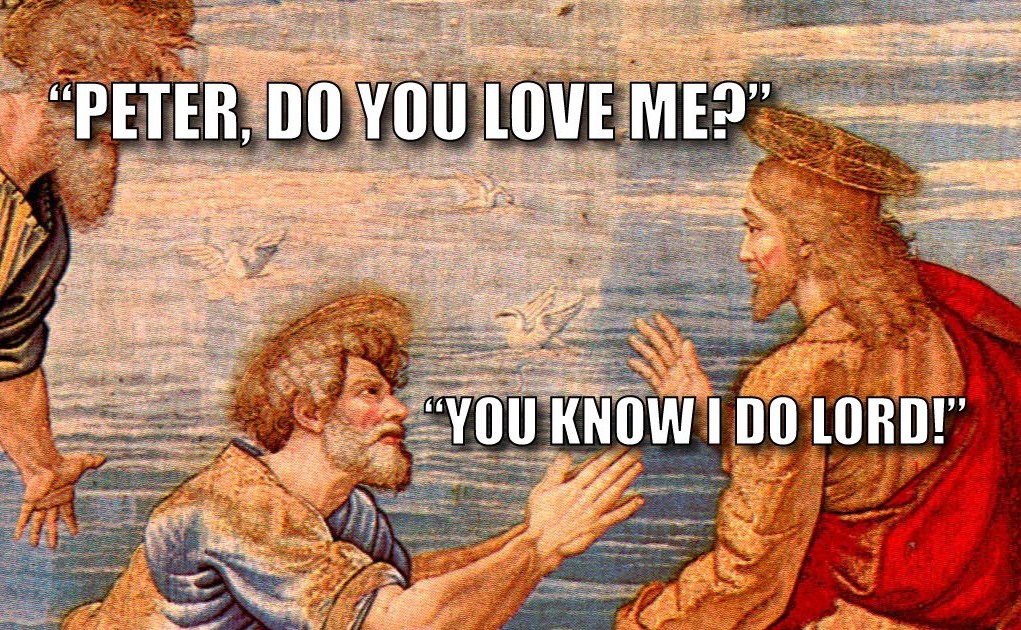
At that time, Jesus revealed himself again to his disciples at the Sea of Tiberias. He revealed himself in this way. Together were Simon Peter, Thomas called Didymus, Nathanael from Cana in Galilee, Zebedee’s sons, and two others of his disciples. Simon Peter said to them, “I am going fishing.” They said to him, “We also will come with you.” So they went out and got into the boat, but that night they caught nothing. When it was already dawn, Jesus was standing on the shore; but the disciples did not realize that it was Jesus. Jesus said to them, “Children, have you caught anything to eat?” They answered him, “No.” So he said to them, “Cast the net over the right side of the boat and you will find something.” So they cast it, and were not able to pull it in because of the number of fish. So the disciple whom Jesus loved said to Peter, “It is the Lord.” When Simon Peter heard that it was the Lord, he tucked in his garment, for he was lightly clad, and jumped into the sea. The other disciples came in the boat, for they were not far from shore, only about a hundred yards, dragging the net with the fish. When they climbed out on shore, they saw a charcoal fire with fish on it and bread. Jesus said to them, “Bring some of the fish you just caught.” So Simon Peter went over and dragged the net ashore full of one hundred fifty-three large fish. Even though there were so many, the net was not torn. Jesus said to them, “Come, have breakfast.” And none of the disciples dared to ask him, “Who are you?” because they realized it was the Lord. Jesus came over and took the bread and gave it to them, and in like manner the fish. This was now the third time Jesus was revealed to his disciples after being raised from the dead. When they had finished breakfast, Jesus said to Simon Peter, “Simon, son of John, do you love me more than these?” Simon Peter answered him, “Yes, Lord, you know that I love you.” Jesus said to him, “Feed my lambs.” He then said to Simon Peter a second time, “Simon, son of John, do you love me?” Simon Peter answered him, “Yes, Lord, you know that I love you.” Jesus said to him, “Tend my sheep.” Jesus said to him the third time, “Simon, son of John, do you love me?” Peter was distressed that Jesus had said to him a third time, “Do you love me?” and he said to him, “Lord, you know everything; you know that I love you.” Jesus said to him, “Feed my sheep. Amen, amen, I say to you, when you were younger, you used to dress yourself and go where you wanted; but when you grow old, you will stretch out your hands, and someone else will dress you and lead you where you do not want to go.” He said this signifying by what kind of death he would glorify God. And when he had said this, he said to him, “Follow me.”

Evanġelju               Qari skont San Ġwann 21:1-19

F’dak iż-żmien, Ġesù raġa’ deher lid-dixxipli ħdejn il-baħar ta’ Tiberija. Dehrilhom hekk: Xmun Pietru, Tumas, li jgħidulu t-Tewmi, Natanjel minn Kana tal-Galilija, ulied Żebedew u tnejn oħra mid-dixxipli tiegħu kienu flimkien. Xmun Pietru qalilhom: “Sejjer nistad”. Qalulu: “Ħa niġu miegħek aħna wkoll”. Marru, rikbu d-dgħajsa, u dak il-lejl ma qabdu xejn. Filgħodu mas-sebħ, Ġesù kien qiegħed ix-xatt, imma d-dixxipli ma kinux jafu li kien Ġesù. Ġesù qalilhom: “Għandkom x’tieklu, ħbieb?”. “Le”, weġbuh. Qalilhom: “Waddbu x-xibka n-naħa tal-lemin tad-dgħajsa u ssibu”. Dawn waddbu x-xibka, u mbagħad ma felħux jiġbduha daqskemm qabdu ħut! Id-dixxiplu li kien iħobb Ġesù qal lil Pietru: “Il-Mulej dan!”. Għalhekk Xmun Pietru, kif sama’ li kien il-Mulej, xeħet fuqu l-libsa ta’ fuq, għax kien għoddu għeri, u ntafa’ l-baħar. Id-dixxipli l-oħra, billi ma kinux imbiegħda wisq mill-art, imma xi mitejn driegħ biss, resqu bid-dgħajsa jkaxkru warajhom ix-xibka bil-ħut. Kif niżlu l-art, raw li kien hemm xi faħam jaqbad, bil-ħut fuqu, u xi ftit ħobż. Qalilhom Ġesù: “Newlu ’l hawn xi ħutiet minn dawk li għadkom kemm qbadtu”. Xmun Pietru tala’ fid-dgħajsa u ġibed l-art ix-xibka mimlija b’mija u tlieta u ħamsin ħuta kbira; u minkejja daqshekk ħut, ix-xibka ma nqasmitx. Qalilhom Ġesù: “Ejjew, kulu”. Imma ħadd mid-dixxipli ma ssogra jistaqsih: “Int min int?”, għax kienu jafu li kien il-Mulej. Ġesù resaq, qabad il-ħobż u newwilhulhom; u hekk ukoll għamel bil-ħut. Din kienet ġa t-tielet darba li Ġesù deher lid-dixxipli wara l-qawmien tiegħu mill-imwiet. Wara li kielu xi ħaġa, Ġesù qal lil Xmun Pietru: “Xmun bin Ġwanni, tħobbni int aktar minn dawn?”. Wieġbu: “Iva, Mulej, int taf li nħobbok”. Qallu: “Irgħa l-ħrief tiegħi”. Staqsieh għat-tieni darba: “Xmun bin Ġwanni, tħobbni int?”. Wieġbu: “Iva, Mulej, int taf li nħobbok”. Qallu: “Irgħa n-nagħaġ tiegħi”. Għat-tielet darba staqsieh: “Xmun bin Ġwanni, tħobbni?”. Pietru ħass għafsa ta’ qalb għax staqsieh għat-tielet darba: “Tħobbni?”, u qallu: “Mulej, int taf kollox, inti taf li nħobbok”. Qallu Ġesù: “Irgħa n-nagħaġ tiegħi. Tassew tassew ngħidlek, meta kont żagħżugħ, kont titħażżem waħdek u tmur fejn trid; imma meta tixjieħ, int tiftaħ idejk u ħaddieħor iħażżmek u jieħdok fejn ma tkunx trid!”. Dan qalu biex ifisser b’liema mewta kien sejjer jagħti glorja lil Alla. Imbagħad Ġesù ssokta jgħidlu: “Ejja warajja”. Il-Kelma tal-Mulej.

///////////////////////////////////////////////

Eight-minute  Gospel reflection by Fr Antony Kadavil   

HOW THE HOLY SPIRIT TRANSFORMS US

Introduction:


Sunday’s Gospel narrative shows us the rehabilitation of Peter, who denied Jesus three times in the courtyard of Caiaphas, repented, and then received Primacy in the Church from Jesus. The Gospel also shows us God in search of man, even when man tries to evade Him.

Scripture lessons:

The first reading, taken from the Acts of the Apostles, tells us how the Holy Spirit transformed Peter, whom Jesus had appointed head of his Church, from a man fearful of powerful men into a brave witness to the Resurrection. Peter stands before the Jewish Supreme Court – the Sanhedrin — boldly announcing that he and the others must obey God rather than men.

The second reading, taken from Revelation (the Apocalypse), presents John’s vision of the Risen Lord as the glorified “Lamb of God,” enthroned in Heaven. The whole of Revelation is an expression of Christian hope in the Risen Lord. 

Sunday’s Gospel tells the post-Resurrection story of our merciful Saviour Who goes in search of His band of disappointed and dejected disciples. The incident proves that Jesus’ post-Resurrection appearances were not mere hallucinations. In the first part of today’s Gospel, the risen Jesus appears to His disciples and gives them a symbol of their mission in a miraculous catch of fish followed by a grilled fish breakfast prepared by Jesus himself. 

The second part is a dialogue between Jesus and Simon where Simon is asked three times whether he loves Jesus, and he answers that he does, as if in reparation for his triple denial of Jesus. The two metaphors used in the story, namely fishing and shepherding, are the duties of the Church in her missionary work. Peter, as a forgiven sinner, is chosen for the quality of his love to serve as leader in a community of brothers and sisters. As his primary mission, Peter is given the care of the vulnerable lambs and sheep, and he is told that fidelity to this mission will lead him to martyrdom.

Life messages:


We need to open our eyes, ears and hearts wide to see, hear, and experience the Risen Lord coming into our lives in various forms, circumstances, and events: 

1) The Risen Lord blesses us with success and achievements. We often fail to acknowledge the presence of the Risen Lord behind our unexpected successes, great achievements, promotions at work, miraculous healings, and success in relationships. He is right there in our parties, celebrations, and occasions of rejoicing.

 2) The Risen Lord is present in our pains and suffering: Acts 9:1-13 tells us how the Risen Lord transformed the life of Saul by pushing him down onto the Damascus Road and making him temporarily blind. The same Jesus often visits us in the form of accidents, illnesses, the loss of dear ones, pain, suffering, and problems in relationships. 

3) The Risen Lord visits us through our friends and well-wishers: He is present in those who visit us and encourage us in our sad and desperate moments. The Risen Lord visits us in the form of unexpected help from the least expected persons in our dire needs.

4) The Risen Lord is present in our Christian worship: He is present on our altars during the Holy Mass to share His life with us; He is present in the words of Holy Scripture; He is there in the Sacraments, and He is there where two or three are gathered in his name (Mt 18: 20).

//////////////////////////////////////     http://frtonyshomilies.com

Friday, 22 April 2022

BLESSED ARE THOSE WHO BELIEVE AND HAVE NOT SEEN.

Readings for Sunday, April 24th, 2022

 
 Second Sunday of Easter (Sunday of Divine Mercy)
Lectionary: 45

 It-Tieni Ħadd tal-Għid (il-Ħadd tal-Ħniena Divina)


Reading 1               ACTS OF THE APOSTLES 5:12-16


Many signs and wonders were done among the people at the hands of the apostles. They were all together in Solomon’s portico. None of the others dared to join them, but the people esteemed them. Yet more than ever, believers in the Lord, great numbers of men and women, were added to them. Thus they even carried the sick out into the streets and laid them on cots and mats so that when Peter came by, at least his shadow might fall on one or another of them. A large number of people from the towns in the vicinity of Jerusalem also gathered, bringing the sick and those disturbed by unclean spirits, and they were all cured.

Qari 1                mill-Ktieb tal-Atti tal-Appostli 5:12-16

Bis-saħħa tal-appostli kienu jsiru ħafna sinjali u mirakli fost il-poplu. U huma lkoll qalb waħda kienu jinġabru flimkien fil-portiku ta’ Salamun, u ħadd mill-oħrajn ma kien jissogra jissieħeb magħhom; imma kulħadd kien ifaħħarhom ħafna. L-għadd ta’ dawk li kienu jemmnu fil-Mulej, kemm irġiel kemm nisa, kien dejjem jiżdied u joktor, hekk li kienu wkoll iġorru l-morda tagħhom fuq sodod u mtieraħ u jqegħduhom fil-pjazez biex, xħin jgħaddi Pietru, jaqa’ mqar id-dell tiegħu fuq xi ħadd minnhom. In-nies kienu jiġu mill-ibliet ta’ madwar Ġerusalemm, iġorru l-morda u lil dawk li kienu maħkuma mill-ispirti mniġġsa; u lkoll kienu jitfejqu. Il-Kelma tal-Mulej.


Responsorial Psalm               PSALM 118:2-4, 13-15, 22-24

Let the house of Israel say,
“His mercy endures forever.”
Let the house of Aaron say,
“His mercy endures forever.”
Let those who fear the LORD say,
“His mercy endures forever.”
R  Give thanks to the Lord for he is good, his love is everlasting.
or:  Alleluia.


I was hard pressed and was falling,
but the LORD helped me.
My strength and my courage is the LORD,
and he has been my savior.
The joyful shout of victory
in the tents of the just:
R  Give thanks to the Lord for he is good, his love is everlasting.
or:  Alleluia.

The stone which the builders rejected
has become the cornerstone.
By the LORD has this been done;
it is wonderful in our eyes.
This is the day the LORD has made;
let us be glad and rejoice in it.
R  Give thanks to the Lord for he is good, his love is everlasting.
or:  Alleluia.


Salm Responsorjali               Salm 117(118):2-4,22-24,25-27a

R/: Faħħru ’l Mulej, għaliex hu tajjeb!
jew  Hallelujah, Hallelujah, Hallelujah.

Ħa jgħidu wlied Iżrael:
“Għal dejjem it-tjieba tiegħu”.
Ħa tgħid dar Aron:
“Għal dejjem it-tjieba tiegħu”.
Ħa jgħidu dawk li jibżgħu mill-Mulej:
“Għal dejjem it-tjieba tiegħu”. R/.

Il-ġebla li warrbu l-bennejja
saret il-ġebla tax-xewka.
Bis-saħħa tal-Mulej seħħ dan:
ħaġa tal-għaġeb f’għajnejna.
Dan hu l-jum li għamel il-Mulej;
ħa nifirħu u nithennew fih! R/.

Ejja, nitolbuk, Mulej, salvana!
Ejja, nitolbuk, Mulej, agħtina r-riżq!
Imbierek minn ġej f’isem il-Mulej!
Inberkukom minn dar il-Mulej.
Jaħweh hu Alla; hu d-dawl tagħna. R/.


Reading 2               REVELATIONS 1:9-11a, 12-13, 17-19

I, John, your brother, who share with you the distress, the kingdom, and the endurance we have in Jesus, found myself on the island called Patmos because I proclaimed God’s word and gave testimony to Jesus. I was caught up in spirit on the Lord’s day and heard behind me a voice as loud as a trumpet, which said, “Write on a scroll what you see.” Then I turned to see whose voice it was that spoke to me, and when I turned, I saw seven gold lampstands and in the midst of the lampstands one like a son of man, wearing an ankle-length robe, with a gold sash around his chest. When I caught sight of him, I fell down at his feet as though dead. He touched me with his right hand and said, “Do not be afraid. I am the first and the last, the one who lives. Once I was dead, but now I am alive forever and ever. I hold the keys to death and the netherworld. Write down, therefore, what you have seen, and what is happening, and what will happen afterwards.”

Qari 2                mill-Ktieb tal-Apokalissi 1:9-11a,12-13,17-19

Jiena, Ġwanni, ħukom u sieħeb tagħkom fit-taħbit u fis-saltna u fis-sabar ma’ Ġesù, jien sibt ruħi fil-gżira jisimha Patmos minħabba l-Kelma ta’ Alla u x-xhieda ta’ Ġesù. Darba, f’jum il-Mulej, ħassejtni merfugħ fl-Ispirtu, u minn warajja smajt leħen qawwi, bħal ta’ tromba, jgħidli: “Kulma tara niżżlu fi ktieb u ibagħtu lis-seba’ knejjes”. U jiena dort biex nara min kien qiegħed ikellimni; u, kif dort, rajt seba’ kandelabri tad-deheb, u f’nofs il-kandelabri kien hemm wieħed qisu Iben ta’ bniedem, liebes libsa twila sa wiċċ saqajh, b’sidru mħażżem bi ħżiem tad-deheb. Jien, kif rajtu, waqajt qisni mejjet f’riġlejh. Iżda hu ressaq idu l-leminija fuqi u qalli: “Tibżax! Jien hu l-Ewwel u l-Aħħar, jiena l-Ħaj; jien kont mejjet, u ara, jien issa ħaj għal dejjem ta’ dejjem, u għandi jinsabu l-imfietaħ tal-Mewt u ta’ Post il-Mejtin. Ikteb kulma tara, kemm il-ħwejjeġ li hawn issa u kemm dawk li se jiġru ’l quddiem”. Il-Kelma tal-Mulej.


Gospel               JOHN 20:19-31

On the evening of that first day of the week, when the doors were locked, where the disciples were, for fear of the Jews, Jesus came and stood in their midst and said to them, “Peace be with you.” When he had said this, he showed them his hands and his side. The disciples rejoiced when they saw the Lord. Jesus said to them again, “Peace be with you. As the Father has sent me, so I send you.” And when he had said this, he breathed on them and said to them, “Receive the Holy Spirit. Whose sins you forgive are forgiven them, and whose sins you retain are retained.” Thomas, called Didymus, one of the Twelve, was not with them when Jesus came. So the other disciples said to him, “We have seen the Lord.” But he said to them, “Unless I see the mark of the nails in his hands and put my finger into the nailmarks and put my hand into his side, I will not believe.” Now a week later his disciples were again inside and Thomas was with them. Jesus came, although the doors were locked, and stood in their midst and said, “Peace be with you.” Then he said to Thomas, “Put your finger here and see my hands, and bring your hand and put it into my side, and do not be unbelieving, but believe.” Thomas answered and said to him, “My Lord and my God!” Jesus said to him, “Have you come to believe because you have seen me? Blessed are those who have not seen and have believed.” Now Jesus did many other signs in the presence of his disciples that are not written in this book. But these are written that you may come to believe that Jesus is the Christ, the Son of God, and that through this belief you may have life in his name.

Evanġelju               Qari skont San Ġwann 20:19-31

Dakinhar filgħaxija, fl-ewwel jum tal-ġimgħa, meta d-dixxipli kienu flimkien imbeżżgħa mil-Lhud, bil-bibien magħluqa, ġie Ġesù u qagħad f’nofshom; u qalilhom: “Is-sliem għalikom!”. Kif qal hekk, uriehom idejh u ġenbu. Id-dixxipli ferħu meta raw lill-Mulej. Imbagħad Ġesù tenna jgħidilhom: “Is-sliem għalikom! Kif il-Missier bagħat lili, hekk jien nibgħat lilkom”. Kif qal hekk, nefaħ fuqhom u qalilhom: “Ħudu l-Ispirtu s-Santu. Dawk li taħfrulhom dnubiethom ikunu maħfura, u dawk li żżommuhomlhom ikunu miżmuma”.  Tumas, wieħed mit-Tnax, jgħidulu t-Tewmi, ma kienx magħhom meta ġie Ġesù. Għalhekk id-dixxipli l-oħra qalulu: “Rajna lill-Mulej”. Iżda hu qalilhom: “Jekk ma narax f’idejh il-marka tal-imsiemer u ma nqigħedx sebgħi fuq il-marka tal-imsiemer u idi fuq ġenbu, jien ma nemminx”. Tmint ijiem wara, id-dixxipli reġgħu kienu ġewwa, u Tumas magħhom. Il-bibien kienu magħluqa, imma Ġesù daħal, qagħad f’nofshom, u qalilhom: “Is-sliem għalikom!”.  Imbagħad qal lil Tumas: “Ġib sebgħek hawn u ara jdejja, u ressaq idek u qegħedha fuq ġenbi; tkunx bniedem bla fidi, iżda emmen”. Wieġeb Tumas u qallu: “Mulej tiegħi u Alla tiegħi!”. Qallu Ġesù: “Emmint għax rajtni! Henjin dawk li ma rawx u emmnu”. Hemm ħafna sinjali oħra li Ġesù għamel quddiem id-dixxipli tiegħu u li mhumiex imniżżla f’dan il-ktieb. Iżda dawn inkitbu sabiex intom temmnu li Ġesù hu l-Messija l-Iben ta’ Alla, u biex bit-twemmin tagħkom ikollkom il-ħajja f’ismu. Il-Kelma tal-Mulej.


///////////////////////////////////////////////

Eight-minute  Gospel reflection by Fr Antony Kadavil   

FAITH, FORGIVENESS and the FATHER

Introduction:


The readings for this Sunday are about God’s mercy, the necessity for trusting Faith, and our need for the forgiveness of our sins. The opening prayer addresses the Father as “God of everlasting Mercy.” In the Responsorial Psalm (Ps 118), we repeat several times, “His mercy endures forever!” God revealed His mercy, first and foremost, in sending His only begotten Son to become our Savior and Lord through His suffering, death, and Resurrection. Divine Mercy is given to us also in each celebration of the Sacraments (all instituted to sanctify us) , especially that of Reconciliation.

Scripture lessons summarized:

The first reading, taken from the Acts of the Apostles, explains how the Risen Lord continued to show His Divine Mercy to the sick through the healing and preaching ministry of the apostles in the early Church. The Faith of the apostles enabled them to minister to the people, giving them the Lord’s healing love in “signs and wonders.”

The second reading, taken from the Book of Revelation (given by Jesus to the Apostle John in exile on Patmos), was intended to comfort and bolster the Faith of persecuted Christians for all time. Sunday’s selection assures us of the presence of the merciful Lord in our lives and encourages all of us to fight fear with Faith, and trepidation about the future with trust and Hope.

Today’s Gospel recalls Jesus’ institution of the Sacrament of Reconciliation, a Sacrament of Divine Mercy. The Risen Lord gave his apostles and their successors the power to forgive sins with the words, “Whose sins you forgive are forgiven them, and whose sins you retain are retained” (Jn 20:19-23). Presenting the doubting Thomas’ famous profession of Faith, “My Lord and my God,” the Gospel illustrates how Jesus showed his mercy to the doubting apostle and emphasizes the importance of Faith.

Life messages:

1) We need to accept God’s invitation to celebrate and practice mercy in our Christian lives: One way the Church celebrates God’s mercy throughout the year is through the Sacrament of Reconciliation. Finding time for Adoration of the Blessed Sacrament is another good way to receive and give thanks for Divine Mercy. But it is mainly through the corporal and spiritual works of mercy that we practice mercy in our daily lives and become eligible for God’s merciful judgment.

2) Let us ask God for the Faith that culminates in self-surrender to God and that leads us to serve those we encounter with love. Living Faith enables us to see the risen Lord in everyone and gives us the willingness to render to each our loving service. 

The Fathers of the Church prescribe the following traditional means to grow in the living and dynamic faith of St. Thomas the Apostle: 

a) First, we must come to know Jesus personally and intimately by our daily and meditative reading of the Bible. 

b) Next, we must strengthen our Faith through our personal and community prayer. 

c) Third, we must share in the Divine Life of Jesus by frequenting the Sacraments of Reconciliation and receiving the Holy Eucharist. St. Teresa of Calcutta (Mother Teresa) presents it this way: “If we pray, we will believe; if we believe, we will love; if we love, we will serve. Only then we put our love of God into action.”

//////////////////////////////////////     http://frtonyshomilies.com


Saturday, 16 April 2022

HE IS RISEN! ALLELUIA!

Readings for Sunday, April 17h, 2022


Easter Sunday The Resurrection of the Lord
Lectionary: 42

 L-Għid il-Kbir tal-Qawmien tal-Mulej mill-Imwiet
Solennità - Quddiesa tal-Jum


Reading 1                ACTS 10:34a, 37-43

Peter proceeded to speak and said: “You know what has happened all over Judea, beginning in Galilee after the baptism that John preached, how God anointed Jesus of Nazareth with the Holy Spirit and power. He went about doing good and healing all those oppressed by the devil, for God was with him. We are witnesses of all that he did both in the country of the Jews and in Jerusalem. They put him to death by hanging him on a tree. This man God raised on the third day and granted that he be visible, not to all the people, but to us, the witnesses chosen by God in advance, who ate and drank with him after he rose from the dead. He commissioned us to preach to the people and testify that he is the one appointed by God as judge of the living and the dead. To him all the prophets bear witness, that everyone who believes in him will receive forgiveness of sins through his name.”

Qari 1                mill-Ktieb tal-Atti tal-Appostli  10, 34a.37-43

F’dak iż-żmien, Pietru qabad jitkellem u qal: “Intom tafu b’dak li ġara mal-Lhudija kollha, ibda mill-Galilija, wara li Ġwanni kien xandar il-magħmudija; tafu kif Alla kkonsagra lil Ġesù ta’ Nazaret bl-Ispirtu s-Santu u bil-qawwa, u kif dan Ġesù għadda jagħmel il-ġid u jfejjaq lil dawk kollha li kienu maħkuma mix-xitan, għax Alla kien miegħu. U aħna xhud ta’ dak kollu li hu għamel fl-art tal-Lhudija u f’Ġerusalemm. Tawh il-mewt billi dendluh mal-għuda tas-salib; imma Alla qajmu mill-imwiet fit-tielet jum u għamel li hu jidher, mhux lil kulħadd, imma lix-xhieda li Alla għażel minn qabel, lilna, li miegħu kilna u xrobna wara l-qawmien tiegħu mill-imwiet. Lilna ordnalna biex inxandruh lill-poplu u nixhdu li dan hu dak li Alla għamlu mħallef tal-ħajjin u tal-mejtin. Il-profeti kollha jixhdu għalih u jgħidu li kull min jemmen fih jaqla’ l-maħfra tad-dnubiet bis-saħħa ta’ ismu”.  Il-Kelma tal-Mulej


Responsorial Psalm               PSALM 118:1-2, 16-17, 22-23.


Give thanks to the LORD, for he is good,
 for his mercy endures forever.
Let the house of Israel say,
“His mercy endures forever.”
R  This is the day the Lord has made; let us rejoice and be glad. or:   R  Alleluia.

“The right hand of the LORD has struck with power;
 the right hand of the LORD is exalted.
I shall not die, but live,
 and declare the works of the LORD.”
R  This is the day the Lord has made; let us rejoice and be glad.  or: R  Alleluia.

The stone which the builders rejected
has become the cornerstone.
By the LORD has this been done;
It is wonderful in our eyes.
R  This is the day the Lord has made; let us rejoice and be glad. or:    R  Alleluia.

Salm Responsorjali               Salm 117 (118), 1-2.16ab-17. 22-23

R/. (24): Dan hu l-jum li għamel il-Mulej; ħa nifirħu u nithennew fih. Hallelujah

Faħħru lill-Mulej, għaliex hu tajjeb,
għax għal dejjem it-tjieba tiegħu!
Ħa jgħidu wlied Iżrael:
“Għal dejjem it-tjieba tiegħu”. R/.

Il-leminija tal-Mulej ’il fuq merfugħa,
il-leminija tal-Mulej għamlet ħwejjeġ ta’ ħila!
Ma mmutx, imma nibqa’ ngħix,
u nħabbar l-għemejjel tal-Mulej. R/.

Il-ġebla li warrbu l-bennejja
saret il-ġebla tax-xewka.
Bis-saħħa tal-Mulej seħħ dan:
ħaġa tal-għaġeb f’għajnejna. R/.

Reading 2               COLOSSIANS 3:1-4
Brothers and sisters:  If then you were raised with Christ, seek what is above, where Christ is seated at the right hand of God. Think of what is above, not of what is on earth. For you have died, and your life is hidden with Christ in God. When Christ your life appears, then you too will appear with him in glory.

Or:               1 CORINTHIANS 5:6b-8
Brothers and sisters: Do you not know that a little yeast leavens all the dough? Clear out the old yeast, so that you may become a fresh batch of dough, inasmuch as you are unleavened. For our paschal lamb, Christ, has been sacrificed. Therefore, let us celebrate the feast, not with the old yeast, the yeast of malice and wickedness, but with the unleavened bread of sincerity and truth.

QARI 2               mill-Ittra lill-Kolossin 3, 1-4

Ħuti, jekk intom irxuxtajtu ma’ Kristu, fittxu l-ħwejjeġ tas-sema, fejn Kristu qiegħed fuq il-lemin ta’ Alla. Aħsbu fil-ħwejjeġ tas-sema, mhux f’dawk tal-art. Għax intom mittu, imma ħajjitkom hi moħbija flimkien ma’ Kristu f’Alla. Meta jidher Kristu, li hu l-ħajja tagħkom, imbagħad intom ukoll tidhru flimkien miegħu fil-glorja.

Jew :                   mill-Ewwel Ittra lill-Korintin 5, 6b-8
Ħuti, ma tafux li ftit ħmira ttalla’ l-għaġna kollha? Tnaddfu mill-ħmira l-qadima ħalli tkunu għaġna ġdida, kif intom bla ħmira. Il-Ħaruf tal-Għid tagħna, li hu Kristu, hu maqtul! Nagħmlu festa, mhux bil-ħmira l-qadima, anqas bil-ħmira tal-qerq u tal-ħażen, imma bil-ħobż bla ħmira tas-safa u tas-sewwa.
Il-Kelma tal-Mulej


Sequence    (Victimae paschali laudes)

Christians, to the Paschal Victim
Offer your thankful praises!
A Lamb the sheep redeems;
Christ, who only is sinless,Reconciles sinners to the Father.
Death and life have contended in that combat stupendous:
The Prince of life, who died, reigns immortal.

Speak, Mary, declaring
 What you saw, wayfaring.
“The tomb of Christ, who is living,
The glory of Jesus’ resurrection;
bright angels attesting,
The shroud and napkin resting.
Yes, Christ my hope is arisen;
to Galilee he goes before you.”
Christ indeed from death is risen, our new life obtaining.
Have mercy, victor King, ever reigning!

Sekwenza

Ħa jgħollu l-insara b’tifħirhom
il-Vittma tal-Għid:
għax feda l-Ħaruf in-nagħaġ tiegħu
mill-jasar tal-mewt;
Ġesù raġa’ ħabbeb il-midneb
ma’ Alla l-Missier.
F’taqbida tal-għaġeb mal-Ħajja
inqerdet il-Mewt;
u qam Sid il-ħajja mill-qabar,
isaltan rebbieħ.

“Għidilna, Marija, ħabbrilna:
fit-triq lil min rajt?”
“Jien rajt qabar Kristu li rxoxta
fis-sebħ tal-qawmien;
rajt l-Anġli li ġew jagħtu xhieda,
il-faxxa, il-liżar.
Irxoxta mill-mewt Kristu Sidi,
li fih ittamajt!
Mar hu l-Galilija qabilkom:
hemmhekk se tarawh”.          


Gospel            JOHN 20:1-9

On the first day of the week, Mary of Magdala came to the tomb early in the morning, while it was still dark, and saw the stone removed from the tomb. So she ran and went to Simon Peter and to the other disciple whom Jesus loved, and told them, “They have taken the Lord from the tomb, and we don’t know where they put him.” So Peter and the other disciple went out and came to the tomb. They both ran, but the other disciple ran faster than Peter and arrived at the tomb first; he bent down and saw the burial cloths there, but did not go in. When Simon Peter arrived after him, he went into the tomb and saw the burial cloths there, and the cloth that had covered his head, not with the burial cloths but rolled up in a separate place. Then the other disciple also went in, the one who had arrived at the tomb first, and he saw and believed. For they did not yet understand the Scripture that he had to rise from the dead.

EVANGELJU              Qari skont San Ġwann 20, 1-9

Kien l-ewwel jum tal-ġimgħa, filgħodu kmieni kif kien għadu d-dlam, u Marija ta’ Magdala ġiet ħdejn il-qabar u rat il-blata mneħħija mill-qabar. Għalhekk telqet tiġri għand Xmun Pietru u għand id-dixxiplu l-ieħor li kien iħobb Ġesù, u qaltilhom: “Qalgħu lill-Mulej mill-qabar, u ma nafux fejn qegħduh!”. Pietru u d-dixxiplu l-ieħor ħarġu u ġew ħdejn il-qabar. It-tnejn ġrew flimkien, imma d-dixxiplu l-ieħor ħaffef aktar minn Pietru u laħaq qablu ħdejn il-qabar. Tbaxxa, u ra l-faxex tal-għażel imqiegħda hemm, iżda ma daħalx. Imbagħad wasal warajh Xmun Pietru, daħal fil-qabar, u ra l-faxex tal-għażel imqiegħda hemm, u l-maktur li kien madwar rasu; dan ma kienx mal-faxex, imma mitwi u mqiegħed f’post għalih. Imbagħad id-dixxiplu l-ieħor, li kien wasal l-ewwel ħdejn il-qabar, daħal hu wkoll, ra, u emmen. Sa dakinhar kienu għadhom ma fehmux l-Iskrittura li tgħid li kellu jqum mill-imwiet. Il-Kelma tal-Mulej


///////////////////////////////////////////////

Eight-minute  Gospel reflection by Fr Antony Kadavil   


THE REAL SIGNIFICANCE OF EASTER


“Easter” literally means “the feast of fresh flowers.” Easter is the greatest and the most important feast in the Church for four reasons:

1) The Resurrection of Christ is the basis of our Christian Faith. It is the greatest of the miracles, for it proves that Jesus is God. That is why St. Paul writes: “If Christ has not been raised, then our preaching is in vain; and your Faith is in vain” (I Cor 15:14). “Jesus is Lord, He is risen” (Rom 10:9), was the central theme of the kerygma (or “preaching”), of the Apostles

2) Easter is the guarantee of our own resurrection. Jesus assured Martha at the tomb of Lazarus: “I am the resurrection and the life; whoever believes in me will live even though he dies…” (Jn 11:25-26).

3) Easter is a feast which gives us hope and encouragement in this world of pain, sorrows and tears. It reminds us that life is worth living. It also gives us strength to fight against temptations and freedom from unnecessary worries and fears.

4) Easter gives meaning to our prayers: It supports our belief in the Real Presence of the Risen Jesus in and around us, in His Church, in the Blessed Sacrament and in Heaven, hearing our prayers, and so gives meaning to our personal as well as our communal prayers. (An anecdote may be added here)

Reasons why we believe in the Resurrection of Jesus:

(1) Jesus himself testified to his Resurrection from the dead, giving it as a sign of his divinity. (Mark 8:31; Matthew 17:22; Luke 9:22). "Tear down this temple and in three days I will build it again”(Jn 2: 19).

(2) The tomb was empty on Easter Sunday (Luke 24:3). Although the guards claimed (Matthew 28:13), that the disciples of Jesus had stolen the body, every sensible Jew knew that it was impossible for the terrified disciples of Jesus to steal the body of Jesus from a tomb guarded by an armed, 16-member Roman Guard detachment.

(3) The initial disbelief of Jesus’ own disciples in Jesus’ Resurrection, in spite of His repeated apparitions, serves as a strong proof of his Resurrection. Their initial disbelief explains why the Apostles started preaching the Risen Christ only after receiving the anointing of the Holy Spirit on the day of Pentecost.

(4) The transformation of Jesus’ disciples: Jesus’ Resurrection and the anointing of the Holy Spirit transformed men who were hopeless and fearful after the crucifixion (Luke 24:21, John 20:19), into men who now were confident and bold witnesses to the Resurrection (Acts 2:24, 3:15, 4:2)powerfully preaching the Risen Lord.

(5) Neither the Jews nor the Romans could disprove Jesus’ Resurrection by presenting the dead body of Jesus.

(6) The Apostles and early Christians would not have fearlessly preached Christ as Savior and faced martyrdom if they were not absolutely sure of Jesus’ Resurrection.

(7) The Apostle Paul’s conversion from a persecutor of Christians to a zealous preacher of Jesus supports the truth of Jesus’ Resurrection (Galatians 1:11-17, Acts 9:1, Acts 9:24-25, Acts 26:15-18).

(8) The sheer existence of a thriving, empire-conquering early Christian Church, bravely facing and surviving three centuries of persecution, supports the truth of the Resurrection claim.

(9) The New Testament witnesses do not bear the stamp of dupes or deceivers. The Apostles and the early Christians were absolutely sure about the Resurrection of Jesus.

Life Messages:

1) Let us live the lives of Resurrection people: We are not supposed to lie buried in the tomb of our sins, evil habits, dangerous addictions, despair, discouragement or doubts. Instead, we are expected to live a joyful and peaceful life, constantly experiencing the living presence of the Risen Lord Who loves us in all the events of our lives and amid the boredom, suffering, pain and tensions of our day-to-day life.

2) The conviction of the real presence of the Risen Lord with us and within us and all around us, enables us to lead disciplined Christian lives. It will help us to control our thoughts, desires, words, behavior and actions.

3)
This salutary awareness of the presence of the Risen Lord within us inspires us to honor our bodies, keeping them holy, pure and free from evil habits and addictions. Our conviction that the loving presence of the Risen Lord dwells in our neighbors and in all those we encounter, should encourage us to respect them and to render them loving, humble and selfless service.

4) We need to become transparent Christians, radiating the Risen Lord around us in the form of selfless and sacrificial agape love, mercy, compassion and a spirit of humble service. each time we try to practice Christian charity, mercy and forgiveness and each time we fight against temptations, we share in the Resurrection of Jesus. (L/22)

May the Risen Lord be a living experience to you, pervading every area of your life, blessing you, strengthening you, inspiring you, guiding you and supporting you

//////////////////////////////////////     http://frtonyshomilies.com