"Amen, amen, I say to you, unless a grain of wheat falls to the ground and dies, it remains just a grain of wheat; but if it dies, it produces much fruit. " (John 12)
Photo copyright : John R Portelli

Wednesday, 8 July 2020

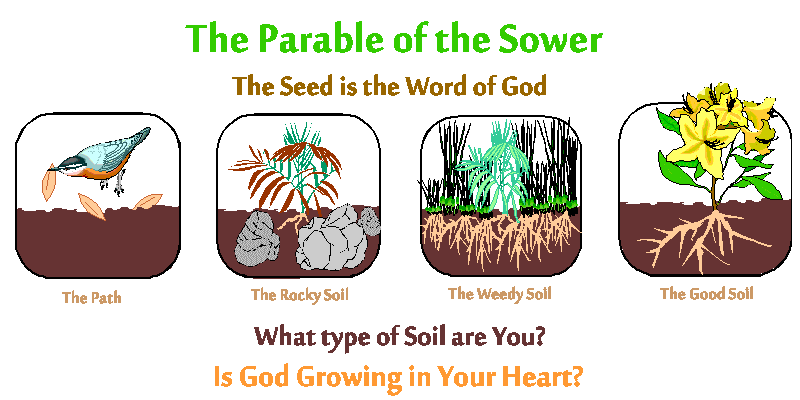
The seed is the word of God

« Sunday, July 12 » 

Fifteenth Sunday in Ordinary Time     Lectionary: 103 

Il-Ħmistax-il Ħadd taż-Żmien ta’ Matul is-Sena 


Reading 1        ISAIAH 55:10-11

Thus says the LORD: Just as from the heavens the rain and snow come down and do not return there till they have watered the earth, making it fertile and fruitful, giving seed to the one who sows and bread to the one who eats, so shall my word be that goes forth from my mouth; my word shall not return to me void, but shall do my will, achieving the end for which I sent it.

Qari I        mill-Ktieb tal-Profeta Isaija 55, 10-11

Dan jgħid il-Mulej: “Bħalma x-xita u s-silġ jinżlu mis-smewwiet, u ma jerġgħux lura mnejn ġew bla ma jsaqqu l-art, imma jġegħluha tnissel u tnibbet, u tagħti ż-żerriegħa lil min jiżra’ u l-ħobż lil min jiekol, hekk jiġri minn kelmti: hija toħroġ minn fommi, u ma terġax lura vojta, imma tagħmel dak li jogħġob lili, u ttemm dak li nkun bgħattha tagħmel”.  Il-Kelma tal-Mulej 

Responsorial Psalm      PSALM 65:10, 11, 12-13, 14

You have visited the land and watered it; greatly have you enriched it. God’s watercourses are filled; you have prepared the grain. R. The seed that falls on good ground will yield a fruitful harvest. 

Thus have you prepared the land: drenching its furrows, breaking up its clods, Softening it with showers, blessing its yield. R. The seed that falls on good ground will yield a fruitful harvest. 

You have crowned the year with your bounty, and your paths overflow with a rich harvest; The untilled meadows overflow with it, and rejoicing clothes the hills. R. The seed that falls on good ground will yield a fruitful harvest. 

The fields are garmented with flocks and the valleys blanketed with grain. They shout and sing for joy. R. The seed that falls on good ground will yield a fruitful harvest. 

Salm Responsorjali        Salm 64 (65), 10abcd.10e-11.12-13.14

R/. (ara Lq 8, 8): Iż-żerriegħa waqgħet f’art tajba, u għamlet il-frott 

Inti żżur l-art u ssaqqiha, u tagħniha bil-ġid tiegħek. Il-wied ta’ Alla mimli bl-ilma, il-qamħ tagħhom ħejjejtilhom. R/. 

Hekk int tħejjiha: issaqqi r-raddiet u twitti t-tub tagħha, bl-irxiex trattabha u tberkilha ż-żrieragħ. Fawwart is-sena bi tjubitek, triqatek bil-ġid joqtru. R/. 

Joqtru bin-nida l-mergħat tad-deżert, u bil-ferħ jitħażżmu l-għoljiet. Il-mergħat jimtlew bl-imrieħel, il-widien jinksew bil-qamħ; jgħajtu lkoll u jgħannu bil-ferħ! R/. 

Reading 2           ROMANS 8:18-23

Brothers and sisters: I consider that the sufferings of this present time are as nothing compared with the glory to be revealed for us. For creation awaits with eager expectation the revelation of the children of God; for creation was made subject to futility, not of its own accord but because of the one who subjected it, in hope that creation itself would be set free from slavery to corruption and share in the glorious freedom of the children of God. We know that all creation is groaning in labour pains even until now; and not only that, but we ourselves, who have the first fruits of the Spirit, we also groan within ourselves as we wait for adoption, the redemption of our bodies. 

Qari II          mill-Ittra lir-Rumani 8, 18-23

Ħuti, jiena għadni persważ li t-tbatijiet ta’ issa ma għandhom xejn x’jaqsmu mal-glorja li għad trid tidher fina. Il-ħlejjaq kollha qegħdin jistennew ħerqana r-rivelazzjoni ta’ wlied Alla; għax il-ħolqien jinsab taħt il-frugħa - mhux minn rajh, imma minħabba dak li xeħtu taħtha – bit-tama li l-ħlejjaq huma wkoll għad ikunu meħlusa mill-jasar tat-taħsir u jiksbu l-ħelsien tal-glorja ta’ wlied Alla. Aħna nafu li l-ħolqien kollu għadu s’issa jitniehed bl-uġigħ tal- ħlas; u mhux hu biss, imma wkoll aħna li għandna l-ewwel frott tal-Ispirtu, aħna wkoll nitniehdu fina nfusna waqt li nistennew l-adozzjoni ta’ wlied, il-fidwa ta’ ġisimna. Il-Kelma tal-Mulej 

Gospel        MATTHEW 13:1-23 OR 13:1-9

On that day, Jesus went out of the house and sat down by the sea. Such large crowds gathered around him that he got into a boat and sat down, and the whole crowd stood along the shore. And he spoke to them at length in parables, saying: “A sower went out to sow. And as he sowed, some seed fell on the path, and birds came and ate it up. Some fell on rocky ground, where it had little soil. It sprang up at once because the soil was not deep, and when the sun rose it was scorched, and it withered for lack of roots. Some seed fell among thorns, and the thorns grew up and choked it. But some seed fell on rich soil, and produced fruit, a hundred or sixty or thirtyfold. Whoever has ears ought to hear.” The disciples approached him and said, “Why do you speak to them in parables?” He said to them in reply, “Because knowledge of the mysteries of the kingdom of heaven has been granted to you, but to them it has not been granted. To anyone who has, more will be given and he will grow rich; from anyone who has not, even what he has will be taken away. This is why I speak to them in parables, because they look but do not see and hear but do not listen or understand. Isaiah’s prophecy is fulfilled in them, which says: You shall indeed hear but not understand, you shall indeed look but never see. Gross is the heart of this people, they will hardly hear with their ears, they have closed their eyes, lest they see with their eyes and hear with their ears and understand with their hearts and be converted, and I heal them. “But blessed are your eyes, because they see, and your ears, because they hear. Amen, I say to you, many prophets and righteous people longed to see what you see but did not see it, and to hear what you hear but did not hear it. “Hear then the parable of the sower. The seed sown on the path is the one who hears the word of the kingdom without understanding it, and the evil one comes and steals away what was sown in his heart. The seed sown on rocky ground is the one who hears the word and receives it at once with joy. But he has no root and lasts only for a time. When some tribulation or persecution comes because of the word, he immediately falls away. The seed sown among thorns is the one who hears the word, but then worldly anxiety and the lure of riches choke the word and it bears no fruit. But the seed sown on rich soil is the one who hears the word and understands it, who indeed bears fruit and yields a hundred or sixty or thirtyfold.” 

Evanġelju          Qari skond San Mattew 13, 1-23

Dakinhar Ġesù ħareġ mid-dar, mar f’xatt il-baħar u qagħad bilqiegħda hemm. U nġabru madwaru folol hekk kbar ta’ nies li kellu jitla’ fuq dgħajsa u jinżel bilqiegħda fiha; in-nies qagħdu lkoll wieqfa fuq ix-xatt, u hu beda jkellimhom fuq bosta ħwejjeġ bil-parabboli. U qalilhom: “Darba wieħed bidwi ħareġ jiżra’. Huwa u jiżra’, xi żerrigħat waqgħu mal-mogħdija, ġew l-għasafar u naqqruhom kollha. Oħrajn waqgħu f’art kollha blat, fejn ma kienx hemm wisq ħamrija, u malajr nibtu, għax il-ħamrija ma kinitx fonda; iżda mbagħad telgħet ix-xemx, u nħarqu u nixfu, għax ma kellhomx għeruq. Oħrajn waqgħu qalb ix-xewk, u x-xewk kiber magħhom u ħonoqhom. Imma oħrajn waqgħu f’art tajba, u għamlu l-frott, min mija, min sittin, u min tletin. Min għandu widnejn, ħa jisma!”. Resqu lejh id-dixxipli u staqsew: “Għaliex tkellimhom bil-parabboli?”. Hu weġibhom: “Għax lilkom ingħata li tagħrfu l-misteri tas-Saltna tas-Smewwiet, iżda lilhom dan ma kienx mogħti. Għax kull min għandu, jingħatalu, u jkollu żżejjed ukoll; iżda min ma għandux, jitteħidlu saħansitra dak li għandu. Jien għalhekk inkellimhom bil-parabboli; għax iħarsu kemm iħarsu ma jarawx, u jisimgħu kemm jisimgħu ma jifhmux. U hekk isseħħ fihom il-profezija ta’ Isaija li tgħid, “Tisimgħu kemm tisimgħu ma tifhmux, u tħarsu kemm tħarsu ma tarawx. Għax il-qalb ta’ dan il-poplu twebbset; kienu tqal biex jisimgħu b’widnejhom, u għalqu għajnejhom li ma jmorrux jaraw b’għajnejhom, u jisimgħu b’widnejhom u jifhmu b’moħħhom, u hekk ibiddlu ħajjithom u jiena nfejjaqhom”. Intom, iżda, henjin għajnejkom, għax qegħdin jaraw; henjin widnejkom, għax qegħdin jisimgħu. Tassew, ngħidilkom, li bosta profeti u nies ġusti xtaqu jaraw dak li qegħdin taraw intom u ma rawhx, u jisimgħu dak li qegħdin tisimgħu intom, u ma semgħuhx! Mela isimgħuha intom il-parabbola ta’ dak li ħareġ jiżra’. Kull min jisma’ l-kelma tas-Saltna u ma jifhimhiex, jersaq il-Ħażin u jisraqlu dak li jkun inżera’ f’qalbu: dan huwa dak li nżera’ mal-mogħdija. Dak li nżera’ f’art kollha blat huwa dak li jisma’ l-kelma u jilqagħha minnufih bil-ferħ; imma għeruq ma jkollux fih innifsu, u għalhekk ftit idum; imbagħad jiġi fuqu l-għawġ, jew isib min iħabbtu minħabba l-kelma, u malajr jitfixkel. Dak li nżera’ qalb ix-xewk huwa dak li jisma’ l-kelma iżda l-inkwiet żejjed għall-ħwejjeġ tad-dinja u l-ġibda għall-ġid tal-art joħonqulu l-kelma, li għalhekk ma tagħmilx frott. Dak imbagħad li nżera’ f’art tajba huwa dak li jisma’ l-kelma u jifhimha; u tassew hu jagħmel il-frott; dan jagħmel mija, dak sittin, u l-ieħor tletin”. Il-Kelma tal-Mulej 

/////////////////////////////////////

 A God of His Word

Gospel Commentary by Fr. Raniero Cantalamessa, OFMCap, Pontifical Household Preacher


The readings of this Sunday speaks of the word of God with two interlaced images: that of rain and of seed. 

In the first reading, Isaiah compares the word of God with rain that falls from heaven and does not return without watering and helping seeds to grow. In the Gospel, Jesus speaks of the word of God as a seed that falls on different terrains and produces fruit. The word of God is seed because it generates life and rain that nourishes life, which allows the seed to grow. 

When speaking of the word of God we often take for granted the most moving event of all, namely, that God speaks. The biblical God is a God who speaks!"

"Our God comes and will not be silent," says Psalm 50; God himself often repeats: "Listen, my people, I will speak" (Psalm 50:7). In this the Bible sees the clearest difference from the idols that "have mouths, but do not speak" (Psalm 115). 

What meaning should we give such an anthropomorphic expression as "God said to Adam," "thus speaks the Lord," "the Lord says," "oracle of the Lord," and others like them? Obviously it is a way of speaking that is different from the human, a speaking to the ears of the heart.  

God speaks the way he writes! "I will place my law within them," says the prophet Jeremiah (Jeremiah 31:33). He writes on the heart and he also makes his words resonate in the heart. He says so expressly himself through the prophet Hosea, speaking of Israel as an unfaithful bride: "So I will allure her; I will lead her into the desert and speak to her heart" (Hosea 2:16). 

God does not have a human mouth or breath; the prophet is his mouth, the Holy Spirit is his breath. "You will be my mouth," he himself says to his prophets. He also says "I will put my word on your lips." This is the meaning of the famous phrase "human beings moved by the Holy Spirit spoke under the influence of God" (2 Peter 1:21). The spiritual tradition of the Church has coined the expression "interior locutions" for this way of speaking addressed to the mind and heart.  

And yet, it is a speaking in the true sense of the term. The creature receives a message that can be translated into human words. So alive and real is God's speaking, that the prophet recalls with precision the place, day and time that a certain word "came" to him. So concrete is the word of God that it is said it "falls" upon Israel, as if it were a stone (Isaiah 9:7). Or, as if it were bread that is eaten with pleasure: "When I found your words, I devoured them; they became my joy and the happiness of my heart," (Jeremiah 15:16).  

No human voice comes to man with the depth with which the word of God comes to him. "Indeed, the word of God is living and effective, sharper than any two-edged sword, penetrating even between soul and spirit, joints and marrow, and able to discern reflections and thoughts of the heart" (Hebrews 4,12). At times God's speaking is a powerful thunder that "splinters the cedars of Lebanon" (Psalm 29), at other times it seems like the "tiny whispering sound" (1 Kings 19:12). It knows all the tones of human speech.

 This interior and spiritual nature of God's speaking changes radically the moment that "the word became flesh." With the coming of Christ, God also speaks with a human voice, which can be heard not only with the ears of the soul but also of the body. 

As we can see, the Bible attributes immense dignity to the word. Attempts have not been lacking to change the solemn affirmation with which John begins his Gospel: "In the beginning was the word." 

Goethe has his Faust say: "In the beginning, there was action," and it is interesting to see how the writer comes to this conclusion. 

"I cannot give 'the word' such high value," says Faust. "Perhaps I should understand it as 'hearing,' but can hearing be what acts and creates everything? Hence one should say: 'In the beginning force existed.' But no, a sudden illumination suggested the answer to me: 'In the beginning, action existed.'" 

However, these are unjustified attempts at correction. John's word or logos has all the meanings that Goethe assigns to the rest of the terms. As we see in the prologue, it is light, life and creative force. 

God created man "in his image" precisely because he created him capable of speaking, of communicating and of establishing relationships. He, who has in himself from eternity one word, has created man and gifted him with the word, in order to be, not only "image" but also "likeness" of God (Genesis 1:26). It is not enough for man to speak, but he must imitate God's speaking. The content and motor of God's speaking is love. 

From beginning to end, the Bible is no more than a message of the love of God for his creatures. The tones might change, from the angry to the tender, but the essence is always, and only, love. God has used the word to communicate life and truth, to instruct and console. This poses the question: What use do we make of the word? In his play "Closed Doors," Sartre has given us a striking image of what human communication can become when love is lacking. 

Three persons are introduced, in brief intervals, in a room. There are no windows. The light is at its brightest and there is no possibility to turn it off. There is suffocating heat, and there is only one seat for each one. The door, of course, is closed. The bell is there but does not ring. Who are these people?

 They are three dead persons, a man and two women, and the place they are in is hell. There are no mirrors, and they can only see themselves through the words of the others, which gives them the most horrible image of themselves, without any mercy, on the contrary, with irony and sarcasm. 

When, after a while, their souls became naked to one another and the faults of which they were ashamed have come into the light one by one and enjoyed by the others without mercy, one of the individuals says to the other two: "Remember, the brimstone, the flames, the tortures with fire. All are stupidities. There is no need of torments: Hell is the others." Abuse of the word can transform life into a hell. 
St. Paul gives Christians this golden rule in regard to words: "No foul language should come out of your mouths, but only such as is good for needed edification, that it may impart grace to those who hear" (Ephesians 4, 29). The good word is the one that chooses the positive side of an action and a person and that, even when it corrects, does not offend. A good word is one that gives hope. A bad word is every word said without love, to wound and humiliate one's neighbour. If a bad word comes out of the lips, it will be necessary to retract it. 

Not altogether correct are the verses of the Italian poet Metastasio: "Word that comes from within, is no longer worth retracting; The arrow cannot be stopped, when it has left the bow." 

A word that issues from the mouth can be retracted, or at least its negative effect can be limited, by asking for forgiveness. Hence, what a gift it can be for our fellow men and what an improvement for the quality of life in the heart of the family and of society!  ////////  [Translation by Joseph G. Trabbic] 

///////////////////////


Thursday, 2 July 2020

WHAT IS REVEALED FOR US...

« Sunday, July 5 » 

Fourteenth Sunday in Ordinary Time      Lectionary: 100

L-Erbatax-il Ħadd taż-Żmien ta’ Matul is-Sena


Reading 1         ZECHARIAH 9:9-10

Thus says the LORD: Rejoice heartily, O daughter Zion, shout for joy, O daughter Jerusalem! See, your king shall come to you; a just saviour is he, meek, and riding on an ass, on a colt, the foal of an ass. He shall banish the chariot from Ephraim, and the horse from Jerusalem; the warrior’s bow shall be banished, and he shall proclaim peace to the nations.  His dominion shall be from sea to sea, and from the River to the ends of the earth.

Qari I       mill-Ktieb tal-Profeta Żakkarija 9, 9-10

Dan jgħid il-Mulej: “Ifraħ kemm tiflaħ, bint Sijon, għajjat bil-ferħ, bint Ġerusalemm! Ara, is-sultan tiegħek ġej għandek; ġust u rebbieħ, umli u riekeb fuq ħmar, fuq felu ta’ ħmara. Hu jeqred il-karru minn Efrajm u ż-żiemel minn Ġerusalemm; jinqered il-qaws tal-gwerra. Hu jxandar il-paċi lill-ġnus, il-ħakma tiegħu tkun minn baħar sa baħar, u mix-xmara tal-Ewfrat sat-trufijiet”. Il-Kelma tal-Mulej 

Responsorial Psalm      PSALM 145:1-2, 8-9, 10-11, 13-14

I will extol you, O my God and King, and I will bless your name forever and ever.  Every day will I bless you, and I will praise your name forever and ever. R. I will praise your name for ever, my king and my God. 

The LORD is gracious and merciful, slow to anger and of great kindness. The LORD is good to all and compassionate toward all his works. R. I will praise your name for ever, my king and my God. 

Let all your works give you thanks, O LORD, and let your faithful ones bless you. Let them discourse of the glory of your kingdom and speak of your might. R. I will praise your name for ever, my king and my God. 

The LORD is faithful in all his words and holy in all his works. The LORD lifts up all who are falling and raises up all who are bowed down. R. I will praise your name for ever, my king and my God. 

Salm Responsorjali         Salm 144 (145), 1-2.8-9.10-11.13cd-14

R/. (1): Mulej, inbierek ismek għal dejjem 

Ħa nkabbrek, Alla tiegħi, sultan,  u nbierek ismek għal dejjem ta’ dejjem.  Kuljum irrid inbierkek,  u nfaħħar ismek għal dejjem ta’ dejjem. R/. 

Twajjeb u ħanin il-Mulej,     idum biex jagħdab u kollu tjieba.    Twajjeb ma’ kulħadd il-Mulej, tjubitu fuq kull ma għamel. R/. 

Kull ma għamilt iroddlok ħajr, Mulej;  iberkuk il-ħbieb tiegħek kollha.  Is-sebħ tas-saltna tiegħek ixandru,  fuq is-setgħa tiegħek jitkellmu. R/. 

Ta’ kelmtu l-Mulej fil-wegħdiet tiegħu kollha,   twajjeb f’dak kollu li għamel.   Iwieżen il-Mulej lil kull min se jaqa’, iqajjem lil kull min hu mitluq. R/. 

Reading 2       ROMANS 8:9, 11-13

Brothers and sisters: You are not in the flesh; on the contrary, you are in the spirit, if only the Spirit of God dwells in you. Whoever does not have the Spirit of Christ does not belong to him. If the Spirit of the one who raised Jesus from the dead dwells in you, the one who raised Christ from the dead will give life to your mortal bodies also, through his Spirit that dwells in you. Consequently, brothers and sisters, we are not debtors to the flesh, to live according to the flesh. For if you live according to the flesh, you will die, but if by the Spirit you put to death the deeds of the body, you will live. 

Qari II         mill-Ittra lir-Rumani 8, 9.11-13

Ħuti, intom ma intomx taħt il-ħakma tal-ġisem, imma tal-Ispirtu, ladarba hemm l-Ispirtu ta’ Alla jgħammar fikom. Jekk xi ħadd ma għandux fih l-Ispirtu ta’ Kristu, dan mhuwiex tiegħu. Jekk l-Ispirtu ta’ dak li qajjem lil Ġesù mill-imwiet jgħammar fikom, Alla stess li qajjem lil Kristu mill-imwiet iqajjem għall-ħajja wkoll il-ġisem mejjet tagħkom, bis-saħħa tal-Ispirtu li jgħammar fikom. Hekk mela, ħuti, aħna m’aħniex midjunin mal-ġisem biex ngħixu skond il-ġisem. Għax jekk tgħixu skond il-ġisem, tmutu; imma jekk tmewtu l-għemil tal-ġisem bl-Ispirtu, tgħixu. Il-Kelma tal-Mulej 

Gospel       MATTHEW 11:25-30

At that time Jesus exclaimed: “I give praise to you, Father, Lord of heaven and earth, for although you have hidden these things from the wise and the learned you have revealed them to little ones. Yes, Father, such has been your gracious will. All things have been handed over to me by my Father. No one knows the Son except the Father, and no one knows the Father except the Son and anyone to whom the Son wishes to reveal him.”  “Come to me, all you who labor and are burdened, and I will give you rest. Take my yoke upon you and learn from me, for I am meek and humble of heart; and you will find rest for yourselves. For my yoke is easy, and my burden light.” 

Evanġelju         Qari skond San Mattew 11, 25-30

F’dak iż-żmien Ġesù qabad u qal: “Infaħħrek, Missier, Sid is-sema u l-art, għax inti dawn il-ħwejjeġ ħbejthom lil min għandu l-għerf u d-dehen u wrejthom liċ-ċkejknin. Iva, Missier, għax lilek hekk għoġbok. Kollox kien mogħti lili minn Missieri, u ħadd ma jagħraf lill-Iben jekk mhux il-Missier, kif ħadd ma jagħraf lill-Missier jekk mhux l-Iben u dak li lilu l-Iben irid jgħarrafhulu. Ejjew għandi, intom ilkoll li tinsabu mħabbtin u mtaqqlin, u jiena nserraħkom. Ħudu fuqkom il-madmad tiegħi u tgħallmu minni, għaliex jiena ta’ qalb ħelwa u umli, u intom issibu l-mistrieħ għal ruħkom. Għax il-madmad tiegħi ħelu u t-toqol tiegħi ħafif”. Il-Kelma tal-Mulej

/////////////////////////////////////


Things Revealed to the Little Ones 

Gospel Commentary by Fr. Raniero Cantalamessa, OFMCap, Pontifical Household Preacher 

This Sunday’s Gospel, among the most intense and profound of Gospel passages, has 3 parts: a prayer -- "I bless you, Father" -- a declaration of Jesus about himself -- "Everything has been given to me by my Father" -- and an invitation -- "Come to me all who labour." 

I will limit my remarks to the first element, the prayer, because it contains a revelation of extraordinary importance: "I bless you, Father, Lord of heaven and earth, because you kept these things hidden from the wise and intelligent and revealed them to the little ones. Yes, Father, because this was your good pleasure." 

The best comment on these words of Jesus is what Paul says in 1 Corinthians: "Consider your own calling, brothers. Not many of you were wise by human standards, not many were powerful, not many were of noble birth. Rather, God chose the foolish of the world to shame the wise, and God chose the weak of the world to shame the strong, and God chose the lowly and despised of the world, those who count for nothing, to reduce to nothing those who are something, so that no human being might boast before God" (1:26-29). 

Christ’s and Paul’s words shed a singular light on today’s world. It is a situation that is repeated. The wise and the intelligent keep their distance from faith, they often look with pity upon the crowds of believers who pray, who believe in miracles, who crowd around Padre Pio. Not all scholars do this, certainly, and perhaps not even the majority of them, but undoubtedly the most influential ones do, the ones who have the most powerful microphones, the group with the access to the major media. 

Many of them are honest and intelligent persons and their position is more the fruit of education, environment and life experience, than of resistance to truth. So, I am not judging individuals. I know some such persons and I hold them in great esteem. But this should not stop us from pointing to the heart of the problem. The closure to every revelation from above, and thus to faith, is not caused by intelligence but by pride, a special pride that refuses all dependence and claims an absolute autonomy. 

They entrench themselves behind the magic word "reason" but in reality it is not the famous "pure reason" that demands it, nor is it demanded by a "sovereign" reason. It is demanded rather by an enslaved reason, by wings that have been clipped. 

Consider what certain philosophers who cannot be accused of a lack of intelligence and dialectical ability have said on this score. Blaise Pascal observed: "Reason’s supreme act is in recognizing that there are an infinite number of things that surpass it." 

Soren Kierkegaard wrote: "It has always been said that science, which seeks to understand, is not satisfied when it is claimed that this or that thing cannot be understood. Here is the mistake. 

"The opposite must be said: if human science does not want to admit that there is something that it cannot understand, or -- to put it more precisely -- that there is something that it can clearly ‘understand that it cannot understand,’ then there are problems. 

"Therefore it is the task of human knowledge to understand that there are things that it cannot understand and what these are." 

Those who do not admit this ability of going beyond are putting limit on reason and humiliating it. But this is not what the believer does since he is open to this possibility of transcending. 

What I have said explains why modern thought, after Nietzsche, no longer values "truth," but rather the "pursuit" of truth and thus sincerity, which has replaced truth. Sometimes this attitude is taken to be one of humility -- being content with what philosophers like Gianni Vattimo call "weak thought" -- but this is a superficial judgment. 

So long as the person is seeking, he is the one who is the protagonist, he is the one who sets down the rules of the game. But once truth is found, it is truth that takes the throne and the seeker must bow before truth and this requires -- when it is a matter of transcendent truth -- the "sacrifice of the intellect." 

Jesus’ statements in John’s Gospel -- "I am the truth"; "No one comes to the Father but through me"; "Come to me all you who labour and have heavy burdens and I will give you rest" -- are provocations to our contemporary culture. But these are invitations not reproofs and they are also addressed to those who are tired of seeking and finding nothing, to those who have gone through life knocking up against the rock of mystery. 

The psychologist C.G. Jung, in a book of his, says that all patients of a certain age to came to him suffered from something that could be called an "absence of humility" and could not be healed until they acquired an attitude of respect in the face of a reality greater than them, that is, an attitude of humility. 

Jesus also repeats to the many honest intelligent and wise people of the world of today his invitation full of love: "Come to me all you who labour and have heavy burdens and I will give you rest and that peace that you seek in vain in your tormented reasoning." [Translation by Joseph G. Trabbic]

///////////////////////


Thursday, 25 June 2020

God found among the dead and the living

« Sunday, June 27 »
Thirteenth Sunday in Ordinary Time       Lectionary: 97 

It-Tlettax-il Ħadd taż-Żmien ta’ Matul is-Sena 


Reading 1          2 KINGS  4:8-11, 14-16A

One day Elisha came to Shunem, where there was a woman of influence, who urged him to dine with her. Afterward, whenever he passed by, he used to stop there to dine. So, she said to her husband, “I know that Elisha is a holy man of God. Since he visits us often, let us arrange a little room on the roof and furnish it for him with a bed, table, chair, and lamp, so that when he comes to us he can stay there.” Sometime later Elisha arrived and stayed in the room overnight. Later Elisha asked, “Can something be done for her?” His servant Gehazi answered, “Yes! She has no son, and her husband is getting on in years.” Elisha said, “Call her.” When the woman had been called and stood at the door, Elisha promised, “This time next year you will be fondling a baby son.” 

Qari I            mit-Tieni Ktieb tas-Slaten 4, 8-11.14-16a

Ġurnata waħda Eliżew kien għaddej minn Sunem. Hawn kienet toqgħod mara għanja, u din ġagħlitu joqgħod jiekol għandha; u kull meta kien jgħaddi minn hemm kien idur għal għandha biex jiekol hemm. U hi qalet lil żewġha: “Ara, jien żgura li dan ir-raġel, li jgħaddi għandna sikwit, hu raġel qaddis ta’ Alla. Ħa ntellgħulu għorfa fuq is-setaħ, u nqegħdulu fiha sodda, mejda, siġġu u mnara, u meta jgħaddi għandna, ikun jista’ jidħol fiha”. U ġurnata waħda wasal hemm, u daħal fl-għorfa, u raqad hemm. U Eliżew qal lil Ġeħażi, il-qaddej tiegħu: “X’nistgħu nagħmlulha lil din il-mara?”. U Ġeħażi wieġbu: “Jaħasra, ma għandhiex tfal, u żewġha xiħ!”. U wieġbu: “Sejħilha”. U dak sejħilha u ġiet fil-bieb. U Eliżew qalilha: “Bħal dan iż-żmien sena, int tkun tħaddan iben”. Il-Kelma tal-Mulej 

Responsorial Psalm         PSALM 89:2-3, 16-17, 18-19

The promises of the LORD I will sing forever, through all generations my mouth shall proclaim your faithfulness.For you have said, “My kindness is established forever;” in heaven you have confirmed your faithfulness. R. For ever I will sing the goodness of the Lord. 

Blessed the people who know the joyful shout; in the light of your countenance, O LORD, they walk. At your name they rejoice all the day, and through your justice they are exalted. R. For ever I will sing the goodness of the Lord 

You are the splendour of their strength, and by your favour our horn is exalted. For to the LORD belongs our shield, and the Holy One of Israel, our king. R. For ever I will sing the goodness of the Lord. 

Salm Responsorjali          Salm 88 (89), 2-3.16-17.18-19

R/. (2a): It-tjieba tal-Mulej irrid dejjem ngħanni 

It-tjieba tal-Mulej irrid dejjem ngħanni; f’kull żmien ixandar fommi l-fedeltà tiegħek. Għax jien għedt: “Tjubitek tibqa’ sħiħa għal dejjem;bħas-smewwiet int wettaqt il-fedeltà tiegħek”. R/. 

Hieni l-poplu li jaf jgħajjat bil-ferħ, li jimxi, Mulej, fid-dawl ta’ wiċċek.B’ismek jithennew il-jum kollu, u bil-ġustizzja tiegħek jifirħu. R/. 

Għax inti l-foħrija tal-qawwa tagħhom; għal tjubitek nerfgħu rasna fl-għoli. Għax il-Mulej it-tarka tagħna, il-Qaddis ta’ Iżrael is-sultan tagħna. R/. 

Reading 2         ROMANS 6:3-4, 8-11

Brothers and sisters: Are you unaware that we who were baptized into Christ Jesus were baptized into his death? We were indeed buried with him through baptism into death, so that, just as Christ was raised from the dead by the glory of the Father, we too might live in newness of life. If, then, we have died with Christ, we believe that we shall also live with him. We know that Christ, raised from the dead, dies no more; death no longer has power over him. As to his death, he died to sin once and for all; as to his life, he lives for God. Consequently, you too must think of yourselves as dead to sin and living for God in Christ Jesus. 

Qari II        mill-Ittra lir-Rumani 6, 3-4.8-11

Ħuti, ma tafux li aħna lkoll li tgħammidna fi Kristu Ġesù, tgħammidna fil-mewt tiegħu? Indfinna miegħu fil-mewt permezz tal-magħmudija sabiex kif Kristu kien imqajjem mill-imwiet permezz tal-qawwa glorjuża tal-Missier, hekk aħna ngħixu ħajja ġdida. Jekk aħna mitna ma’ Kristu, nemmnu wkoll li għad ngħixu ma’ Kristu. Nafu li Kristu qam mill-imwiet u ma jmutx aktar; il-mewt ma għadhiex taħkem fuqu. Hu li miet, miet darba għal dejjem għad-dnub; u issa li qiegħed jgħix, qiegħed jgħix għal Alla. Hekk ukoll intom għandkom tqisu lilkom infuskom mejtin għad-dnub, iżda ħajjin għal Alla fi Kristu Ġesù. Il-Kelma tal-Mulej 

Gospel             MATTHEW 10:37-42

Jesus said to his apostles: “Whoever loves father or mother more than me is not worthy of me, and whoever loves son or daughter more than me is not worthy of me;  and whoever does not take up his cross and follow after me is not worthy of me. Whoever finds his life will lose it,  and whoever loses his life for my sake will find it. "Whoever receives you receives me, and whoever receives me receives the one who sent me. Whoever receives a prophet because he is a prophet will receive a prophet’s reward, and whoever receives a righteous man because he is a righteous man will receive a righteous man’s reward. And whoever gives only a cup of cold water to one of these little ones to drink because the little one is a disciple— amen, I say to you, he will surely not lose his reward.” 

Evanġelju        Qari skond San Mattew 10, 37-42

F’dak iż-żmien, Ġesù qal lill-appostli tiegħu: “Min iħobb lil missieru jew lil ommu iżjed minni ma jistħoqqlux li jkun miegħi; min iħobb lil ibnu jew lil bintu iżjed minni ma jistħoqqlux li jkun tiegħi. U min ma jerfax salibu u jimxi warajja ma jistħoqqlux li jkun miegħi. Min isib lil ħajtu, jitlifha; u min jitlef lil ħajtu minħabba fija jsibha. Min jilqa’ lilkom jilqa’ lili, u min jilqa’ lili jkun jilqa’ lil dak li bagħatni. Min jilqa’ profeta għax hu profeta, ħlas ta’ profeta jieħu; u min jilqa’ bniedem ġust għax hu ġust, ħlas ta’ wieħed ġust jieħu. U kull min jagħti mqar tazza ilma frisk lil xi ħadd minn dawn l-iżgħar għax hu dixxiplu, tassew ngħidilkom li ma jitlifx il-ħlas tiegħu”.  Il-Kelma tal-Mulej

///////////////////////////////////// //////////////////////////////////// //////////////////////////////////// 

"LET THE DEAD BURY THE DEAD"

A reflection by Fr. Raniero Cantalamessa, OFMCap, Pontifical Household Preacher 

When Pope Emeritus Benedict XVI's book "Jesus of Nazareth" appeared some years ago I thought that I would take account of the Pope's reflections in my commentary on some of the next Sunday Gospels. First of all, I'd like to remark on the content and purpose of the book. It treats of Jesus in the period from his baptism in the Jordan to the moment of his transfiguration, that is, from the beginning of his public ministry almost to its epilogue. 

The Pope says that if God gives him sufficient strength and time to write it, a second volume will deal with the accounts of Jesus' death and resurrection along with the infancy narratives. These were not treated in the first volume. 

The book presupposes historical-critical exegesis and uses its findings, but desires to go beyond this method, aiming at a properly theological interpretation, that is, one that is global, not narrow, and that takes seriously the witness of the Gospels and Scriptures as books inspired by God. 

The purpose of the book is to show that the figure of Jesus that is arrived at in this way is "much more logical and, from the historical point of view, also more understandable than the reconstructions that we have seen in the last decades. I hold," the Pope adds, "that precisely this Jesus -- that of the Gospels -- is a historically sensible and convincing figure." 

It is quite significant that the Pope's choice to attend to the Jesus of the Gospels finds a confirmation in the more recent and authoritative orientation of the same historical-critical approach, in, for example, the Scottish exegete James Dunn's monumental work "Christianity in the Making." 

According to Dunn, "the synoptic Gospels bear testimony to a pattern and technique of oral transmission which has ensured a greater stability and continuity in the Jesus tradition that has thus far been generally appreciated." 

But let us come to the Gospel reading for the 13th Sunday in Ordinary Time. It recounts three different meetings Jesus had on the same journey. We will focus on one of these meetings. "And to another Jesus said, 'Follow me.' But he replied, 'Lord, let me go first and bury my father.' But Jesus answered him, 'Let the dead bury their dead. But you, go and proclaim the kingdom of God.'" 

In his book, the Pope comments on the theme of family relations alluded to in the above Gospel passage in dialogue with the Jewish-American Rabbi Jacob Neusner. In his book "A Rabbi Talks with Jesus," Rabbi Neusner imagines himself as present in the crowds when Jesus speaks. 

Rabbi Neusner explains why, despite his great admiration for the "Rabbi of Nazareth," he would not have been able to become his disciple. One of the reasons for this is Jesus' position on family relations. Rabbi Neusner says that on many occasions Jesus seems to invite transgression of the fourth commandment, which says that we must honour our father and mother. Jesus asks someone, as we just heard, to forget about burying his own father and elsewhere he says that whoever loves father and mother more than him is not worthy of him. 

Often the response to these objections is to cite other words of Jesus that strongly affirm the permanent validity of family bonds: the indissolubility of marriage, the duty to help one's father and mother. 

In his book, however, the Pope offers a more profound and illuminating answer to this objection, an objection that is not only Rabbi Neusner's, but also that of many Christian readers of the Gospel. He takes his point of departure from something else Jesus says. "Who is my mother? Who are my brothers? ... Whoever does the will of my Father who is in heaven is my brother, sister, and mother" (Matthew 12:48-50). 

Jesus does not thereby abolish the natural family, but reveals a new family in which God is father, and men and women are all brothers and sisters thanks to a common faith in him, the Christ. Rabbi Neusner asks whether he has a right to do this. This spiritual family already existed: It was the people of Israel, united by observance of the Torah, that is, the Mosaic law. 

A son was only permitted to leave his father's house to study the Torah. But Jesus does not say, "Whoever loves father or mother more than the Torah is not worthy of the Torah." He says, "Whoever loves father or mother more than me is not worthy of me." He puts himself in the place of the Torah and this can only be done by someone who is greater than the Torah and greater than Moses, who promulgated it. 

Benedict XVI thinks that the rabbi is right to conclude: "Only God can demand of me what Jesus asks." The Pope notes that the discussion about Jesus and family relations -- like that about Jesus and observance of the Sabbath -- thus brings us to the true heart of the matter, which is to know who Jesus is. If a Christian does not believe that Jesus acts with the authority itself of God and is himself God, then Rabbi Neusner, who refuses to follow Jesus, has a more coherent position than that particular Christian does. One cannot accept Jesus' teaching if one does not accept his person. 

Let us take some practical instruction from this discussion. The "family of God," which is the Church, not only is not against the natural family, but is its guarantee and promoter. We see it today. It is a shame that some divergences of opinion in our society on questions linked to marriage and the family impede many from recognizing the providential work of the Church on behalf of the family. She is often without support in this decisive battle for the future of humanity.


Thursday, 18 June 2020

Have Fear But Do Not Be Afraid

« Sunday, June 21, 2020 »        

Twelfth Sunday in Ordinary Time   (Lectionary: 94)

 It-Tnax-il Ħadd taż-Żmien ta’ Matul is-Sena


Reading 1     JEREMIAH 20:10-13

Jeremiah said: “I hear the whisperings of many: ‘Terror on every side! Denounce! let us denounce him!’ All those who were my friends are on the watch for any misstep of mine. ‘Perhaps he will be trapped; then we can prevail, and take our vengeance on him.’ But the LORD is with me, like a mighty champion: my persecutors will stumble, they will not triumph. In their failure they will be put to utter shame, to lasting, unforgettable confusion. O LORD of hosts, you who test the just, who probe mind and heart, let me witness the vengeance you take on them, for to you I have entrusted my cause. Sing to the LORD, praise the LORD, for he has rescued the life of the poor from the power of the wicked!” 

Qari I          mill-Ktieb tal-Profeta Ġeremija 20, 10-13

F’dak iż-żmien, Ġeremija qal: Ma nismax ħlief taqsis il-kotra; biża’ madwari kollu! “Ixluh! Ħa nixluh!”. Jgħajtu saħansitra ħbiebi kollha, ifittxu l-qerda tiegħi: “Għandu mnejn jitqarraq u negħlbuh;  ta’ kollox nitħallsu minnu!”. Il-Mulej miegħi bħal raġel qalbieni, għalhekk dawk li jagħmlu għalija jogħtru, ma jagħmlu xejn, jitħawdu bis-sħiħ, għax ħsiebhom ma jseħħx; għajb għalihom li ma jintesa qatt. Int, Mulej tal-eżerċti, li ġġarrab il-ġust, li tara l-ġewwieni u l-qalb, ħallini nara l-vendetta tiegħek kontrihom, għax f’idejk ħallejt il-kawża tiegħi. Għannu lill-Mulej, faħħru lill-Mulej, għaliex ħajjet l-imsejken ħelisha minn id il-ħżiena. Il-Kelma tal-Mulej 

Responsorial Psalm       PSALM 69:8-10, 14, 17, 33-35

For your sake I bear insult, and shame covers my face. I have become an outcast to my brothers, a stranger to my children, Because zeal for your house consumes me, and the insults of those who blaspheme you fall upon me. R. Lord, in your great love, answer me. 

I pray to you, O LORD, for the time of your favor, O God! In your great kindness answer me with your constant help. Answer me, O LORD, for bounteous is your kindness; in your great mercy turn toward me.R. Lord, in your great love, answer me. 

“See, you lowly ones, and be glad; you who seek God, may your hearts revive! For the LORD hears the poor, and his own who are in bonds he spurns not. Let the heavens and the earth praise him, the seas and whatever moves in them!’‘R. Lord, in your great love, answer me. 

Salm Responsorjali        Salm 68 (69), 8-10.14.17.33-35

R/. (14ċ): Fil-kobor ta’ tjubitek weġibni, O Alla

Minħabba fik qiegħed nilqa’ t-tmaqdir, u l-mistħija tiksili wiċċi. Sirt barrani għal ħuti, ulied ommi ma jagħrfunix. Għax il-ħeġġa għal darek fnietni,it-tagħjir ta’ min jgħajjar lilek waqa’ fuqi. R/. 

Imma jien lilek nitlob, Mulej; meta jogħ , o Alla, weġibni, fil-kobor ta’ tjubitek u skond il-wegħda tas-salvazzjoni tiegħek. Weġibni, Mulej, għax mill-aħjar tjubitek; dur lejja fil-kobor tal-ħniena tiegħek. R/.

Hekk jaraw l-imsejkna u jifirħu; u tagħmlu l-qalb, intom li tfittxu lil Alla. Għax jisma’ l-fqajrin il-Mulej, ma jistmellx l-imjassrin tiegħu. Ifaħħruh is-sema u l-art, l-ibħra u kull ma jitħarrek fihom. R/. 

Reading 2         ROMANS 5:12-15

Brothers and sisters: Through one man sin entered the world, and through sin, death, and thus death came to all men, inasmuch as all sinned— for up to the time of the law, sin was in the world, though sin is not accounted when there is no law. But death reigned from Adam to Moses, even over those who did not sin after the pattern of the trespass of Adam, who is the type of the one who was to come.  But the gift is not like the transgression. For if by the transgression of the one the many died, how much more did the grace of God and the gracious gift of the one man Jesus Christ overflow for the many. 

Qari II         mill-ittra lir-Rumani 5, 12-15

Ħuti, kien permezz ta’ bniedem wieħed li fid-dinja daħal id-dnub, u permezz tad-dnub il-mewt, u hekk il-mewt laħqet il-bnedmin kollha, għax kollha dinbu. Kienet għadha ma waslitx il-Liġi, id-dnub kien ġa fid-dinja: imma d-dnub ma kienx magħdud, ladarba Liġi ma kienx hemm. Madankollu l-mewt saltnet ukoll minn Adam sa Mosè, mqar fuq dawk li ma waqgħux fid-dnub li fih kien waqa’ Adam, li kien xbieha ta’ dak li kellu jiġi. Imma d-don mhuwiex bħall-ħtija. Għax jekk permezz ta’ ħtija waħda mietet il-kotra, aktar u aktar issa l-grazzja ta’ Alla u d-don mogħti bil-grazzja ta’ bniedem wieħed li hu Ġesù Kristu, xterdu bil-bosta fuq il-kotra. Il-Kelma tal-Mulej 

Gospel      MATTHEW 10:26-33

Jesus said to the Twelve:  “Fear no one.  Nothing is concealed that will not be revealed, nor secret that will not be known. What I say to you in the darkness, speak in the light; what you hear whispered, proclaim on the housetops. And do not be afraid of those who kill the body but cannot kill the soul; rather, be afraid of the one who can destroy both soul and body in Gehenna. Are not two sparrows sold for a small coin? Yet not one of them falls to the ground without your Father’s knowledge. Even all the hairs of your head are counted. So do not be afraid; you are worth more than many sparrows. Everyone who acknowledges me before others I will acknowledge before my heavenly Father. But whoever denies me before others, I will deny before my heavenly Father.” 

Evanġelju         Qari skond San Mattew 10, 26-33

F’dak iż-żmien, Ġesù qal  lill-Appostli tiegħu: “La tibżgħux mil-bnedmin. Għax xejn ma hu mgħotti li ma jinkixifx, u xejn ma hu moħbi li ma jsirx magħruf. Dak li jien ngħidilkom fid-dlam għiduh fid-dawl, u dak li ngħidilkom f’widnejkom xandruh minn fuq il-bjut. U tibżgħux minn dawk li joqtlu l-ġisem bla ma jistgħu joqtlu r-ruħ; imma aktar ibżgħu minn dak li jista’ jeqred kemm ir-ruħ u kemm il-ġisem flinfern. Żewġ għasafar tal-bejt mhux b’ħabba jinbiegħu? U b’danakollu anqas wieħed minnhom ma jaqa’ fl-art mingħajr ir-rieda ta’ missierkom. Intom imbagħad sax-xagħar ta’ raskom kollu hu magħdud. Mela xejn la tibżgħu; intom aqwa minn ħafna għasafar tal-bejt. Kull min jistqarr quddiem il-bnedmin li hu miegħi, jien ukoll nistqarr li jiena miegħu quddiem Missieri li hu fis-smewwiet. Iżda min jiċħad lili quddiem il-bnedmin, jien ukoll niċħad lilu quddiem Missieri li hu fis-smewwiet”. Il-Kelma tal-Mulej 

///////////////////////////////////// /////////////////// 

Have Fear But Do Not Be Afraid 

Gospel Commentary     

 by Fr. Raniero Cantalamessa, OFMCap, Pontifical Household Preacher 

This Sunday's Gospel contains a number of ideas but they all can be summarized in this apparently contradictory phrase: "Have fear but do not be afraid." Jesus says: "Do not be afraid of those who can kill the body but cannot kill the soul; fear rather him who has the power to make both the soul and the body perish in Gehenna." We must not be afraid of, nor fear human beings; we must fear God but not be afraid of him. 

There is a difference between being afraid and fearing and I would like to take this occasion to try to understand why this is so and in what this difference consists. Being afraid is a manifestation of our fundamental instinct for preservation. It is a reaction to a threat to our life, the response to a real or perceived danger, whether this be the greatest danger of all, death, or particular dangers that threaten our tranquility, our physical safety, or our affective world. 

With respect to whether the dangers are real or imagined, we say that someone is "justifiably" or "unjustifiably" or "pathologically" afraid. Like sicknesses, this worry can be acute or chronic. If it is acute, it has to do with states determined by situations of extraordinary danger. If I am about to be hit by a car or I begin to feel the earth quake under my feet, this is being acutely afraid. These "scares" arise suddenly and without warning and cease when the danger has passed, leaving, if anything, just a bad memory. Being chronically afraid is to be constantly in a state of preoccupation, this state grows up with us from birth or childhood and becomes part of our being, and we end up developing an attachment to it. We call such a state a complex or phobia: claustrophobia, agoraphobia, and so on. 

The Gospel helps to free us from all of these worries and reveals their relative, non-absolute, nature. There is something of ours that nothing and no one in the world can truly take away from us or damage: For believers it is the immortal soul; for everyone it is the testimony of their own conscience. 

The fear of God is quite different from being afraid. The fear of God must be learned: "Come, my children, listen to me," a Psalm says, "I will teach you the fear of the Lord" (33:12); being afraid, on the other hand, does not need to be learned at school; it overtakes us suddenly in the face of danger; the things themselves bring about our being afraid. 

But the meaning itself of fearing God is different from being afraid. It is a component of faith: It is born from knowledge of who God is. It is the same sentiment that we feel before some great spectacle of nature. It is feeling small before something that is immense; it is stupor, marvel mixed with admiration. Beholding the miracle of the paralytic who gets up on his feet and walks, the Gospel says, "Everyone was in awe and praised God; filled with fear they said: ‘Today we have seen wondrous things'" (Luke 5:26). Fear is here simply another name for stupor and praise. 

This sort of fear is a companion of and allied to love: It is the fear of offending the beloved that we see in everyone who is truly in love, even in the merely human realm. This fear is often called "the beginning of wisdom" because it leads to making the right choices in life. Indeed it is one of the seven gifts of the Holy Spirit! (cf. Isaiah 11:2).

 As always, the Gospel does not only illumine our faith but it also helps us to understand the reality of everyday life. Our time has been called "the age of anxiety" (W.H. Auden). Anxiety, which is closely related to being afraid, has become the sickness of the century and it is, they say, one of the principal causes of the large number of heart attacks. This spread of anxiety seems connected with the fact that, compared with the past, we have many more forms of economic insurance, life insurance, many more means of preventing illness and delaying death. 

The cause of this anxiety is the diminishing -- if not the complete disappearance -- in our society of the holy fear of God. "No one fears God anymore!" We say this sometimes jokingly but it contains a tragic truth. The more that the fear of God diminishes, the more we become afraid of our fellow men! 

It is easy to understand why this is the case. Forgetting God, we place all our confidence in the things of this world, that is, in the things that Christ says "thieves can steal and moths consume" -- uncertain things that can disappear from one moment to the next, that time (and moths!) inexorably consume, things that everyone is after and which therefore cause competition and rivalry (the famous "mimetic desire" of which René Girard speaks), things that need to be defended with clenched teeth and, sometimes, with a gun in hand. 

The decline in fear of God, rather than liberating us from worry, gets us more entangled in worry. Look at what happens in the relationship between children and parents in our society. Fathers no longer fear God and children no longer fear fathers! The fear of God is reflected in and analogous to the reverential fear of children for parents. The Bible continually associates the two things. But does the lack of this reverential fear for their parents make the children and young people of today more free and self-confident? We know well that the exact opposite is true. 

The way out of the crisis is to rediscover the necessity and the beauty of the holy fear of God. Jesus explains to us in the Gospel that we will hear on Sunday that the constant companion of the fear of God is confidence in God. "Are not two sparrows sold for a small coin? Yet not one of them falls to the ground without your Father's knowledge. Even all the hairs of your head are counted. So do not be afraid; you are worth more than many sparrows!" 

God does not want us to be afraid of him but to have confidence in him. It is the contrary of that emperor who said: "Oderint dum metuant" -- "Let them hate me so long as they are afraid of me!" Our earthly fathers must imitate God; they must not make us afraid of them but have confidence in them. It is in this way that respect is nourished: admiration, confidence, everything that falls under the name of "holy fear."   [Translation by Joseph G. Trabbic]


///////////////////////


Thursday, 4 June 2020

What Love made for us!

« Sunday, June 7, 2020 » 

The Solemnity of the Most Holy Trinity  -  Lectionary: 164 

It-Trinità Qaddisa - Solennità 


Reading 1       EXODUS 34:4b-6, 8-9

Early in the morning Moses went up Mount Sinai as the LORD had commanded him, taking along the two stone tablets. Having come down in a cloud, the LORD stood with Moses there and proclaimed his name, "LORD." Thus the LORD passed before him and cried out, "The LORD, the LORD, a merciful and gracious God, slow to anger and rich in kindness and fidelity." Moses at once bowed down to the ground in worship. Then he said, "If I find favor with you, O Lord, do come along in our company. This is indeed a stiff-necked people; yet pardon our wickedness and sins, and receive us as your own."  

Qari I        mill-Ktieb tal-Eżodu 34, 4b-6.8-9

F’dak iż-żmien, Mosè qam filgħodu kmieni, u tala’ fuq il-muntanja tas-Sinaj, kif kien ordnalu l-Mulej, u ħa f’idejh iż-żewġ twavel tal-ġebel. Imbagħad il-Mulej niżel fi sħaba u waqaf hemm maġenbu; u xandar l-isem tal-Mulej. U l-Mulej għadda minn quddiemu u għajjat: “Jaħweh! Jaħweh! Alla li jagħder u jħenn; tqil biex jagħdab u kbir fit-tjieba u fil-fedeltà”. Mosè minnufih inxteħet għal wiċċu fl-art, ta qima u qal: “Jekk jien tassew sibt ħniena quddiemek, Sidi, ħa jiġi Sidi ġo nofsna, nitolbok; għax dan hu poplu rasu iebsa. Aħfrilna ħżunitna u ħtijietna, u ħudna b’wirt għalik”. Il-Kelma tal-Mulej. 

Responsorial Psalm    DANIEL 3:52, 53, 54, 55, 56

Blessed are you, O Lord, the God of our fathers, praiseworthy and exalted above all forever;And blessed is your holy and glorious name, praiseworthy and exalted above all for all ages.    R. Glory and praise for ever! 

Blessed are you in the temple of your holy glory, praiseworthy and glorious above all forever. R. Glory and praise for ever!  

Blessed are you on the throne of your kingdom, praiseworthy and exalted above all forever.  R. Glory and praise for ever!  

Blessed are you who look into the depths from your throne upon the cherubim, praiseworthy and exalted above all forever.    R. Glory and praise for ever!   

Salm Responsorjali   Danjel 3, 52.53.54.55.56

R/. (52b): Ta’ min ifaħħrek u jgħollik fuq kollox għal dejjem

Imbierek int, Mulej, Alla ta’ missirijietna. R/. 

Imbierek ismek, qaddis u msebbaħ. R/.

 Imbierek int fit-tempju tas-sebħ imqaddes tiegħek. R/.

 Imbierek int li qiegħed fuq il-kerubini, li ħarstek tinfed l-abbissi. R/. 

Imbierek int fuq it-tron ta’ saltnatek. R/. 

Imbierek int fil-wisa’ kollu tas-sema. R/. 

Reading 2   2 CORINTHIANS 13:11-13

Brothers and sisters, rejoice. Mend your ways, encourage one another, agree with one another, live in peace, and the God of love and peace will be with you. Greet one another with a holy kiss. All the holy ones greet you. The grace of the Lord Jesus Christ and the love of God and the fellowship of the Holy Spirit be with all of you. 

Qari II         Għeluq tat-2 Ittra lill-Korintin 13, 11-13

Ħuti, ifirħu, ħabirku għall-perfezzjoni, isimgħu milli wieħed jgħidilkom, kunu ta’ fehma waħda, żommu s-sliem, u Alla ta’ l-imħabba u s-sliem ikun magħkom. Sellmu lil xulxin b’bewsa qaddisa. Il-qaddisin kollha jsellmulkom. Il-grazzja ta’ Sidna Ġesù Kristu, l-imħabba ta’ Alla u l-għaqda fl-Ispirtu s-Santu jkunu magħkom ilkoll. Il-Kelma tal-Mulej.  

Gospel         JOHN 3:16-18

God so loved the world that he gave his only Son, so that everyone who believes in him might not perish but might have eternal life. For God did not send his Son into the world to condemn the world, but that the world might be saved through him. Whoever believes in him will not be condemned, but whoever does not believe has already been condemned, because he has not believed in the name of the only Son of God. 

Evanġelju         Qari skond San Ġwann 3, 16-18

F’dak iż-żmien, Ġesù qal lil Nikodemu:  “Alla hekk ħabb lid-dinja li ta lil Ibnu l-waħdieni, biex kull min jemmen fih ma jintilifx, iżda jkollu l-ħajja ta’ dejjem. Għax Alla ma bagħatx lil Ibnu fid-dinja biex jagħmel ħaqq mid-dinja, imma biex id-dinja ssalva permezz tiegħu. Min jemmen fih ma jkunx ikkundannat; iżda min ma jemminx huwa ġa kkundannat, għax ma emminx fl-isem tal-Iben il-waħdieni ta’ Alla”.   Il-Kelma tal-Mulej

///////////////////////////////////// 

Father Cantalamessa on the Trinity 

In a commentary on this Sunday’s Gospel passage, Capuchin Father Raniero Cantalamessa, the preacher of the Pontifical Household, comments that the Trinity is a model for the whole human community because it shows how love creates unity out of diversity.

The Source of Love

At that time, Jesus said to Nicodemus: “For God so loved the world that he gave his only Son, that whoever believes in him should not perish but have eternal life. For God sent the Son into the world, not to condemn the world, but that the world might be saved through him. He who believes in him is not condemned; he who does not believe is condemned already, because he has not believed in the name of the only Son of God.” 

The second reading of Sunday’s liturgy, taken from the second letter of St. Paul to the Corinthians, is the one that most directly evokes the mystery of the Most Holy Trinity: “The grace of the Lord Jesus Christ, the love of God and the communion of the Holy Spirit be with you.” But, why do Christians believe in the Trinity? Isn’t it difficult enough to believe that God exists, that we must also have added to it the enigma that he is “one and triune?” There are some today who would not be unhappy to leave the Trinity to one side, to be able to dialogue better with Jews and Muslims, who profess faith in a God who is rigidly one. 

Christians believe that God is triune because they believe that God is love! It is the revelation of God as love, made by Jesus, which obliges us to admit the Trinity. It is not a human invention. There is no love for the void, no love that is not directed to someone. So, we must ask: who does God love to be defined as love? A first answer might be: He loves mankind. But we have existed for some millions of years, no more. And, before then, who did God love? He could not in fact have begun to be love at a certain point in time, because God cannot change. 

Second answer: Before then he loved the cosmos, the universe. But the universe has existed for some thousands of millions of years. Before then, who did God love to be able to define himself as love? We cannot say that he loved himself because to love oneself is not love, but egoism or, as psychologists say, narcissism. 

Here is the answer of Christian revelation. God is love in himself, before time, because he has always had in himself a Son, the word, whom he loves with an infinite love, that is, in the Holy Spirit. In all love there are always three realities or subjects: one who loves, one who is loved, and the love that unites them. 

The God of Christian revelation is one and triune because he is communion of love. Theology has made use of the term “nature” or “substance” to indicate unity in God, and of the term “person” to indicate the distinction. Because of this we say that our God is one God in three persons. The Christian doctrine of the Trinity is not a regression, a compromise between monotheism and polytheism. It is a step further that only God himself could make the human mind take. 

Let us now turn to some practical considerations. The Trinity is the model of every human community, from the most simple and elemental, which is the family, to the universal Church. It shows how love creates unity out of diversity: unity of intentions, of thought, of will; diversity of subjects, of characteristics and, in the human realm, of sex. And we see, specifically, what a family can learn from the Trinitarian model. 

If we read the New Testament with care, we observe a sort of rule. Each one of the three divine persons does not speak about himself, but about the other; does not attract attention to himself, but to the other. Every time the Father speaks in the Gospel he does so always to reveal something of the Son. Jesus, in turn, speaks only of the Father. When the Holy Spirit reaches a believer’s heart, he does not teach him to say his name, which in Hebrew is “Ruah,” but teaches him to say “Abba,” which is the Father’s name. 

Let’s try to think what this style would bring about if it were transferred to family life. The father, who is not so concerned about asserting his authority as that of the mother; the mother, who before teaching the child to say “Mommy,” teaches him to say “Daddy.” If this style was imitated in our families and communities, they would truly become a reflection of the Trinity on earth, places where love is the rule that governs everything.

[Italian original published by “Famiglia Cristiana”] [Translation by ZENIT]  

///////////////////////