"Amen, amen, I say to you, unless a grain of wheat falls to the ground and dies, it remains just a grain of wheat; but if it dies, it produces much fruit. " (John 12)
Photo copyright : John R Portelli

Thursday, 6 August 2020

Putting all our trust in Jesus

<< Sunday, August 9th, 2020 >>

Nineteenth Sunday in Ordinary Time   /   Lectionary: 115

 Id-Dsatax-il Ħadd taż-Żmien ta’ Matul is-Sena


Reading 1          1 KINGS 19:9a,11-13a

At the mountain of God, Horeb, Elijah came to a cave where he took shelter. Then the LORD said to him, “Go outside and stand on the mountain before the LORD; the LORD will be passing by.” A strong and heavy wind was rending the mountains and crushing rocks before the LORD— but the LORD was not in the wind. After the wind there was an earthquake—but the LORD was not in the earthquake. After the earthquake there was fire— but the LORD was not in the fire. After the fire there was a tiny whispering sound.  When he heard this, Elijah hid his face in his cloak and went and stood at the entrance of the cave. 

 Qari I        mill-1 Ktieb tas-Slaten 19, 9a.11-13a

F’dak iż-żmien: Elija wasal fil-Ħoreb, il-muntanja tal-Mulej. Hemmhekk daħal fl-għar u għadda l-lejl ġo fih. U Alla qallu: “Oħroġ, u oqgħod fuq il-muntanja quddiem il-Mulej”. U ara, il-Mulej għadda. Riħ qawwi, b’saħħa li jofroq il-muntanji u jfarrak il-blat, għadda quddiem il-Mulej; imma l-Mulej ma kienx f’dan ir-riħ. U wara dan ir-riħ theżhżet l-art imma l-Mulej ma kienx f’din it-theżhiża. U wara t-theżhiża kien hemm in-nar, imma l-Mulej ma kienx fin-nar. Wara n-nar inħasset żiffa ħelwa. Elija, kif ħassha, għatta wiċċu bil-mantell, ħareġ barra, u waqaf f’bieb l-għar. Il-Kelma tal-Mulej 

Responsorial Psalm             PSALM 85: 9, 10,11-12, 13-14

I will hear what God proclaims; the LORD — for he proclaims peace. Near indeed is his salvation to those who fear him, glory dwelling in our land. R. Lord, let us see your kindness, and grant us your salvation. 

Kindness and truth shall meet; justice and peace shall kiss. Truth shall spring out of the earth, and justice shall look down from heaven. R. Lord, let us see your kindness, and grant us your salvation.  

The LORD himself will give his benefits; our land shall yield its increase Justice shall walk before him, and prepare the way of his steps. R. Lord, let us see your kindness, and grant us your salvation. 

Salm Responsorjali         Salm 84 (85), 9ab-10.11-12.13-14

R/. (8): Uri lilna, Mulej, it-tjieba tiegħek  

Ħa nisma’ xi jgħid Alla; il-Mulej is-sliem ixandar, għall-poplu u l-ħbieb tiegħu. Qrib hi tassew is-salvazzjoni tiegħu għal dawk li jibżgħu minnu, biex jgħammar is-sebħ f’artna. R/. 

It-tjieba u l-fedeltà jiltaqgħu, il-ġustizzja u s-sliem jitbewsu. Il-fedeltà mill-art tinbet, u l-ġustizzja mis-sema tixref.  R/. 

Il-Mulej ukoll jagħti l-ġid tiegħu, u artna tagħti l-frott tagħha. Il-ġustizzja quddiemu timxi, u s-sliem fuq il-passi tiegħu.  R/. 

Reading 2          ROMANS 9: 1-5

Brothers and sisters:  I speak the truth in Christ, I do not lie; my conscience joins with the Holy Spirit in bearing me witness that I have great sorrow and constant anguish in my heart.  For I could wish that I myself were accursed and cut off from Christ for the sake of my own people, my kindred according to the flesh. They are Israelites; theirs the adoption, the glory, the covenants, the giving of the law, the worship, and the promises; theirs the patriarchs, and from them, according to the flesh, is the Christ, who is over all, God blessed forever. Amen. 

Qari II         mill-Ittra ta’ San Pawl Appostlu lir-Rumani  9, 1-5

Ħuti, 1ngħidilkom is-sewwa fi Kristu, m’iniex nigdeb, tixhidli l-istess kuxjenza tiegħi fl-Ispirtu s-Santu, li jiena mnikket għall-aħħar, u dejjem qalbi maqsuma; nixtieq li kont jiena stess maqtugħ minn Kristu minħabba f’ħuti, nies ġensi skond il-ġisem: l-Iżraelin.  Tagħhom hija l-adozzjoni ta’ wlied Alla u l-glorja, il-pattijiet u l-Liġi, il-liturġija u l-wegħdiet, tagħhom huma l-patrijarki; u kien minnhom li, skond il-ġisem, ħareġ Kristu, li hu fuq kollox, Alla mbierek għal dejjem ta’ dejjem. Amen!  Il-Kelma tal-Mulej 

Gospel          MATTHEW 14: 22-33

After he had fed the people, Jesus made the disciples get into a boat and precede him to the other side, while he dismissed the crowds. After doing so, he went up on the mountain by himself to pray. When it was evening he was there alone.  Meanwhile the boat, already a few miles offshore, was being tossed about by the waves, for the wind was against it.  During the fourth watch of the night,  he came toward them walking on the sea. When the disciples saw him walking on the sea they were terrified.  “It is a ghost,” they said, and they cried out in fear.  At once Jesus spoke to them, “Take courage, it is I; do not be afraid.”  Peter said to him in reply, “Lord, if it is you, command me to come to you on the water.”  He said, “Come.” Peter got out of the boat and began to walk on the water toward Jesus.  But when he saw how strong the wind was he became frightened; and, beginning to sink, he cried out, “Lord, save me!”  Immediately Jesus stretched out his hand and caught Peter, and said to him, “O you of little faith, why did you doubt?” After they got into the boat, the wind died down. Those who were in the boat did him homage, saying, “Truly, you are the Son of God.”

 Evanġelju          Qari skond San Mattew Mt 14, 22-33

Wara lin-nies kielu u xebgħu, Ġesù minnufih ġiegħel lid-dixxipli jitilgħu fuq id-dgħajsa u jmorru qablu x-xatt l-ieħor, sakemm jibgħat lin-nies. Wara li bagħat lin-nies, tela’ waħdu fuq l-għoljiet biex jitlob. Xħin sar filgħaxija kien għadu hemm fuq, waħdu. Id-dgħajsa kienet diġa’ f’nofs il-baħar titħabat mal-mewġ, għax kellhom ir-riħ kontra tagħhom. Fir-raba’ sahra tal-lejl mar lejn in-naħa tagħhom miexi fuq il-baħar. Huma rawh miexi fuq il-baħar u twerwru. “Dan xi fantażma!”. qalu; u qabdu jgħajtu bil-biża’. Iżda hu minnufih kellimhom u qalilhom: “Agħmlu l-qalb, jien hu, tibżgħu xejn!”. Wieġeb Pietru u qallu: “Mulej, jekk huwa int, ordnali niġi ħdejk fuq l-ilma”. “Ejja”, qallu Ġesù. Pietru niżel mid-dgħajsa, u qabad jimxi fuq l-ilma u jersaq lejn Ġesù. Iżda meta ra li r-riħ kien qawwi, baża’, ħabat jegħreq, u beda jgħajjat u jgħid: “Salvani, Mulej!”. Malajr Ġesù medd idu u qabdu: “Bniedem ta’ fidi żgħira”, qallu, “għaliex iddubitajt?”. Meta mbagħad it-tnejn telgħu fid-dgħajsa, ir-riħ waqaf. Dawk li kienu fid-dgħajsa nxteħtu jqimuh u qalulu: “Tassew, int Bin Alla!”. Il-Kelma tal-Mulej    

/////////////////////////////////////

Peter Walks on Water

A reflection by Fr. George Smiga 

Jesus’ walking on the water in Matthew 14:22-36 is connected to an earlier episode of the gospel in which Jesus calms a storm (8:18-34). The calming of the storm is not concerned with the conditions of the water but of the cosmos. Throughout the bible the sea often stands as a symbol of the powers of evil in combat with God. Yahweh is shown to be in battle with sea monsters while creating and saving the world (Job 26:12-13). Matthew presents Jesus’ action as a cosmic battle with evil. The Greek word translated “windstorm” in 8:24 really means “earthquake.” Matthew is associating this miracle with the shaking of the foundations of the world. Jesus’ calming of the storm symbolizes his cosmic victory over evil which comes about through his resurrection. 

Jesus’ relationship to his disciples is emphasized in the story. They follow him into the boat, into the struggle with evil (8:23). Their call to the sleeping Jesus echoes the words in Psalm 44:23, “Rouse yourself! Why do you sleep, O Lord? Awake, do not  cast us off forever!” Their words have become a prayer. Matthew intends that his community see themselves in the boat voicing their fears to the risen Lord. We should place ourselves in the boat as well, so that in our struggle with evil we can hear Jesus’ response: “Why are you afraid, you of little faith?” 

In Matthew 14:22-36 Jesus walks on the water. As in chapter 8, the sea represents the power of chaos which Jesus combats and will defeat. In Matt 8:23-27 Jesus was asleep in the boat. In this narrative Jesus comes to his disciples across the water. He says, “It is I” (14:27) which reflects the divine name of God from Exod 3:14, “I am he.” Just as God saved Israel from slavery in Egypt, Jesus saves his disciples from harm. 

Matthew draws this scene from Mark 6:45-52. But he enlarges the story by adding an episode about Peter. This is the first of a number of incidents concerning Peter which are only found in Matthew’s gospel. Matthew inserts much of this material into Book Four because the church is the central topic of this book and Peter plays a key role in the church. 

Peter acts as the representative of what belonging to the church means. He knows that he is called to follow Christ. So when he sees Jesus walking on the water, he asks permission to do the same (verse 28). Yet Peter is not a perfect disciple. When he sees the strength of the storm he doubts and begins to sink. Jesus pulls him up and uses Matthew’s gentle rebuke to failing disciples “You of little faith” (14:31). 

Through Peter, Matthew has shown us what it is to be a disciple. We will doubt and will need to be pulled up by Jesus time and again. But we also share in the dignity and power of Jesus. When united to the risen Lord, we too can walk on water.

/ / / / / / / 


Thursday, 30 July 2020

The most joyous picnic in the history of the world!


« Sunday, August 2, 2020 » 

Eighteenth Sunday In Ordinary Time / Lectionary: 112 

It-Tmintax-il Ħadd taż-Żmien ta’ Matul is-Sena


Reading 1        ISAIAH 55:1-3

Thus says the LORD: All you who are thirsty, come to the water! You who have no money, come, receive grain and eat; Come, without paying and without cost, drink wine and milk! Why spend your money for what is not bread; your wages for what fails to satisfy? Heed me, and you shall eat well, you shall delight in rich fare. Come to me heedfully, listen, that you may have life. I will renew with you the everlasting covenant, the benefits assured to David. 

Qari I      mill-Ktieb tal-Profeta Isaija 55, 1-3

Dan jgħid il-Mulej: “Intom li bikom l-għatx, ejjew għall-ilma, intom ukoll li m’għandkomx flus. Ejjew, ixtru u kulu b’xejn, inbid u ħalib bla ħlas. Għaliex taħlu fluskom f’dak li mhuwiex ħobż, u ġidkom f’dak li ma jxebbax? Isimgħu minni, u tieklu tajjeb, u ruħkom titpaxxa b’ikel bnin. Agħtuni widen u ersqu lejja, isimgħu u tieħdu r-ruħ. Nagħmel patt magħkom għal dejjem, biex iseħħu l-favuri mwiegħda lil David”. 

Responsorial Psalm PSALM 145:8-9, 15-16, 17-18

The LORD is gracious and merciful, sow to anger and of great kindness. The LORD is good to all and compassionate toward all his works. R. The hand of the Lord feeds us; he answers all our needs. 

The eyes of all look hopefully to you, and you give them their food in due season; you open your hand  and satisfy the desire of every living thing. R. The hand of the Lord feeds us; he answers all our needs. 

The LORD is just in all his ways  and holy in all his works. The LORD is near to all who call upon him, to all who call upon him in truth.  R. The hand of the Lord feeds us; he answers all our needs.

Salm Responsorjali         Salm 144 (145), 8-9.15-16.17-18

R/. (ara 16): Mulej, inti ttaffi x-xewqat tagħna. 

Twajjeb u ħanin il-Mulej, idum biex jagħdab u kollu tjieba. Twajjeb ma’ kulħadd il-Mulej, tjubitu fuq kull ma għamel. R/. 

Għajnejn kulħadd iħarsu lejk, Mulej, u inti tagħtihom l-ikel f’waqtu. Int tiftaħ idek, u xxabba’ ’l kulħadd bil-ġid. R/. 

Ġust il-Mulej fl-imġiba tiegħu kollha, twajjeb f’dak kollu li għamel. Qrib il-Mulej lejn kull min isejjaħlu, lejn kull min isejjaħlu fis-sewwa. R/.

Reading 2 ROMANS 8:35, 37-39

Brothers and sisters: What will separate us from the love of Christ? Will anguish, or distress, or persecution, or famine, or nakedness, or peril, or the sword? No, in all these things we conquer overwhelmingly through him who loved us. For I am convinced that neither death, nor life, nor angels, nor principalities, nor present things, nor future things, nor powers, nor height, nor depth, nor any other creature will be able to separate us from the love of God in Christ Jesus our Lord. 

Qari II        mill-Ittra lir-Rumani 8, 35.37-39

 Ħuti, min se jifridna mill-imħabba ta’ Kristu? It-taħbit, id-dwejjaq, il-persekuzzjoni, il-ġuħ, l-għera, it-tiġrib, ix-xabla? Imma f’dan kollu aħna aktar minn rebbieħa bis-saħħa ta’ dak li ħabbna. Għax jiena żgur li la l-mewt u la l-ħajja, la l-anġli u la l-qawwiet, la ż-żmien t’issa u la ta’ li ġej, la setgħat, la l-għoli u lanqas il-fond, u ebda ħliqa oħra ma jistgħu qatt jifirduna mill-imħabba ta’ Alla li dehret fi Kristu Ġesù Sidna. Il-Kelma tal-Mulej 

Gospel     MATTHEW 14:13-21

When Jesus heard of the death of John the Baptist, he withdrew in a boat to a deserted place by himself. The crowds heard of this and followed him on foot from their towns. When he disembarked and saw the vast crowd, his heart was moved with pity for them, and he cured their sick. When it was evening, the disciples approached him and said, “This is a deserted place and it is already late; dismiss the crowds so that they can go to the villages and buy food for themselves.” Jesus said to them, “There is no need for them to go away; give them some food yourselves.” But they said to him, “Five loaves and two fish are all we have here.” Then he said, “Bring them here to me, ” and he ordered the crowds to sit down on the grass. Taking the five loaves and the two fish, and looking up to heaven, he said the blessing, broke the loaves, and gave them to the disciples, who in turn gave them to the crowds. They all ate and were satisfied, and they picked up the fragments left over— twelve wicker baskets full. Those who ate were about five thousand men, not counting women and children. 

Evanġelju  Qari skond San Mattew 14, 13-21

F’dak iż-żmien, meta sama’ l-aħbar tal-mewt ta’ Ġwanni l-Battista, Ġesù telaq minn hemm bid-dgħajsa u mar waħdu f’post imwarrab. Imma n-nies semgħu fejn mar, u telqu warajh bil-mixi mill-ibliet. Xħin niżel l-art mid-dgħajsa ra kotra kbira ta’ nies u tħassarhom, u fejqilhom il-morda tagħhom. Xħin sar filgħaxija d-dixxipli tiegħu resqu lejh u qalulu: “Dan post imwarrab, u l-ħin għamel sewwa. Ibgħathom lin-nies, ħa jmorru fl-irħula jixtru x’jieklu”. Imma Ġesù qalilhom: “Ma għandhomx għalfejn imorru; agħtuhom intom x’jieklu”. U huma qalulu: “Hawn ma għandniex ħlief ħames ħobżiet u żewġ ħutiet”. “Ġibuhomli hawn”, qalilhom. Imbagħad ordna lin-nies biex joqogħdu bilqiegħda fuq il-ħaxix; ħa l-ħames ħobżiet u ż-żewġ ħutiet, rafa’ għajnejh lejn is-sema, bierek, qasam il-ħobżiet u tahom lid-dixxipli, u d-dixxipli newluhom lin-nies. U kulħadd kiel u xaba’, u ġabru l-bċejjeċ li kien fadal u mlew bihom tnax-il qoffa. U kienu madwar ħamest elef raġel dawk li kielu, barra n-nisa u t-tfal. Il-Kelma tal-Mulej

/////////////////////////////////////

They All Ate and Were Satisfied 

Gospel Commentary by Fr. Raniero Cantalamessa, OFMCap, Pontifical Household Preacher

 One day Jesus was on his way to a solitary place along the shore of the Sea of Galilee.  The Gospel of Matthew tells the story: “But when he disembarked he found that a large crowd was waiting for him. When he disembarked and saw the vast crowd, his heart was moved with pity for them, and he cured their sick.  When it was evening, the disciples approached him and said, ‘This is a deserted place and it is already late; dismiss the crowds so that they can go to the villages and buy food for themselves.’  Jesus said to them, ‘There is no need for them to go away; give them some food yourselves.’ But they said to him, ‘Five loaves and two fish are all we have here.’ 

"Then he said, ‘Bring them here to me,’ and he ordered the crowds to sit down on the grass. Taking the five loaves and the two fish, and looking up to heaven, he said the blessing, broke the loaves, and gave them to the disciples, who in turn gave them to the crowds. They all ate and were satisfied, and they picked up the fragments left over -- twelve wicker baskets full. Those who ate were about five thousand men, not counting women and children.” 

It was the most joyous picnic in the history of the world!   What does this Gospel tell us? 

     First, that Jesus was worried and “his heart was moved with pity” for the whole man, body and soul. He distributes the word to the soul, and to the body he offers healing and food. You will say: So why doesn’t he still do that today? Why doesn’t he multiply bread for the many millions who are starving on the earth?

   There is a detail in this Gospel that can help us to find the answer to these questions. Jesus does not snap his fingers and bread and fish appear magically at will. He asked his disciples what they had; he invited them to share what they had: five loaves of bread and two fish. 

   Jesus does the same today. He asks us to share the resources of the earth. It is well known, at least in regard to food, that our earth would be able to support more than a billion more people than presently inhabit the earth. 

   So how can we accuse God of not furnishing enough bread for everyone when every year we destroy millions of tons of food supplies -- which we say we have “too much” of -- so as to prevent food prices from falling? What is the solution? Better distribution, greater solidarity and more sharing.

    I know, it’s not that easy. There is the mania for weapons, there are irresponsible government leaders who keep many people hungry. But part of the responsibility is on the shoulders of the rich countries. We are that anonymous person -- a boy, according to one of the evangelists -- who has five loaves of bread and two fish; it is only that we hold onto them and are careful with them lest they be shared with everyone. 

   Because of the way in which it is described -- “Taking the five loaves and the two fish, and looking up to heaven, he said the blessing, broke the loaves, and gave them to the disciples" -- the multiplication of the loaves and fish has always made us think of the multiplication of that other bread, which is the body of Christ. 

   For this reason the most antique representations of the Eucharist are of a basket containing loaves of bread and, on the sides, two fish, like the mosaic discovered in Tabga in Palestine, in the church erected on the site of the multiplication of the loaves, or in the famous fresco in the catacombs of Priscilla. 

   At bottom, even that which we are doing in this moment with this commentary is a multiplication of loaves -- the loaves of bread of the word of God. I have broken open the bread of the word and the Internet has multiplied my words -- but many more than 5,000 men, even this time, have eaten and are satisfied. 

   There remains this task: “picking up the fragments left over,” and bringing them also to those who did not participate in the banquet. We must be “repeaters” and witnesses of the message.   [Translation from the Italian original by Zenit]

//////////////////////


Thursday, 23 July 2020

Christ, our treasure, awaits us to find him

>> Sunday, July 26, 2020 <<

Seventeenth Sunday in Ordinary Time

Lectionary: 109 

Is-Sbatax-il Ħadd taż-Żmien ta’ Matul is-Sena


Reading 1         1 Kings 3:5, 7-12

The LORD appeared to Solomon in a dream at night. God said, “Ask something of me and I will give it to you.” Solomon answered: “O LORD, my God, you have made me, your servant, king to succeed my father David; but I am a mere youth, not knowing at all how to act. I serve you in the midst of the people whom you have chosen, a people so vast that it cannot be numbered or counted. Give your servant, therefore, an understanding heart to judge your people and to distinguish right from wrong. For who is able to govern this vast people of yours?”  The LORD was pleased that Solomon made this request. So God said to him: “Because you have asked for this— not for a long life for yourself, nor for riches, nor for the life of your enemies, but for understanding so that you may know what is right— I do as you requested. I give you a heart so wise and understanding that there has never been anyone like you up to now, and after you there will come no one to equal you.” 

Qari I          mill-Ewwel Ktieb tas-Slaten 3, 5.7-12

F’dak iż-żmien f’Gibgħon il-Mulej deher lil Salamun fil-ħolm bil-lejl. “Itlobni x’nagħtik”, qallu Alla. U wieġbu Salamun: “Mulej, Alla tiegħi, lili, qaddej tiegħek, għadek kemm qegħedtni sultan flok David missieri. Iżda jiena għadni daqsxejn ta’ żagħżugħ, bla ma naf mnejn għandi ngħaddi. Il-qaddej tiegħek sab ruħu f’nofs dan il-poplu li int għażilt, poplu hekk kotran li ħadd ma jista’ jgħoddu jew iqisu. Agħti, għalhekk, lill-qaddej tiegħek moħħ ħafif biex jifhem, biex jista’ jmexxi l-poplu tiegħek, u jagħraf it-tajjeb mill-ħażin; għax inkella min jasal biex imexxih, dan il-poplu tiegħek ta’ kotra hekk kbira?”. Il-Mulej ħa gost li Salamun talab dil-ħaġa. Għalhekk qallu Alla: “Ladarba tlabt din il-ħaġa, u ma tlabtnix għomor twil, jew għana, jew il-ħajja tal-għedewwa tiegħek – iva, talli tlabt li tagħraf tifhem kif għandek tmexxi – hawn jien se nagħmel kif għedt int. Qed nagħtik moħħ għaref u għaqli, hekk li ħadd qablek ma kien hawn bħalek, u anqas warajk ma jkun hawn”. Il-Kelma tal-Mulej  

Responsorial Psalm      PSALM 119:57, 72, 76-77, 127-128, 129-130

I have said, O LORD, that my part is to keep your words. The law of your mouth is to me more precious than thousands of gold and silver pieces. R. Lord, I love your commands. 

Let your kindness comfort me according to your promise to your servants. Let your compassion come to me that I may live, for your law is my delight. R. Lord, I love your commands. 

For I love your command more than gold, however fine. For in all your precepts I go forward; every false way I hate. R. Lord, I love your commands. 

Wonderful are your decrees; therefore I observe them. The revelation of your words sheds light, giving understanding to the simple. R. Lord, I love your commands. 

Salm Responsorjali         Salm 118 (119), 57.72.76-77.127-128.129-130

R/. (97a): Kemm inħobbha l-liġi tiegħek, Mulej

Mulej, dan hu sehmi, li nħares il-kelma tiegħek. Aħjar għalija l-liġi ta’ fommok mill-eluf ta’ flejjes tad-deheb u l-fidda. R/. 

Tkun it-tjieba tiegħek il-faraġ tiegħi, skond il-wegħda li għamilt mal-qaddej tiegħek. Tiġi fuqi tjubitek, biex ikolli l-ħajja; għax il-liġi tiegħek hi l-għaxqa tiegħi. R/. 

Għalhekk inħobb il-kmandamenti tiegħek, aktar mid-deheb, mid-deheb l-aktar fin. Għalhekk jien nimxi dritt fuq il-preċetti tiegħek, u nobgħod kull triq qarrieqa. R/. 

Tal-għaġeb huma l-preċetti tiegħek, għalhekk tħarishom qalbi. It-tifsir ta’ kelmtek jagħti d-dawl, ifiehem lil min ma jafx. R/. 

Reading 2           ROMANS 8:28-30

Brothers and sisters: We know that all things work for good for those who love God, who are called according to his purpose. For those he foreknew he also predestined to be conformed to the image of his Son, so that he might be the firstborn among many brothers and sisters. And those he predestined he also called; and those he called he also justified; and those he justified he also glorified. 

Qari II       mill-Ittra lir-Rumani 8, 28-30

Ħuti, aħna nafu li Alla, ma’ dawk li jħobbuh, ma’ dawk li huma msejħin skond il-providenza tiegħu, f’kollox jaħdem id f’id għall-ġid tagħhom. Għax lil dawk li hu għarafhom mill-bidu, ippredestinahom ukoll biex jieħdu s-sura fuq ix-xbieha ta’ Ibnu, ħalli dan ikun il-kbir fost ħafna aħwa; lil dawk li ppredestinahom, sejħilhom ukoll; lil dawk li sejħilhom, iġġustifikahom ukoll; lil dawk imbagħad li ġġustifikahom, igglorifikahom ukoll. Il-Kelma tal-Mulej

 Gospel         MATTHEW 13:44-52

Jesus said to his disciples: “The kingdom of heaven is like a treasure buried in a field, which a person finds and hides again, and out of joy goes and sells all that he has and buys that field. Again, the kingdom of heaven is like a merchant searching for fine pearls. When he finds a pearl of great price, he goes and sells all that he has and buys it. Again, the kingdom of heaven is like a net thrown into the sea, which collects fish of every kind. When it is full they haul it ashore and sit down to put what is good into buckets. What is bad they throw away. Thus it will be at the end of the age. The angels will go out and separate the wicked from the righteous and throw them into the fiery furnace, where there will be wailing and grinding of teeth. “Do you understand all these things?” They answered, “Yes.” And he replied, “Then every scribe who has been instructed in the kingdom of heaven is like the head of a household who brings from his storeroom both the new and the old.” 

Evanġelju         Qari skond San Mattew 13, 44-52

F’dak iż-żmien Ġesù qal lid-dixxipli tiegħu: “Is-Saltna tas-Smewwiet tixbah lil teżor moħbi f’għalqa, li wieħed raġel isibu u jaħbih, u kollu ferħan imur ibigħ kull ma jkollu u jixtri dik l-għalqa. Tixbah ukoll is-Saltna tas-Smewwiet lil wieħed neguzjant ifittex ġawhar fin; meta sab ġawhra tiswa ħafna, mar biegħ kull ma kellu u xtara lilha. Tixbah ukoll is-Saltna tas-Smewwiet lil xibka mitfugħa l-baħar li fiha jinġabar minn kollox. Meta timtela jtellgħuha x-xatt, u joqogħdu bilqiegħda, jiġbru fil-kannestri dak li jkun tajjeb u jarmu l-ħażin. Hekk jiġri fi tmiem id-dinja: l-anġli joħorġu jifirdu l-ħżiena mill-ġusti, u jixħtuhom fil-ħuġġieġa tan-nar; hemmhekk ikun hemm il-biki u t-tgħażżiż tas-snien. Kollu fhimtuh dan?” “Iva”, qalulu. U hu qalilhom: “Għalhekk kull kittieb li jkun sar dixxiplu tas-Saltna tas-Smewwiet jixbah lil wieħed sid li, mill-ħażna tiegħu, joħroġ sew il-ġdid u sew il-qadim”. Il-Kelma tal-Mulej 

/////////////////////////////////////   Gospel commentary 

Seek the Treasure that Awaits 

A reflection by Fr. Raniero Cantalamessa, OFMCap, Pontifical Household Preacher 

What did Jesus want to say with the two parables of the hidden treasure and the precious pearl? More or less this: The decisive hour of history has arrived. The Kingdom of God has come on earth. 

Specifically, it is about himself and his coming on earth. The hidden treasure and the precious pearl are nothing other than Jesus himself. It is as if, with these words, Jesus wished to say: Salvation has come to you freely, by God's initiative. Make a decision, take advantage of the opportunity, do not let it escape from you. It is the time to decide. 

What comes to my mind is the day World War II ended. In the city, partisans and allies opened the storerooms with provisions left by the German army when it retreated. In a flash, the news reached villages in the country and all ran at top speed to take all those wonderful things. Some arrived home full of blankets, others with baskets of provisions. 

I think that with these two parables Jesus wished to create such an atmosphere. He wanted to say: Run while you have time! There is a free treasure that awaits you, a precious pearl. Do not lose the opportunity. 

Except that, in Jesus' case, what is at stake is infinitely more serious. One's all is at stake. The Kingdom is the only thing that can save us from the highest risk of life, which is to lose the reason why we are in this world. 

We are in a society that lives on insurance. People insure themselves against everything. In some countries, it is a kind of mania. There is even insurance against bad weather during vacations. Among all, the most important and frequent insurance is that of life. 

However, lets reflect for a minute. Of what use is this insurance and against what does it insure us? Against death? Of course not. It ensures that, in case of death, some one receives an indemnity.

 The Kingdom of Heaven is also life insurance against death. "Whoever believes in me, even though he dies, shall live," said Jesus. Thus, we also understand the radical need posed by such a "deal": to sell everything and leave it all. In other words, to be prepared, if necessary, for any sacrifice.

 However, not to pay the price of the treasure or the pearl, which, by definition, do not have a "price," but to be worthy of them. 

In each of the parables there are, in fact, two actors: an evident one, that goes, sells and buys; and a hidden one, taken for granted. The author taken for granted is the former proprietor who did not realize that in his field there was a treasure and sold it cheaply to the first bidder. It is the man or woman who had the precious pearl, did not realize its value, and gave it to the first merchant passing by, perhaps for a collection of false pearls. 

How can we not see in this warning that is addressed to those of us who sell our faith and Christian heritage for nothing?

 However, the parable does not say "a man sold everything he had and started to look for a hidden treasure." We know how such stories end: One loses what one had and finds no treasure. These are stories of dreamers, of visionaries. 

No, man found a treasure and, because of this, sold all he had to buy it. In a word, it is necessary to have found the treasure to have the strength and joy to sell everything. 

Leaving the parable to one side, we must first find Jesus, meet him in a personal, new and convincing way. Discover him as friend and saviour. Then it will be child's play to sell everything. 

It is something that will be "full of joy," as the proprietor mentioned in the Gospel.  //////////////////////


Thursday, 16 July 2020

The seeds and weeds in our life


« Sunday, July 19, 2020 »

Sixteenth Sunday in Ordinary Time

Lectionary: 106

 Is-Sittax-il Ħadd taż-Żmien ta’ Matul is-Sena

 Reading 1       WISDOM 12:13, 16-19

There is no god besides you who have the care of all, that you need show you have not unjustly condemned. For your might is the source of justice; your mastery over all things makes you lenient to all. For you show your might when the perfection of your power is disbelieved; and in those who know you, you rebuke temerity. But though you are master of might, you judge with clemency, and with much lenience you govern us; for power, whenever you will, attends you. And you taught your people, by these deeds, that those who are just must be kind; and you gave your children good ground for hope that you would permit repentance for their sins.

 Qari I          mill-Ktieb tal-Għerf 12, 13.16-19

M’hemmx Alla ieħor ħliefek, li jieħu ħsieb kollox biex ikollok turih li ma qtajtx il-ħaqq ħażin. Għax is-setgħa tiegħek hi l-għajn tal-ġustizzja, u, għax int Sid ta’ kollox, lil kulħadd tagħder. Int turi saħħtek ma’ min ma jemminx fil-kobor ta’ setegħtek: u trażżan ’il dawk li, għalkemm jafuha, iqumu kontriha. Għax sid il-qawwa, int tagħmel il-ħaqq bil-ħniena; lilna tmexxina bi tjieba kbira. Għalkemm għandek is-setgħa, issibha wkoll meta tridha. B’dan l-għemil int għallimt lill-poplu tiegħek, li l-ġust għandu jkun twajjeb. Din hi t-tama sabiħa li inti tajt lil uliedek, li inti tagħti żmien għall-indiema ta’ dnubiethom.  Il-Kelma tal-Mulej 

Responsorial Psalm          PSALM 86:5-6, 9-10, 15-16

You, O LORD, are good and forgiving, abounding in kindness to all who call upon you. Hearken, O LORD, to my prayer and attend to the sound of my pleading. R. Lord, you are good and forgiving.

 All the nations you have made shall come and worship you, O LORD, and glorify your name. For you are great, and you do wondrous deeds; you alone are God. R. Lord, you are good and forgiving.

 You, O LORD, are a God merciful and gracious, slow to anger, abounding in kindness and fidelity. Turn toward me, and have pity on me; give your strength to your servant. R. Lord, you are good and forgiving.

 Salm Responsorjali       Salm 85 (86), 5-6.9-10.15-16a

R/. (5a): Mulej, inti twajjeb u taħfer 

Int, Sidi, twajjeb u taħfer, kollok tjieba għal kull min isejjaħlek. Agħti widen, Mulej, għat-talba tiegħi, isma’ l-leħen tal-ilfiq tiegħi. R/.  

Il-ġnus kollha, li għamilt, jiġu jinxteħtu quddiemek, u jsebbħu ismek, Sidi. Għax kbir int, u għemejjel tal-għaġeb tagħmel; int waħdek Alla! R/.  

Int, Alla Sidi, ħanin u twajjeb, iddum biex tagħdab, kollok tjieba u fedeltà. Ħares lejja u ħenn għalija, agħti qawwa lill-qaddej tiegħek. R/.

 Reading 2       ROMANS 8:26-27

Brothers and sisters: The Spirit comes to the aid of our weakness; for we do not know how to pray as we ought, but the Spirit himself intercedes with inexpressible groanings. And the one who searches hearts knows what is the intention of the Spirit, because he intercedes for the holy ones according to God’s will. 

Qari II        mill-Ittra lir-Rumani 8, 26-27

Ħuti, l-Ispirtu, min-naħa tiegħu, jgħinna fin-nuqqas ta’ ħila tagħna. Għax aħna anqas biss nafu nitolbu kif imiss, imma l-Ispirtu stess jidħol għalina bit-talb tiegħu bi tnehid li ma jistax jitfisser bil-kliem; u Alla, li l-ħarsa tiegħu tinfed il-qlub, jaf x’inhi x-xewqa tal-Ispirtu; bit-talb tiegħu jidħol għall-qaddisin skond ma jrid Alla. Il-Kelma tal-Mulej

 Gospel       MATTHEW 13:24-43 OR 13:24-30

Jesus proposed another parable to the crowds, saying: “The kingdom of heaven may be likened to a man who sowed good seed in his field. While everyone was asleep his enemy came and sowed weeds all through the wheat, and then went off. When the crop grew and bore fruit, the weeds appeared as well. The slaves of the householder came to him and said, ‘Master, did you not sow good seed in your field? Where have the weeds come from?’ He answered, ‘An enemy has done this.’ His slaves said to him, ‘Do you want us to go and pull them up?’ He replied, ‘No, if you pull up the weeds you might uproot the wheat along with them. Let them grow together until harvest; then at harvest time I will say to the harvesters, “First collect the weeds and tie them in bundles for burning; but gather the wheat into my barn.”’” He proposed another parable to them. “The kingdom of heaven is like a mustard seed that a person took and sowed in a field. It is the smallest of all the seeds, yet when full-grown it is the largest of plants. It becomes a large bush, and the ‘birds of the sky come and dwell in its branches.’” He spoke to them another parable. “The kingdom of heaven is like yeast that a woman took and mixed with three measures of wheat flour until the whole batch was leavened.” All these things Jesus spoke to the crowds in parables. He spoke to them only in parables, to fulfill what had been said through the prophet: I will open my mouth in parables, I will announce what has lain hidden from the foundation of the world. Then, dismissing the crowds, he went into the house. His disciples approached him and said, “Explain to us the parable of the weeds in the field.” He said in reply, “He who sows good seed is the Son of Man, the field is the world, the good seed the children of the kingdom. The weeds are the children of the evil one, and the enemy who sows them is the devil. The harvest is the end of the age, and the harvesters are angels. Just as weeds are collected and burned up with fire, so will it be at the end of the age. The Son of Man will send his angels, and they will collect out of his kingdom all who cause others to sin and all evildoers. They will throw them into the fiery furnace, where there will be wailing and grinding of teeth. Then the righteous will shine like the sun in the kingdom of their Father. Whoever has ears ought to hear.” 

Evanġelju         Qari skond San Mattew 13, 24-43

 F’dak iż-żmien, Ġesù qal lin-nies din il-parabbola: “Is-saltna tas-Smewwiet tixbah lil wieħed raġel li żara’ żerriegħa tajba fl-għalqa tiegħu. Iżda xħin in-nies kienu reqdin, ġie l-għadu tiegħu, żara’ s-sikrana qalb il-qamħ u telaq. Meta mbagħad il-qamħ nibet u ħareġ is-sbul, tfaċċat ukoll is-sikrana. Resqu l-qaddejja fuq sid l-għalqa u qalulu: “Sinjur, int mhux żerriegħa tajba żrajt fl-għalqa tiegħek? Mela dis-sikrana mnejn ġiet?”. Iżda hu qalilhom: “Dil-biċċa għamilhieli xi għadu tiegħi”. “Tridx immorru niġbruha?”, qalulu l-qaddejja. “Le, qalilhom, għax intom u tiġbru s-sikrana għandkom mnejn taqilgħu magħha l-qamħ ukoll. Erħulhom jikbru t-tnejn flimkien sal-ħsad; meta mbagħad jasal il-ħsad, ngħid lill-ħassada: Iġbru s-sikrana l-ewwel, u orbtuha qatta qatta għall-ħruq, imbagħad qiegħdu l-qamħ fil-maħżen tiegħi””. Ġibilhom parabbola oħra u qalilhom: “Is-Saltna tas-Smewwiet tixbah lil żerriegħa tal-mustarda li wieħed raġel ikun qabad u żeragħha fl-għalqa tiegħu. Hija tabilħaqq l-iżgħar waħda fost iż-żrieragħ kollha, iżda meta tikber, tkun l-akbar waħda fost il-ħxejjex u ssir siġra, hekk li l-għasafar tal-ajru jiġu jbejtu fil-friegħi tagħha”.Qalilhom parabbola oħra: “Is-Saltna tas-Smewwiet tixbah lil ftit ħmira li waħda mara tkun qabdet u ħalltet ma’ tliet sigħan dqiq sa ma tkun għoliet l-għaġna kollha”. Dan kollu Ġesù qalu bil-parabboli lin-nies, u mingħajr xi parabbola ma kienx ikellimhom, biex hekk iseħħ dak li kien ingħad permezz tal-profeta, meta qal: “Niftaħ fommi bil-parabboli, nitkellem fuq ħwejjeġ moħbija sa mit-twaqqif tad-dinja”. Imbagħad ħalla n-nies u mar id-dar. Resqu lejh id-dixxipli tiegħu u qalulu: “Fissirhielna l-parabbola tas-sikrana fl-għalqa”. U weġibhom: “Dak li jiżra’ ż-żerriegħa t-tajba huwa Bin il-bniedem. L-għalqa hija d-dinja; iż-żerriegħa t-tajba huma wlied is-Saltna; is-sikrana huma wlied il-Ħażin, u l-għadu li żeragħha huwa x-Xitan. Il-ħsad ifisser tmiem id-dinja, u l-ħassada l-anġli. Mela bħalma s-sikrana jiġbruha u jaħarquha fin-nar, hekk isir fi tmiem id-dinja. Bin il-bniedem jibgħat l-anġli tiegħu, u huma jiġbru barra mis-Saltna tiegħu kull ma jġib it-tfixkil u kull min jagħmel il-ħażen, u jixħtuhom fil-ħuġġieġa tan-nar; hemmhekk ikum hemm il-biki u t-tgħażżiż tas-snien. Imbagħad il-ġusti jsiru jiddu bħax-xemx fis-Saltna ta’ Missierhom. Min għandu widnejn, ħa jisma!”. Il-Kelma tal-Mulej 

/////////////////////////////////////


Of Weeds and Seeds

Gospel Commentary by Fr. Raniero Cantalamessa, OFMCap, Pontifical Household Preacher 

Jesus sketched the situation of the Church in the world with three parables. The grain of mustard seed that becomes a tree indicates the growth of the Kingdom of God on earth. Also the parable of leaven in the dough signifies the growth of the Kingdom, not so much in extension as in intensity. It indicates the transforming force of the Gospel that raises the dough and prepares it to become bread. 

These two parables were easily understood by the disciples, but not so the third, the seeds and the weeds, which Jesus explained to them separately. The sower, he said, was himself, the good seeds were the children of the Kingdom, the bad seeds were the children of the evil one, the field was the world and the harvest was the end of the world. 

In antiquity, Jesus' parable was the object of a memorable dispute that it is very important to keep in mind also today. There were sectarian spirits, the Donatists, who resolved the matter in a simplistic way: On one hand was the Church (their church) made up wholly and solely of the perfect; on the other was the world full of children of the evil one, without hope of salvation. 

St. Augustine opposed them: The field, he explained, is, indeed, the world, but it is also the Church, the place in which saints and sinners live side-by-side, and in which there is room to grow and to be converted. "The evildoers," he said, "exist in this way either so that they will be converted, or because through them the good exercise patience." 

Hence the scandals that every now and then shake the Church should sadden, but not surprise us. The Church is made up of human persons, not wholly and solely of saints. There are weeds also in every one of us, not only in the world and in the Church, and this should render us less ready to point the finger.                              

To Luther, who rebuked Erasmus of Rotterdam for staying in the Catholic Church notwithstanding her corruption, the latter responded: "I support this Church in the hope that she will become better, because she is also constrained to bear with me in the hope that I will become better."                          

Perhaps the main subject of the parable, however, is neither the seeds nor the weeds, but God's patience. The liturgy underlines it with the selection of the first reading, which is a hymn to God's strength that is manifested under the form of patience and indulgence. God's patience is not simply patience, namely, awaiting the Day of Judgment so as to punish more severely. It is forbearance, mercy, the will to save. 

The parable of the seeds and the weeds lends itself to a wider reflection. One of the principal motives of embarrassment for believers and of rejection of God by nonbelievers has always been the "disorder" that exists in the world. Ecclesiastes, which in so many instances makes itself the spokesman of doubters and skeptics, noted, "There is the same lot for all, for the just and the wicked" (9:2). And, "Under the sun in the judgment place I saw wickedness, and in the seat of justice, iniquity" (3:16). 

At all times, iniquity has been seen as triumphant and innocence as humiliated. "However," noted the great orator Bossuet, "so that the world is not believed to be something fixed and secure, note that sometimes the contrary is seen, namely, innocence on the throne and iniquity on the scaffold. " 

The response to this scandal was already found by the author of Ecclesiastes: "And I said to myself, both the just and the wicked God will judge, since there is a time for every affair and on every work a judgment" (3:17). It is what Jesus calls in the parable "the time of harvest." In other words, it is a question of finding the precise point of observation in face of the reality, of seeing things in the light of eternity. 

It is what happens with certain modern paintings that, seen up close, seem a medley of colours without order or meaning, but seen from the correct distance they reveal a precise and powerful design. 

It is not a question of remaining passive and in expectation in face of evil and injustice, but of struggling with all licit means to promote justice and repress injustice and violence. To this effort, which involves men of good will, faith adds assistance and support of inestimable value -- the certainty that the final victory will not be that of injustice and arrogance, but of innocence. 

Modern man finds it difficult to accept the idea of God's Last Judgment on the world and history, but in this he contradicts himself because it is he himself who rebels against the idea that injustice has the last word. 

In so many millennia of life on earth, man has become accustomed to everything: He has adapted himself to all climates, and immunized himself against so many sicknesses. However, he has never become accustomed to one thing: injustice. He continues to see it as intolerable. And it is to this thirst for justice that the judgment will respond. This will not be willed only by God, but by all men and, paradoxically, even by the ungodly. 

"In the day of the universal judgment," says the poet Paul Claudel, "it is not only the Judge who will descend from heaven, but the whole earth will precipitate the encounter." 

How much human affairs change when seen from this angle, even those that are happening in the world today! Let us take the phenomenon, which so humiliates and saddens us Italians, of organized crime. Recently, Roberto Saviano's book "Gomorrah," and later the film made about it, documented the degree of odiousness and contempt of others gathered around the heads of these organizations, but also the sense of impotence and almost of resignation of society in face of the phenomenon. 

We saw in the past people of the mafia accused of horrible crimes, defend themselves with a smile on their lips, defeating the judges and courts, gaining strength by the lack of evidence. As if, pretending to be candid before the human judges, they resolved everything. If I could address them I would say: Don't delude yourselves, poor unfortunate ones; you haven't accomplished a thing! The real judgment must still begin. You may end your days in liberty, honoured, and finally with a splendid religious funeral, after having left hefty donations for charitable works, but you will not have accomplished anything. The true Judge awaits you behind the door, and you can't cheat him. God does not allow himself to be bribed. 

Hence, what Jesus says at the end of his explanation of the parable of the weeds should be a reason for consolation for the victims, and of healthy dread for the violent. "Just as the weeds are gathered and burned with the fire, so will it be at the close of the age. The Son of man will send his angels, and they will gather out of his Kingdom all causes of sin and all evildoers, and throw them into the furnace of fire; there men will weep and gnash their teeth. Then the righteous will shine like the sun in the Kingdom of their Father."

///////////////////////  


Wednesday, 8 July 2020

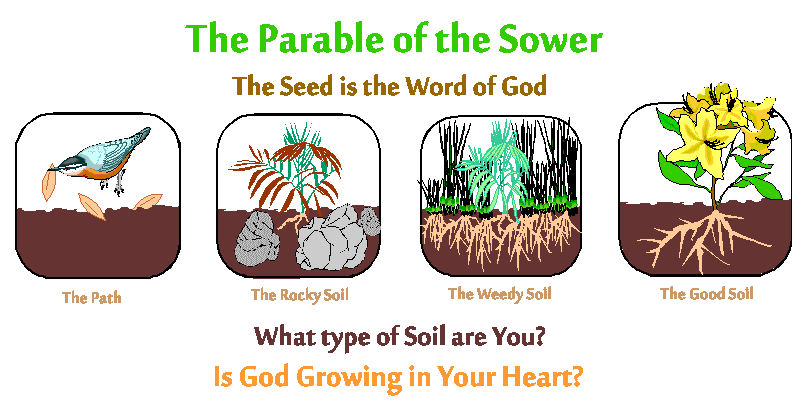
The seed is the word of God

« Sunday, July 12 » 

Fifteenth Sunday in Ordinary Time     Lectionary: 103 

Il-Ħmistax-il Ħadd taż-Żmien ta’ Matul is-Sena 


Reading 1        ISAIAH 55:10-11

Thus says the LORD: Just as from the heavens the rain and snow come down and do not return there till they have watered the earth, making it fertile and fruitful, giving seed to the one who sows and bread to the one who eats, so shall my word be that goes forth from my mouth; my word shall not return to me void, but shall do my will, achieving the end for which I sent it.

Qari I        mill-Ktieb tal-Profeta Isaija 55, 10-11

Dan jgħid il-Mulej: “Bħalma x-xita u s-silġ jinżlu mis-smewwiet, u ma jerġgħux lura mnejn ġew bla ma jsaqqu l-art, imma jġegħluha tnissel u tnibbet, u tagħti ż-żerriegħa lil min jiżra’ u l-ħobż lil min jiekol, hekk jiġri minn kelmti: hija toħroġ minn fommi, u ma terġax lura vojta, imma tagħmel dak li jogħġob lili, u ttemm dak li nkun bgħattha tagħmel”.  Il-Kelma tal-Mulej 

Responsorial Psalm      PSALM 65:10, 11, 12-13, 14

You have visited the land and watered it; greatly have you enriched it. God’s watercourses are filled; you have prepared the grain. R. The seed that falls on good ground will yield a fruitful harvest. 

Thus have you prepared the land: drenching its furrows, breaking up its clods, Softening it with showers, blessing its yield. R. The seed that falls on good ground will yield a fruitful harvest. 

You have crowned the year with your bounty, and your paths overflow with a rich harvest; The untilled meadows overflow with it, and rejoicing clothes the hills. R. The seed that falls on good ground will yield a fruitful harvest. 

The fields are garmented with flocks and the valleys blanketed with grain. They shout and sing for joy. R. The seed that falls on good ground will yield a fruitful harvest. 

Salm Responsorjali        Salm 64 (65), 10abcd.10e-11.12-13.14

R/. (ara Lq 8, 8): Iż-żerriegħa waqgħet f’art tajba, u għamlet il-frott 

Inti żżur l-art u ssaqqiha, u tagħniha bil-ġid tiegħek. Il-wied ta’ Alla mimli bl-ilma, il-qamħ tagħhom ħejjejtilhom. R/. 

Hekk int tħejjiha: issaqqi r-raddiet u twitti t-tub tagħha, bl-irxiex trattabha u tberkilha ż-żrieragħ. Fawwart is-sena bi tjubitek, triqatek bil-ġid joqtru. R/. 

Joqtru bin-nida l-mergħat tad-deżert, u bil-ferħ jitħażżmu l-għoljiet. Il-mergħat jimtlew bl-imrieħel, il-widien jinksew bil-qamħ; jgħajtu lkoll u jgħannu bil-ferħ! R/. 

Reading 2           ROMANS 8:18-23

Brothers and sisters: I consider that the sufferings of this present time are as nothing compared with the glory to be revealed for us. For creation awaits with eager expectation the revelation of the children of God; for creation was made subject to futility, not of its own accord but because of the one who subjected it, in hope that creation itself would be set free from slavery to corruption and share in the glorious freedom of the children of God. We know that all creation is groaning in labour pains even until now; and not only that, but we ourselves, who have the first fruits of the Spirit, we also groan within ourselves as we wait for adoption, the redemption of our bodies. 

Qari II          mill-Ittra lir-Rumani 8, 18-23

Ħuti, jiena għadni persważ li t-tbatijiet ta’ issa ma għandhom xejn x’jaqsmu mal-glorja li għad trid tidher fina. Il-ħlejjaq kollha qegħdin jistennew ħerqana r-rivelazzjoni ta’ wlied Alla; għax il-ħolqien jinsab taħt il-frugħa - mhux minn rajh, imma minħabba dak li xeħtu taħtha – bit-tama li l-ħlejjaq huma wkoll għad ikunu meħlusa mill-jasar tat-taħsir u jiksbu l-ħelsien tal-glorja ta’ wlied Alla. Aħna nafu li l-ħolqien kollu għadu s’issa jitniehed bl-uġigħ tal- ħlas; u mhux hu biss, imma wkoll aħna li għandna l-ewwel frott tal-Ispirtu, aħna wkoll nitniehdu fina nfusna waqt li nistennew l-adozzjoni ta’ wlied, il-fidwa ta’ ġisimna. Il-Kelma tal-Mulej 

Gospel        MATTHEW 13:1-23 OR 13:1-9

On that day, Jesus went out of the house and sat down by the sea. Such large crowds gathered around him that he got into a boat and sat down, and the whole crowd stood along the shore. And he spoke to them at length in parables, saying: “A sower went out to sow. And as he sowed, some seed fell on the path, and birds came and ate it up. Some fell on rocky ground, where it had little soil. It sprang up at once because the soil was not deep, and when the sun rose it was scorched, and it withered for lack of roots. Some seed fell among thorns, and the thorns grew up and choked it. But some seed fell on rich soil, and produced fruit, a hundred or sixty or thirtyfold. Whoever has ears ought to hear.” The disciples approached him and said, “Why do you speak to them in parables?” He said to them in reply, “Because knowledge of the mysteries of the kingdom of heaven has been granted to you, but to them it has not been granted. To anyone who has, more will be given and he will grow rich; from anyone who has not, even what he has will be taken away. This is why I speak to them in parables, because they look but do not see and hear but do not listen or understand. Isaiah’s prophecy is fulfilled in them, which says: You shall indeed hear but not understand, you shall indeed look but never see. Gross is the heart of this people, they will hardly hear with their ears, they have closed their eyes, lest they see with their eyes and hear with their ears and understand with their hearts and be converted, and I heal them. “But blessed are your eyes, because they see, and your ears, because they hear. Amen, I say to you, many prophets and righteous people longed to see what you see but did not see it, and to hear what you hear but did not hear it. “Hear then the parable of the sower. The seed sown on the path is the one who hears the word of the kingdom without understanding it, and the evil one comes and steals away what was sown in his heart. The seed sown on rocky ground is the one who hears the word and receives it at once with joy. But he has no root and lasts only for a time. When some tribulation or persecution comes because of the word, he immediately falls away. The seed sown among thorns is the one who hears the word, but then worldly anxiety and the lure of riches choke the word and it bears no fruit. But the seed sown on rich soil is the one who hears the word and understands it, who indeed bears fruit and yields a hundred or sixty or thirtyfold.” 

Evanġelju          Qari skond San Mattew 13, 1-23

Dakinhar Ġesù ħareġ mid-dar, mar f’xatt il-baħar u qagħad bilqiegħda hemm. U nġabru madwaru folol hekk kbar ta’ nies li kellu jitla’ fuq dgħajsa u jinżel bilqiegħda fiha; in-nies qagħdu lkoll wieqfa fuq ix-xatt, u hu beda jkellimhom fuq bosta ħwejjeġ bil-parabboli. U qalilhom: “Darba wieħed bidwi ħareġ jiżra’. Huwa u jiżra’, xi żerrigħat waqgħu mal-mogħdija, ġew l-għasafar u naqqruhom kollha. Oħrajn waqgħu f’art kollha blat, fejn ma kienx hemm wisq ħamrija, u malajr nibtu, għax il-ħamrija ma kinitx fonda; iżda mbagħad telgħet ix-xemx, u nħarqu u nixfu, għax ma kellhomx għeruq. Oħrajn waqgħu qalb ix-xewk, u x-xewk kiber magħhom u ħonoqhom. Imma oħrajn waqgħu f’art tajba, u għamlu l-frott, min mija, min sittin, u min tletin. Min għandu widnejn, ħa jisma!”. Resqu lejh id-dixxipli u staqsew: “Għaliex tkellimhom bil-parabboli?”. Hu weġibhom: “Għax lilkom ingħata li tagħrfu l-misteri tas-Saltna tas-Smewwiet, iżda lilhom dan ma kienx mogħti. Għax kull min għandu, jingħatalu, u jkollu żżejjed ukoll; iżda min ma għandux, jitteħidlu saħansitra dak li għandu. Jien għalhekk inkellimhom bil-parabboli; għax iħarsu kemm iħarsu ma jarawx, u jisimgħu kemm jisimgħu ma jifhmux. U hekk isseħħ fihom il-profezija ta’ Isaija li tgħid, “Tisimgħu kemm tisimgħu ma tifhmux, u tħarsu kemm tħarsu ma tarawx. Għax il-qalb ta’ dan il-poplu twebbset; kienu tqal biex jisimgħu b’widnejhom, u għalqu għajnejhom li ma jmorrux jaraw b’għajnejhom, u jisimgħu b’widnejhom u jifhmu b’moħħhom, u hekk ibiddlu ħajjithom u jiena nfejjaqhom”. Intom, iżda, henjin għajnejkom, għax qegħdin jaraw; henjin widnejkom, għax qegħdin jisimgħu. Tassew, ngħidilkom, li bosta profeti u nies ġusti xtaqu jaraw dak li qegħdin taraw intom u ma rawhx, u jisimgħu dak li qegħdin tisimgħu intom, u ma semgħuhx! Mela isimgħuha intom il-parabbola ta’ dak li ħareġ jiżra’. Kull min jisma’ l-kelma tas-Saltna u ma jifhimhiex, jersaq il-Ħażin u jisraqlu dak li jkun inżera’ f’qalbu: dan huwa dak li nżera’ mal-mogħdija. Dak li nżera’ f’art kollha blat huwa dak li jisma’ l-kelma u jilqagħha minnufih bil-ferħ; imma għeruq ma jkollux fih innifsu, u għalhekk ftit idum; imbagħad jiġi fuqu l-għawġ, jew isib min iħabbtu minħabba l-kelma, u malajr jitfixkel. Dak li nżera’ qalb ix-xewk huwa dak li jisma’ l-kelma iżda l-inkwiet żejjed għall-ħwejjeġ tad-dinja u l-ġibda għall-ġid tal-art joħonqulu l-kelma, li għalhekk ma tagħmilx frott. Dak imbagħad li nżera’ f’art tajba huwa dak li jisma’ l-kelma u jifhimha; u tassew hu jagħmel il-frott; dan jagħmel mija, dak sittin, u l-ieħor tletin”. Il-Kelma tal-Mulej 

/////////////////////////////////////

 A God of His Word

Gospel Commentary by Fr. Raniero Cantalamessa, OFMCap, Pontifical Household Preacher


The readings of this Sunday speaks of the word of God with two interlaced images: that of rain and of seed. 

In the first reading, Isaiah compares the word of God with rain that falls from heaven and does not return without watering and helping seeds to grow. In the Gospel, Jesus speaks of the word of God as a seed that falls on different terrains and produces fruit. The word of God is seed because it generates life and rain that nourishes life, which allows the seed to grow. 

When speaking of the word of God we often take for granted the most moving event of all, namely, that God speaks. The biblical God is a God who speaks!"

"Our God comes and will not be silent," says Psalm 50; God himself often repeats: "Listen, my people, I will speak" (Psalm 50:7). In this the Bible sees the clearest difference from the idols that "have mouths, but do not speak" (Psalm 115). 

What meaning should we give such an anthropomorphic expression as "God said to Adam," "thus speaks the Lord," "the Lord says," "oracle of the Lord," and others like them? Obviously it is a way of speaking that is different from the human, a speaking to the ears of the heart.  

God speaks the way he writes! "I will place my law within them," says the prophet Jeremiah (Jeremiah 31:33). He writes on the heart and he also makes his words resonate in the heart. He says so expressly himself through the prophet Hosea, speaking of Israel as an unfaithful bride: "So I will allure her; I will lead her into the desert and speak to her heart" (Hosea 2:16). 

God does not have a human mouth or breath; the prophet is his mouth, the Holy Spirit is his breath. "You will be my mouth," he himself says to his prophets. He also says "I will put my word on your lips." This is the meaning of the famous phrase "human beings moved by the Holy Spirit spoke under the influence of God" (2 Peter 1:21). The spiritual tradition of the Church has coined the expression "interior locutions" for this way of speaking addressed to the mind and heart.  

And yet, it is a speaking in the true sense of the term. The creature receives a message that can be translated into human words. So alive and real is God's speaking, that the prophet recalls with precision the place, day and time that a certain word "came" to him. So concrete is the word of God that it is said it "falls" upon Israel, as if it were a stone (Isaiah 9:7). Or, as if it were bread that is eaten with pleasure: "When I found your words, I devoured them; they became my joy and the happiness of my heart," (Jeremiah 15:16).  

No human voice comes to man with the depth with which the word of God comes to him. "Indeed, the word of God is living and effective, sharper than any two-edged sword, penetrating even between soul and spirit, joints and marrow, and able to discern reflections and thoughts of the heart" (Hebrews 4,12). At times God's speaking is a powerful thunder that "splinters the cedars of Lebanon" (Psalm 29), at other times it seems like the "tiny whispering sound" (1 Kings 19:12). It knows all the tones of human speech.

 This interior and spiritual nature of God's speaking changes radically the moment that "the word became flesh." With the coming of Christ, God also speaks with a human voice, which can be heard not only with the ears of the soul but also of the body. 

As we can see, the Bible attributes immense dignity to the word. Attempts have not been lacking to change the solemn affirmation with which John begins his Gospel: "In the beginning was the word." 

Goethe has his Faust say: "In the beginning, there was action," and it is interesting to see how the writer comes to this conclusion. 

"I cannot give 'the word' such high value," says Faust. "Perhaps I should understand it as 'hearing,' but can hearing be what acts and creates everything? Hence one should say: 'In the beginning force existed.' But no, a sudden illumination suggested the answer to me: 'In the beginning, action existed.'" 

However, these are unjustified attempts at correction. John's word or logos has all the meanings that Goethe assigns to the rest of the terms. As we see in the prologue, it is light, life and creative force. 

God created man "in his image" precisely because he created him capable of speaking, of communicating and of establishing relationships. He, who has in himself from eternity one word, has created man and gifted him with the word, in order to be, not only "image" but also "likeness" of God (Genesis 1:26). It is not enough for man to speak, but he must imitate God's speaking. The content and motor of God's speaking is love. 

From beginning to end, the Bible is no more than a message of the love of God for his creatures. The tones might change, from the angry to the tender, but the essence is always, and only, love. God has used the word to communicate life and truth, to instruct and console. This poses the question: What use do we make of the word? In his play "Closed Doors," Sartre has given us a striking image of what human communication can become when love is lacking. 

Three persons are introduced, in brief intervals, in a room. There are no windows. The light is at its brightest and there is no possibility to turn it off. There is suffocating heat, and there is only one seat for each one. The door, of course, is closed. The bell is there but does not ring. Who are these people?

 They are three dead persons, a man and two women, and the place they are in is hell. There are no mirrors, and they can only see themselves through the words of the others, which gives them the most horrible image of themselves, without any mercy, on the contrary, with irony and sarcasm. 

When, after a while, their souls became naked to one another and the faults of which they were ashamed have come into the light one by one and enjoyed by the others without mercy, one of the individuals says to the other two: "Remember, the brimstone, the flames, the tortures with fire. All are stupidities. There is no need of torments: Hell is the others." Abuse of the word can transform life into a hell. 

St. Paul gives Christians this golden rule in regard to words: "No foul language should come out of your mouths, but only such as is good for needed edification, that it may impart grace to those who hear" (Ephesians 4, 29). The good word is the one that chooses the positive side of an action and a person and that, even when it corrects, does not offend. A good word is one that gives hope. A bad word is every word said without love, to wound and humiliate one's neighbour. If a bad word comes out of the lips, it will be necessary to retract it. 

Not altogether correct are the verses of the Italian poet Metastasio: "Word that comes from within, is no longer worth retracting; The arrow cannot be stopped, when it has left the bow." 

A word that issues from the mouth can be retracted, or at least its negative effect can be limited, by asking for forgiveness. Hence, what a gift it can be for our fellow men and what an improvement for the quality of life in the heart of the family and of society!  ////////  [Translation by Joseph G. Trabbic] 

///////////////////////