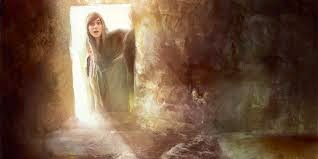
"Amen, amen, I say to you, unless a grain of wheat falls to the ground and dies, it remains just a grain of wheat; but if it dies, it produces much fruit. " (John 12)
Photo copyright : John R Portelli

Friday, 17 April 2015

"Have you anything here to eat?"


Third Sunday of Easter
It-Tielet Ħadd ta’ l-Għid
Messalin B 284

Reading 1                        Acts 3:13-15, 17-19
Peter said to the people: "The God of Abraham, the God of Isaac, and the God of Jacob, the God of our fathers, has glorified his servant Jesus, whom you handed over and denied in Pilate's presence when he had decided to release him. You denied the Holy and Righteous One and asked that a murderer be released to you. The author of life you put to death, but God raised him from the dead; of this we are witnesses. Now I know, brothers, that you acted out of ignorance, just as your leaders did; but God has thus brought to fulfillment what he had announced beforehand through the mouth of all the prophets, that his Christ would suffer. Repent, therefore, and be converted, that your sins may be wiped away." This is the Word of The Lord.

L-Ewwel Qari   -   mill-Atti ta' l-Appostli 3, 13-15,17-19
F'dak iż-żmien,  Pietru qal lill-poplu:   "Alla ta' Abraham, Alla ta' Iżakk u Alla ta' Ġakobb, Alla ta' missirijietna, gglorifika lill-qaddej tiegħu, Ġesu', li intom ittradejtuh  u ċħadtuh quddiem Pilatu,  għalkemm dan kien qatagħha li  jitilqu. Intom ċħadtu l-Qaddis u l-Ġust, tlabtu l-ħelsien ta' wieħed qattiel u  qtiltu lill-awtur tal-ħajja.   Imma Alla  qajmu mill-imwiet, u ta' dan aħna xhieda. Issa, ħuti, jien naf li kemm intom u kemm  il-kapijiet tagħkom, għamiltu dan għaliex  ma kontux tafu.  Imma b'hekk Alla temm  dak  li  hu kien ħabbar  sa minn qabel b'fomm  il-profeti, jiġifieri,  li l-Messija tiegħu kellu jbati. Indmu, mela, u erġgħu lura biex dnubietkom  biex jinħafrulkom." Il-Kelma tal-Mulej
 ..........................................

Responsorial Psalm                                  Ps alm4:2, 4, 7-8, 9
R. (7a) Lord, let your face shine on us.   or:  Alleluia.
When I call, answer me, O my just God,
you who relieve me when I am in distress;
have pity on me, and hear my prayer!                                   R.
 Know that the LORD does wonders for his faithful one;
the LORD will hear me when I call upon him.                     R.
O LORD, let the light of your countenance shine upon us!
You put gladness into my heart.                                            R
. As soon as I lie down, I fall peacefully asleep,
for you alone, O LORD,
bring security to my dwelling.                                              R
Salm Responsorjali    Salm  4
                R/   Ixħet fuqna, Mulej, id-dawl ta' wiċċek  jew                 Hallelujah

Weġibni, meta nsejjaħlek,
Alla tal-ġustizzja tiegħi;
oħroġni  fil-wisa' meta nkun imdejjaq,
ħenn għalija u isma' t-talbi.                                        R/

Kunu afu li l-Mulej
wera tjieba kbira miegħi;
jismagħna l-Mulej meta nsejjħulu.                         R/

Ħafna jgħidu:  "Min jurina r-riżq?"
Ixħet fuqna, Mulej,  id-dawl ta' wiċċek.
Nimtedd u norqod minnufih fis-sliem,
Għax int waħdek, Mulej, fis-sod tqegħedni.        R/
.......................................

Reading 2                        1 John 2:1-5a
My children, I am writing this to you so that you may not commit sin. But if anyone does sin, we have an Advocate with the Father, Jesus Christ the righteous one. He is expiation for our sins,
and not for our sins only but for those of the whole world. The way we may be sure that we know him is to keep his commandments. Those who say, "I know him," but do not keep his commandments are liars, and the truth is not in them. But whoever keeps his word, the love of God is truly perfected in him. This is the Word of The Lord.

It-Tieni Qari   -    mill-Ewwel Ittra ta' San Ġwann 2, 1-5
Uliedi, dan qed niktibhulkom biex ma tindinbux; imma jekk xi ħadd jidneb, aħna għandna  Difensur quddiem il-Missier, lil Ġesu' Kristu, il-Ġust. U hu jħallas għal dnubnietna, mhux għal tagħna biss, iżda wkoll għal dawk tad-dinja kollha. U b'dan nafu li nagħarfuh 'l Ġesu': jekk inżommu il-kmandamenti tiegħu. Min jgħid "Jien nafu" u ma jżommx  il-kmandamenti tiegħu, hu giddieb u  l-verita'  mhijiex fih.   Iżda kull min  iżomm il-kelma tiegħu, fih hemm tassew  l-imħabba ta' Alla fil-milja tagħha.   Il-Kelma tal-Mulej
.........................................................
Gospel                                                Luke 24:35-48 
The two disciples recounted what had taken place on the way, and how Jesus was made known to them  in the breaking of bread. While they were still speaking about this, he stood in their midst and said to them, "Peace be with you." But they were startled and terrified and thought that they were seeing a ghost. Then he said to them, "Why are you troubled? A nd why do questions arise in your hearts? Look at my hands and my feet, that it is I myself. Touch me and see, because a ghost does not have flesh and bones as you can see I have." And as he said this, he showed them his hands and his feet. While they were still incredulous for joy and were amazed, he asked them, "Have you anything here to eat?" They gave him a piece of baked fish;  he took it and ate it in front of them. He said to them, "These are my words that I spoke to you while I was still with you, that everything written about me in the law of Moses and in the prophets and psalms must be fulfilled." Then he opened their minds to understand the Scriptures. And he said to them, "Thus it is written that the Christ would suffer and rise from the dead on the third day and that repentance, for the forgiveness of sins, would be preached in his name to all the nations, beginning from Jerusalem. You are witnesses of these things."  This is the Word of The Lord.

L-Evanġelju   -   skond San Luqa 24, 35-48
F'dak iż-żmien, iż-żewġ dixxipli li reġgħu lura Ġerusalemm minn Għemmaws  kienu qegħdin itarrfu lill-Ħdax u lil dawk  li kienu magħhom xi ġralhom fit-triq, u kif għarfu 'l Ġesu'  fil-qsim tal-ħobż. Kif kienu għadhom jitkellmu, Ġesu' nnifsu waqaf f'nofshom u  qalilhom:  "Is-sliem għalikom!"  Huma twerwru bil-biża', għax  ħasbu li qegħdin jaraw xi fantażma.   Iżda hu qalilhom: "Għaliex  tħawwadtu?  Għaliex dan it-tħassib kollu f'qalbkom?  Araw idejja  u riġlejja.  Jiena Hu!  Missuni, u ifhmuha li l-Ispirtu ma għandux laħam u għadam bħalma qegħdin taraw li għandi jien."Huwa u  jgħidilhom dan, uriehom idejh u riġlejh. Iżda billi huma, fil-ferħ tagħhom, kienu għadhom ma jridux  jemmnu u baqgħu mistagħġba, qalilhom:"Għandkom xi ħaġa  ta' l-ikel hawn?"U ressqulu quddiemu biċċa ħuta mixwija, u hu ħadha, u  kielha quddiemhom. Imbagħad qalilhom:  "Meta kont għadni magħkom għidtilkom  dawn il-kelmiet: jeħtieġ li jseħħ kull ma nkiteb fuqi fil-Liġi ta'  Mose,fil-Profeti u s-Salmi."  Imbagħad  fetħilhom moħħom  biex jifhmu l-Iskrittura.  U qalilhom: "Hekk kien miktub, li  l-Messija jbati u fit-tielet jum jqum mill-imwiet, u li l-indiema  għall-maħfra tad-dnubiet tixxandar f'ismu lill-ġnus kollha,  ibda minn Ġerusalem.  Intom xhud ta' dan.  U jiena,araw,  nibgħat fuqkom lil dak li wiegħed Missieri. Imma intom ibqgħu  fil-belt, sa ma Alla jkun libbiskom bil-qawwa tiegħu."  Il-Kelma tal-Mulej
//////////////////////////
Commentary by Fr Raniero Cantalamessa
The Lord Has Risen Indeed!

The Gospel enables us to be present at one of the many apparitions of the Risen One. The disciples of Emmaus have just arrived out of breath to Jerusalem and are recounting what happened to them on the road, when Jesus appears in person in their midst saying: "Peace to you!" At first, fear, as if they saw a spirit; then amazement, disbelief; finally, joy. What is more, disbelief and joy at the same time: "And while they still disbelieved for joy, and wondered."

Theirs is an altogether special disbelief. It is the attitude of someone who believes (otherwise, there would be no joy) but does not know how to realize it. As someone who says: "Too wonderful to be true." We can call it, paradoxically, an incredulous faith. To convince them, Jesus asks them for something to eat, because there is nothing like eating together to comfort and create communion.

All this tells us something important about the Resurrection. The latter is not only a great miracle, an argument or a proof in favor of the truth of Christ. More than that, it is a new world in which one enters with faith accompanied by wonder and joy. Christ's resurrection is the "new creation."

It is not just about believing that Jesus has risen; it is about knowing and experiencing "the power of the resurrection" (Philippians 3:10).

This more profound dimension of Easter is particularly felt by our Orthodox brothers. For them, Christ's resurrection is everything. In Eastertide, when they meet someone they greet one another saying: "Christ has risen!", and the other replies: "He has risen indeed!"

This custom is so rooted in the people that the following anecdote is told that occurred at the beginning of the Bolshevik Revolution. A public debate had been organized on the resurrection of Christ. First the atheist spoke, demolishing for good, in his opinion, Christians' faith in the resurrection.

When he came down, the Orthodox priest went to the dais, who was to speak in defense. The humble priest looked at the crowd and said simply: "Christ is risen!" Before even thinking, all answered in unison: "He has risen indeed!" And the priest came down from the dais in silence.

We know well how the resurrection is represented in the Western tradition, for example, in Piero della Francesca. Jesus comes out of the sepulcher raising the cross as a standard of victory. His face inspires extraordinary trust and security. But his victory is over his external, earthly enemies. The authorities had put seals in his sepulcher and guards to keep watch, and, lo, the seals are broken and the guards asleep. Men are present only as inert and passive witnesses; they do not really take part in the Resurrection.

In the Eastern image, the scene is altogether different. It is not developed under an open sky, but underground. In the resurrection, Jesus does not come out but descends. With extraordinary energy he takes Adam and Eve by the hand, who were waiting in the realm of the dead, and pulls them with him to life and resurrection. Behind the two parents, an innumerable multitude of men and women who awaited the redemption. Jesus tramples on the gates of hell which he himself has just dislocated and broken. Christ's victory is not so much over visible but over invisible enemies, which are the worst: death, darkness, anguish, the devil.

We are involved in this representation. Christ's resurrection is also our resurrection. Every man who looks is invited to be identified with Adam, and every woman with Eve, and to stretch out their hands to allow themselves to be gripped and pulled by Christ out of the sepulcher. This is the new universal Easter exodus. God has come "with powerful arm and outstretched hand" to liberate his people from a much harsher and universal slavery than that of Egypt.

[Translation from the Italian by ZENIT]
© Innovative Media Inc.


Friday, 10 April 2015

FAITH AS A GIFT

Second Sunday of Easter
Sunday of Divine Mercy

It-Tieni Ħadd ta' l-Għid
Messalin B 279

Reading 1                         -                              ACTS 4:32-35
The community of believers was of one heart and mind, and no one claimed that any of his possessions was his own, but they had everything in common. With great power the  apostles bore witness to the resurrection of the Lord Jesus, and great favor was  accorded them all. There was no needy person among them, for those who owned property or houses would sell them, bring the proceeds of the sale, and put them at the feet of  the apostles, and they were distributed to each according to need.   This is the Word of The Lord.

L-Ewwel Qari   -   i mill-Ktieb tal-Atti tal-Appostli 4, 32-35
Il-kotra kbira ta' dawk li emmnu  kienu qalb waħda u ruħ waħda. Ħadd minnhom ma kien igħid li dak li kellu  kien tiegħu, iżda kellhom kollox flimkien.    B'qawwa kbira l-appostli kienu jagħtu  xhieda tal-qawmien tal-Mulej Ġesu',  u kulħadd kien iġibhom ħafna.  Ħadd minnhom ma kien jonqsu  xejn;  għax kull min  kellu oqsma jew djar kien ibigħhom, u l-flus li jdaħħal minnhom, kien imur iqegħeduhom f'riġlejn l-apposlti.  Imbagħad kien jitqassam kollox skont  il-ħtieġa ta' kull wieħed.  Il-Kelma tal-Mulej

Responsorial Psalm                   PSalm 118:2-4, 13-15, 22-24
R. (1) Give thanks to the LORD, for he is good, his love is everlasting.
or:  Alleluia.

Let the house of Israel say,
“His mercy endures forever.”
Let the house of Aaron say,
“His mercy endures forever.”
Let those who fear the LORD say,
“His mercy endures forever.”                                     R.

I was hard pressed and was falling,
but the LORD helped me.
My strength and my courage is the LORD,
and he has been my savior.
The joyful shout of victory
in the tents of the just:                                  R/

The stone which the builders rejected
has become the cornerstone.
By the LORD has this been done;
it is wonderful in our eyes.
This is the day the LORD has made;
let us be glad and rejoice in it.                  R/

Salm Responsorjali                                    -              SALM 117 (118)

   R/  Faħħru l-Mulej, għaliex hu tajjeb, għax it-tjieba  tiegħu għal dejjem!

Ħa jgħidu wlied Israel: 
"Għal dejjem it-tjieba tiegħu"!
Ħa tgħid  dar  Aron:
"Għal dejjem it-tjieba tiegħu."
Ħa jgħidu dawk li jibżgħu mill-Mulej:
"Għal dejjem It-tjieba tiegħu."                                 R/

Il-leminija tal-Mulej 'il fuq merfugħa,
il-leminija tal-Mulej għamlet ħwejjeġ ta' ħila.
Ma mmutx, imma nibqa' ngħix,
u nħabbar l-egħmjjel tal-Mulej.
Haqarni  tassew il-Mulej,
imma ma telaqnix għal-mewt.                                 R/

Il-ġebla li warrbu l-bennejja
saret il-ġebla tax-xewka.
Bis-saħħa tal-Mulej seħħ dan:
ħaġa tal-għaġeb f'għajnejna.
Dan hu l-jum li għamel il-Mulej;
ħa nifirħu u nithennew fih!                                          R/

Reading 2                                                                         1 JohN 5:1-6
Beloved:  Everyone who believes that Jesus is the  Christ is begotten by God, and everyone who loves  the Father loves also the one begotten by him. In this way we know that we love the children of God when we love God and obey his commandments. For the love of God is this, that we keep his commandments. And his commandments are not burdensome, for whoever is begotten by God conquers the world. And the victory that conquers the world is our faith. Who indeed is the victor over the world but the one who believes that Jesus is the Son of God? This is the one who came through water and blood, Jesus Christ, not by water alone, but by water and blood. The Spirit is the one that testifies, and the Spirit is truth.   This is the Word of The Lord.

It-Tieni Qari     -      mill-Ewwel Ittra ta' San Ġwann 5, 1-6
Egħżież,  kull min jemmen li Ġesu' hu l-Messija hu mwieled minn Alla, u kull min iħobb lill-Missier  iħobb lil twieled minnu.    Minn dan nafu li nħobbu  lil ulied Alla, meta nħobbu 'l Alla u nagħmlu l- Kmandamenti tiegħu.   Għax din hi l-imħabba ta' Alla,  li nżommu  l-Kmandamenti tiegħu;u l-Kmandamenti tiegħu  m'humiex tqal: għax kull min hu mwieled minn Alla jegħleb  lid-dinja.   Din hi r-rebħa fuq id-dinja: il-fidi tagħna. Għax min hu dak li jegħleb lid-dinja, jekk mħux min jemmen  li Ġesu' hu l-Iben ta' Alla?   Dan huwa dak li ġie bl-ilma u d-demm,   Ġesu' Kristu;   mhux bl-ilma biss, iżda bl-ilma u d-demm. U l-Ispirtu hu li jixhed, għax l-Ispirtu hu l-verita'.  Il-Kelma tal-Mulej

Gospel                                                                                JohN 20:19-31
On the evening of that first day of the week, when the doors were locked, where the disciples were, for fear of the Jews, Jesus came and stood in their midst and said to them, “Peace be with you.” When he had said this, he showed them his hands and his side. The disciples rejoiced when they saw the Lord. Jesus said to them again, “Peace be with you. As the Father has sent me, so I send you.” And when he had said this, he breathed on them and said to them, “Receive the Holy Spirit. Whose sins you forgive are forgiven them, and whose sins you retain are retained.” Thomas, called Didymus, one of the Twelve, was not with them when Jesus came. So the other disciples said to him, “We have seen the Lord.” But he said to them, “Unless I see the mark of the nails in his hands and put my finger into the nailmarks and put my hand into his side, I will not believe.” Now a week later his disciples were again inside and Thomas  was with them.Jesus came, although the doors were locked,  and stood in their midst and said, “Peace be with you.” Then he said to Thomas, “Put your finger here and see my hands, and bring your hand and put it into my side, and do not be  unbelieving, but believe.”Thomas answered and said to him,  “My Lord and my God!”Jesus said to him, “Have you come to  believe because you have seen me? Blessed are those who have  not seen and have believed.” Now Jesus did many other signs in the presence of his disciples that are not written in this book.But these are written that you may come  to believe that Jesus is the Christ, the Son of God, and that through this belief you may have life in his name.   This is the Word of The Lord.

Evanġelju    -     skond San Ġwann 20, 19-31
Dakinhar filgħaxija, fl-ewwel jum tal-ġimgħa,  meta d-dixxipli kienu flimkien imbeżżgħa mil-Lhud,  bil-bibien magħluqa,  ġie Ġesu' u qagħad f'nofshom;  u qalilhom: "Is-Sliem għalikom!"  Kif qal hekk, uriehom idejh u ġenbu.Id-dixxipli ferħu meta raw il-Mulej, Imbagħad Ġesu' tenna jgħidilhom: Is-Sliem għalikom!  Kif il-Missier  bagħat lili, hekk jien nibgħat lilkom." Kif qal hekk, nefaħ fuqhom  u qalilhom: "Ħudu l-Ispirtu s-Santu.  Dawk  li taħfrulhom  dnubiethom  jkunu maħfura. u dawk li  żżommuhomlhom  jkunu miżmuma." Tumas,  wieħed mit-Tnax, jgħidulu t-Tewmi, ma kienx magħhom meta ġie Ġesu'.  Għalhekk  id-dixxipli l-oħra qalulu: "Rajna  lill Mulej".   Iżda hu qalilhom:  "Jekk ma narax f'idejh il-marka  ta' l-imsiemer, u ma nqigħedx sebgħi fuq il-marka  tal-imsiemer u idi fuq ġenbu, jien ma nemminx".  Tmint ijiem wara, id-dixxipli reġgħu kienu ġewwa, u  Tumas  magħhom.   Il-bibien  kienu magħluqa,  imma Ġesu'  daħal, qagħad f'nofshom, u qalilhom: "Is-Sliem għalikom!"   Imbagħad qal lil Tumas: "Ġib sebgħek  hawn u ara idejja, u ressaq idek u  qegħedha fuq ġenbi; tkunnnnnx bniedem bla fidi, iżda emmen."     Wieġb Tumas u qallu: "Mulej tiegħi  u Alla tiegħi!" Qallu Ġesu':  "Emmint għax rajtni!   Ħenjin dawk li ma rawx u emmnu".Hemm ħafna  sinjali oħra li Ġesu' għamel quddiem id-dixxipli tiegħu u li mhumiex imniżżla f'dan il-Ktieb. Iżda dawn inkitbu biex intom temmnu li Ġesu' hu  l-Messija l-Iben Alla, u biex bit-twemmin tagħkom ikollkom il-ħajja f'Ismu.        Il-Kelma tal-Mulej.

////////////////////////////

COMMENTARY:   Father Cantalamessa on:

"Unless I Place My Hand in His Side, I Will Not Believe"


"Eight days later, his disciples were again in the house, and Thomas was with them. The doors were shut, but Jesus came and stood among them, and said: 'Peace be with you.' Then he said to Thomas, 'Put your finger here, and see my hands; and put out your hand and place it in my side; do not be faithless, but believing.' Thomas answered him, 'My Lord and my God!' Jesus said to him, 'Have you believed because you have seen me? Blessed are those who have not seen and yet believe.'"

With the emphasis on the incident of Thomas and his initial incredulity ("Unless I see in his hands the print of the nails, and place my finger in the mark of the nails, I will not believe"), the Gospel addresses the man of the technological age who believes only what he can verify. Among the apostles, we can call Thomas our contemporary.

St. Gregory the Great says that, with his incredulity, Thomas was more useful to us than all the other apostles who believed right away. Acting in this way, so to speak, he obliged Jesus to give us a "tangible proof of the truth of his resurrection." Faith in the resurrection benefited by his doubts. This is true, at least in part, when applied to the numerous "Thomases" of today who are the nonbelievers.

The criticism of nonbelievers and dialogue with them, when carried out in respect and reciprocal loyalty, are very useful to us. Above all they make us humble. They oblige us to take note that faith is not a privilege or an advantage for anyone. We cannot impose it or demonstrate it, but only propose it and show it with our life. "What have you that you did not receive? If then you received it, why do you boast as if it were not a gift?" says St. Paul (1 Corinthians 4:7). In the end, faith is a gift, not a merit, and as all gifts it can only be lived in gratitude and humility.

The relationship with nonbelievers also helps us to purify our faith of clumsy representations. Very often what nonbelievers reject is not the true God, the living God of the Bible, but his double, a distorted image of God that believers themselves have contributed to create. Rejecting this God, nonbelievers oblige us to go back to the truth of the living and true God, who is beyond all our representations and explanations, and not to fossilize or trivialize him.

But there is also a wish to be expressed: that St. Thomas might find today many imitators not only in the first part of his story -- when he states he does not believe -- but also at the end, in that magnificent act of faith that leads him to exclaim: "My Lord and my God!"

Thomas is also imitable because of another fact. He does not close the door; he does not remain in his position, considering the problem resolved once and for all. In fact, we find him eight days later with the other apostles in the Cenacle. If he had not wished to believe, or to "change his opinion," he would not have been there. He wants to see, to touch: Therefore, he is searching. And at the end, after he has seen and touched with his hand, he exclaims to Jesus, not as someone defeated but as victorious: "My Lord and my God!" No other apostle had yet gone out to proclaim Christ's divinity with so much clarity.

© Innovative Media Inc.


Friday, 3 April 2015

The Resurrection of the Lord 

The Mass of Easter Day 


L-Għid  il-Kbir tal-Qawmien tal-Mulej mill-Imwiet  -
Solennita' – Quddies tal-Jum


Reading 1                         ACTS 10:34A, 37-43

Peter proceeded to speak and said: “You know what has happened all over Judea,  beginning in Galilee after the baptism that John preached,  how God anointed Jesus of Nazareth with the Holy Spirit and power. He went about doing good and healing all those oppressed by the devil,  for God was with him. We are witnesses of all that he did both in the country of the Jews and in Jerusalem. They put him to death by hanging him on a tree. This man God raised on the third day and granted that he be visible, not to all the people, but to us, the witnesses chosen by God in advance, who ate and drank with him after he rose from the dead. He commissioned us to preach to the people and testify that he is the one appointed by God as judge of the living and the dead. To him all the prophets bear witness, that everyone who believes in him will receive forgiveness of sins through his name.” This is the Word of The Lord.

L-Ewwek Qari   -   mill-Atti ta’ l-Appostli 10, 34a, 37-43
F’dak iż-żmien, Pietru qabad jitkellem u qal:  “Intom tafu b’dak li ġara mal-Lhudija kollha, ibda mill-Galilija,  wara li Ġwanni xandar il-magħmudija; kif Alla kkonsagra  lil Ġesù ta’ Nażaret bl-Ispirtu s-Santu u bil-qawwa, u kif   dan Ġesù għadda jagħmel il-ġid u jfejjaq ’il dawk kollha li  kienu maħkuma mix-xitan, għax Alla kien miegħu.  U aħna xhud  ta’ dak kollu li hu għamel fl-art tal-Lhudija u f’Ġerusalemm.   Tawh  il-mewt billi dendluh mal-għuds tas-salib;   imma Alla qajmu mill-imwiet fit-tielet jum u għamel li  hu jidher, mhux lil kulħadd, imma li xhieda li Alla għażel  minn qabel lilna, li miegħu kilna u xrobna wara li qawmien  tiegħu mill-imwiet.  Lilna ordnalna biex inxandruh lill-poplu u nixhdu li dan  hu dak li Alla għamlu mħallef tal-ħajjin u tal-mejtin.  Il-profeti kollha jixhdu għalih u jgħidu li kull min jemmen fih jaqla’ l-maħfra tad-dnubiet.   Il-Kelma  tal-Mulej.

………………………………

Responsorial Psalm                   PSALM 118:1-2, 16-17, 22-23

R. (24) This is the day the Lord has made; let us rejoice and be glad.     or:      R. Alleluia.


Give thanks to the LORD, for he is good,
for his mercy endures forever.
Let the house of Israel say,
“His mercy endures forever.                                      R/

“The right hand of the LORD has struck with power;
the right hand of the LORD is exalted.
I shall not die, but live,
and declare the works of the LORD.”                      R/

The stone which the builders rejected
has become the cornerstone.
By the LORD has this been done;
it is wonderful in our eyes.                                          R/

Salm Responsorjali                                    Salm  117
  R/    Dan hu l-jum li għamel il-Mulej:  ħa nifirħu u nithennew fih. Hallelujah.

Faħħru l-Mulej, għaliex hu tajjeb,
għax għal dejjem it-tjieba tiegħu!
Ħa jgħid wlied Israel:
"Għal dejjem it-tjieba tiegħu!"                                 R/

Il-leminija tal-Mulej 'il fuq merfugħa,
il-leminija tal-Mulej għamlet ħwejjeġ ta’ ħila!
Ma mmutx, imma nibqa' ngħix,
u nħabbar l-għemejjel tal-Mulej.                            R/

Il-ġebla  li warrbu l-bennejja
saret il-ġebla tax-xewka.
Bis-saħħa tal-Mulej seħħ dan:
ħaġa tal-għaġeb f’għajnejna.                                     R/
……………………….
For the Second Reading the celebrant may choose one of the following:

Reading 2                                         COLOSSIANS 3:1-4

Brothers and sisters:  If then you were raised with Christ, seek what is above,  where Christ is seated at the right hand of God. Think of what is above, not of what is on earth. For you have died, and your life is hidden with Christ in God. When Christ your life appears, then you too will appear with him in glory.  This is the Word of The Lord.

Or                     1 CORinthians 5:6B-8

Brothers and sisters: Do you not know that a little yeast leavens all the dough? Clear out the old yeast, so that you may become a fresh batch of dough,  inasmuch as you are unleavened. For our paschal lamb, Christ, has been sacrificed. Therefore, let us celebrate the feast,  not with the old yeast, the yeast of malice and wickedness,  but with the unleavened bread of sincerity and truth. .  This is the Word of The Lord.
………………………………
Għat-Tieni Qari tingħażel silta mit-tnejn li ġejjin.

It-Tieni Qari  -   mill-Ittra lill-Kolossin 3, 1-4
Ħuti, jekk intom irxoxtajtu ma’ Kristu, fittxu l-ħwejjeġ tas-sema, fejn Kristu qiegħed fuq il-lemin ta’ Alla.   Aħsbu  fil-ħwejjeġ tas-sema, mhux f’dawk ta’ l-art.Għax  intom mittu, imma ħajjitkom hi moħbija flimkien ma’ Kristu f’Alla.   Meta  jidher Kristu, li hu l-ħajja tagħkom, imbagħad intom ukoll tidhru flimkien miegħu fil-glorja.  Il-Kelma tal-Mulej.
jew:
Qari  mill-Ewwel Ittra lill-Korintin 5, 6b-8
Ħuti,  ma  tafux li ftit ħmira ttalla’ l-għaġna kollha?  Tnaddfu mill-ħmira l-qadima ħalli tkunu għaġna ġdida, kif intom bla ħmira.  Il-Ħaruf  tal-Għid tagħna, li hu Kristu, hu maqtul!  Nagħmlu   festa,  mhux bil-ħmira l-qadima, anqas bil-ħmira tal-qerq u tal-ħażen, imma bil-ħobż bla ħmira tas-safa u tas-sewwa. Il-Kelma tal-Mulej.

SEQUENCE - Victimæ Paschali Laudes
Christians, to the Paschal Victim
Offer your thankful praises!
A Lamb the sheep redeems;
Christ, who only is sinless,
Reconciles sinners to the Father.
Death and life have contended in that combat stupendous:
The Prince of life, who died, reigns immortal.
Speak, Mary, declaring
What you saw, wayfaring.
“The tomb of Christ, who is living,
The glory of Jesus’ resurrection;
bright angels attesting,
The shroud and napkin resting.
Yes, Christ my hope is arisen;
to Galilee he goes before you.”
Christ indeed from death is risen, our new life obtaining.
Have mercy, victor King, ever reigning!
Amen. Alleluia.

SEKWENZA - Victimæ Paschali Laudes
Ħa jgħollu l-insara b’tifħirhom il-Vittma tal-Għid: għax feda l-Ħaruf in-ngħaġ tiegħu mill-jasar tal-mewt; Ġesù reġa’ ħabbeb il-midneb ma’ Alla l-Missier.  F’taqbida tal-għaġeb mal-Ħajja 
inqerdet il-Mewt;
isaltan rebbieħ.
fit-triq  lil min rajt?
fis-sebħ tal-qawmien;
rajt l-Anġli li ġew jagħtu xhieda, 
il-faxxa, l-liżar.
Irxoxta mill-mewt Kristu Sidi,
li fih ittamajt!
Mar hu l-Galilija qabilkom:
hemmhekk se tarawh.”
tassew mill-imwiet!
Int  mela, Sultan, ħenn għalina, 
O Kristu rebbieħ.
Amen! Hallelujah!
u qam Sid il-ħajja mill-qabar,
Għidilna, Marija, ħabbrilna:
“Jien rajt qabar Kristu li rxoxta
O, nemmnu li llum Kristu rxoxta 


Gospel                                                JohN 20:1-9

On the first day of the week,  Mary of Magdala came to the tomb early in the morning, while it was still dark,   and saw the stone removed from the tomb. So she ran and went to Simon Peter  and to the other disciple whom Jesus loved, and told them,  “They have taken the Lord from the tomb,  and we don’t know where they put him.” So Peter and the other disciple went out and came to the tomb. They both ran, but the other disciple ran faster than Peter  and arrived at the tomb first;  he bent down and saw the burial cloths there, but did not go in. When Simon Peter arrived after him,  he went into the tomb and saw the burial cloths there,  and the cloth that had covered his head,  not with the burial cloths but rolled up in a separate place. Then the other disciple also went in,  the one who had arrived at the tomb first,  and he saw and believed. For they did not yet understand the Scripture  that he had to rise from the dead.  .  This is the Word of The Lord.


Options:
crs4Gospel Reading according to Mark 16, 1-7
In the evening celebration of the day, the Reading can also be
crs4the Gospel according to Luke 24, 13-35

crs4L-EVANĠELJU  -  skond San Ġwann 20, 1-9
Kien  l-ewwel jum tal-ġimgħa, filgħodu kmieni kif kien għadu  d-dlam,  u Marjam ta’ Magdala ġiet ħdejn il-qabar u rat il-blata  mneħħija mill-qabar.  Għalhekk telqet tiġri għand  Xmun Pietru u għand id-dixxiplu  l-ieħor li kien iħobb Ġesù, u qaltilhom: “Qalgħu l-Mulej mill-qabar,  u ma nafux fejn qegħduh.” Pietru  u d-dixxiplu l-ieħor ħarġu u ġew ħdejn il-qabar.  It-tnejn  ġrew flimkien, imma d-dixxiplu l-ieħor ħaffef  aktar minn Pietru,  u laħaq qablu ħdejn il-qabar.  Tbaxxa,  u ra l-faxex tal-għażel  imqiegħda hemm, iżda ma daħalx.  Imbagħad  wasal warajh  Xmun Pietru, daħal fil-qabar, u ra l-faxex tal-għażel imqiegħda  hemm, u l-maktur li kien madwar rasu; dan ma kienx mal-faxex,  imma mitwi u mqiegħed f'post għalih. Imbagħad id-dixxiplu l-ieħor, li kien wasal l-ewwel ħdejn il-qabar,  daħal hu wkoll, ra, u emmen.  Sa dak in-nhar kienu għadhom ma  fehmux l-Iskrittura li kienet tgħid li kellu jqum mill-imwiet. Il-Kelma tal-Mulej. 
Jew
crs4Qari mill-Evanġelju skont San Mark 16, 1-7
Fil-Quddiesa ta’ filgħaxija tal-jum jista’ jinqara
* l-Evanġelju skont San Luqa 24, 13-35
///////////////////////////////////
COMMENTARY........

The Empty Tomb

 A reflection on this Easter Sunday’s Readings - by  Larry Broding,  Catholic Lectionary Resources.


Have you ever seen something so unusual that the experience made you pause? Did you jump to a conclusion? What happened?

While I have lived in California for the past 40 years, I was born in Missouri, the "Show Me" state. I tend to have a skeptical streak. If I see something unbelievable, I don't believe it.  Yet, there are events and experiences that have stopped me in my tracks. And have challenged my skepticism. Many times these events and experiences have deepened my faith life. The only explanation I can give them is "God."

One woman had such an experience. She told two others who saw what she saw. Only one of these witnesses saw God's hand in the experience. The empty tomb proved a transcendent event.

The time frame and the initial audience for encounter with the tomb was different in John. In the Synoptic gospels, a group of women (including the Magdalene) reached the tomb just at or after sunrise. But, in John, Mary Magdalene arrived alone before dawn. Unlike the other scenes, Mary ran to Peter and the other disciple (18:15) whom Jesus loved (13:23 and 19:26). They returned and inspected the tomb before Mary saw the angels (20:11-13). John placed the arrival of Peter and the other disciple to heighten the importance of the empty tomb. For John, this took precedent over the vision of angelic messengers.

Why was the empty tomb so important? Part of the answer could have been polemical. The audience of John had been ejected from the synagogues throughout the empire and had endured prejudice by the Jewish population. One of the attacks on John's audience could have been a challenge to veracity. "Did your Jesus really rise from the dead?" Jewish critics could have exclaimed "Prove it!"

Witness to the empty tomb during burial rites would have supported Christian claims for their Lord. Especially within a tradition that prized the service of those who cared for the dead, despite the fact that such care made one "unclean." Preparing the body for burial was a cultural privilege and duty that ranked with care for the widows and orphans. Caring for the dead elevated one's reputation. The discovery of the empty tomb took place in the context of a charitable act. This alone cast the scepter of shame on those who publically criticized Christians.

But John added another twist. There were two male witnesses to the event (which, in an ancient Jewish court of law, verified the fact of the case). With two male witnesses to the empty tomb, the onus was back upon the critic. The Christian could claim, "We know the body from a sealed tomb was missing." It would have been only a small leap of faith to conclude the Lord had truly risen! The vision of the angels to a woman and the appearance of a dead man to his followers could not be so easily dismissed as the signs of lunacy or a mass hallucination.

Yet, only the disciple whom the Lord loved believed (i.e., made the connection between the empty tomb and the Lord's resurrection). After all, Mary Magdalene saw grave robbers as the most likely suspects for the missing body (yet, why would anyone rob the grave of a poor, traveling preacher?) The key to understanding the other disciple's faith is the phrase "the one Jesus loved." In John's gospel, Jesus revealed himself to those he loved. After the resurrection, the "other disciple" (unwavering in faith at the foot of the cross) was the first to understand, then Mary Magdalene (20:14-17), next the other disciples and Thomas (20:19-29), and finally, Peter by name (21:1-23). Those who fully believed in the time of testing were those who said "yes' to the Lord and who understood the full impact of the empty tomb. Those who abandoned the Lord in his hour were the last to come to faith. The Lord loved all who followed him completely. But who received that love and acted upon it? The one who grasped the import of the tomb without a body.

Have you ever seen God's hand in the unusual? What was it? How did you know God was responsible for the event?

The scene of the empty tomb and two reactions: skepticism (Mary Magdalene) and faith (the beloved disciple). Many experiences in life present us with the same options. Was it the activity of the evil? Or, was it the hand of God? Like St. Paul insisted, these experiences need to be tested. But we should not draw hasty conclusions. Instead, we should look to the source of the experience and its "aftershocks." Does good come from the experience or more evil? And if good does result, was God its ultimate cause?

After all, how did you know that the death of Jesus was the will of God? Look to the empty tomb. You will see the Resurrection!

On this glorious day, look at the experiences and events of the past weeks. Thank God for the good and the bad. Allow that reflection and prayer to lead you to the joy of the Resurrection.