"Amen, amen, I say to you, unless a grain of wheat falls to the ground and dies, it remains just a grain of wheat; but if it dies, it produces much fruit. " (John 12)
Photo copyright : John R Portelli

Thursday, 20 July 2017

Facing wickedness

Sixteenth Sunday  in Ordinary Time

Is-Sittax-il Ħadd matul is-Sena
Missalin A  p 332


Reading 1                
                              
There is no god besides you who have the care of all, that you need show you have not unjustly condemned. For your might is the source of justice; your mastery over all things makes you lenient to all. For you show your might when the perfection of your power is disbelieved; and in those who know you, you rebuke temerity. But though you are master of might, you judge with clemency, and with much lenience you govern us; for power, whenever you will, attends you. And you taught your people, by these deeds, that those who are just must be kind; and you gave your children good ground for hope that you would permit repentance for their sins.

L-Ewwel Lezzjoni
Qari mill-Ktieb tal-Għerf 12, 13, 16-19
M'hemmx Alla ieħor ħliefek, li jieħu ħsieb kollox biex  ikollok turih li ma qjatx il-ħaqq ħażin. Għax is-setgħa tiegħek hi l-għajn tal-ġustizzja, u, għax int Sid ta' kollox, lil kulħadd tagħder. Int turi saħħtek ma' min ma jemminx fil-kobor ta' setegħtek; u trażżan 'il dawk li, għalkemm jafuha, iqumu kontriha. Għax sid il-qawwa, int tagħmel il-ħaqq bil-ħniena;  lilna tmexxina bi tjieba kbira. Għalkemm għandek is-setgħa, issibha wkoll meta tridha. B'dan l-għemil int għallimt lill-poplu tiegħek, li l-ġust għandu jkun twajjeb. Din hi t-tama sabiħa li inti tajt lil uliedek, li inti tagħti żmien għall-indiema ta' dnubiethom. Il-Kelma tal-Mulej

Responsorial Psalm                     

R. (5a) Lord, you are good and forgiving.
                                  
You, O LORD, are good and forgiving,
abounding in kindness to all who call upon you.
Hearken, O LORD, to my prayer
and attend to the sound of my pleading.                     R.

All the nations you have made shall come
and worship you, O LORD,  and glorify your name.
For you are great, and you do wondrous deeds;
you alone are God.                                                      R.

You, O LORD, are a God merciful and gracious,
slow to anger, abounding in kindness and fidelity.
Turn toward me, and have pity on me;
give your strength to your servant.                             R.

Salm Respeonsorjali                                                                    
Salm 85 (86)

            R/   Mulej, inti twajjeb u taħfer
Int, Sidi, twajjeb u taħfer,
kollok tjieba għal kull min isajjaħlek.
Agħti widen, Mulej, għat-talba tiegħi,
isma' l-leħen ta' l-ilfiq tiegħi.                            R/

Il-ġnus kollha, li għamilt, jiġu jinxteħtu quddiemek,
u jsebbħu ismek, Sidi.
Għax kbir int, u għemejjel ta' l-għaġeb tagħmel; 
int waħdek Alla!           `                                   R/

Int, Alla Sidi, ħanin u twajjeb,
iddum biex tagħdab, kollok tjieba u fedelta',
Ħares lejja u ħenn għalija,
Agħti qawwa lill-qaddej tiegħek.                      R/

Reading II                
Brothers and sisters: The Spirit comes to the aid of our weakness; for we do not know how to pray as we ought, but the Spirit himself intercedes with inexpressible groanings. And the one who searches hearts knows what is the intention of the Spirit, because he intercedes for the holy ones according to God’s will.

It-Tieni Lezzjoni
Qari mill-Ittra lir-Rumani 8, 26-27
Ħuti, l-Ispirtu, min-naħa tiegħu, jgħinna fin-nuqqas ta' ħila tagħna.  Għax aħna anqas biss nafu nitolbu kif imiss, imma l-Ispirtu stess jidħol għalina bit-talb tiegħu bi tnehid li ma jistax jitfisser bil-kliem; u Alla, li l-ħarsa tiegħu tinfed il-qlub, jaf x'inhi  x-xewqa ta' l-Ispirtu; bit-talb tiegħu jidħol għall-qaddissin skond ma jrid Alla. Il-Kelma tal-Mulej

Gospel                      
Jesus proposed another parable to the crowds, saying: “The kingdom of heaven may be likened to a man who sowed good seed in his field.  While everyone was asleep his enemy came and sowed weeds all through the wheat, and then went off.  When the crop grew and bore fruit, the weeds appeared as well.  The slaves of the householder came to him and said, ‘Master, did you not sow good seed in your field?  Where have the weeds come from?’ He answered, ‘An enemy has done this.’ His slaves said to him, ‘Do you want us to go and pull them up?’ He replied, ‘No, if you pull up the weeds you might uproot the wheat along with them.  Let them grow together until harvest; then at harvest time I will say to the harvesters, “First collect the weeds and tie them in bundles for burning; but gather the wheat into my barn.”’” He proposed another parable to them.  “The kingdom of heaven is like a mustard seed that a person took and sowed in a field.  It is the smallest of all the seeds, yet when full-grown it is the largest of plants.  It becomes a large bush, and the ‘birds of the sky come and dwell in its branches.’” He spoke to them another parable.  “The kingdom of heaven is like yeast that a woman took and mixed with three measures of wheat flour until the whole batch was leavened.” All these things Jesus spoke to the crowds in parables. He spoke to them only in parables, to fulfill what had been said through the prophet: I will open my mouth in parables, I will announce what has lain hidden from the foundation of the world. Then, dismissing the crowds, he went into the house. His disciples approached him and said, “Explain to us the parable of the weeds in the field.”  He said in reply, “He who sows good seed is the Son of Man, the field is the world, the good seed the children of the kingdom.  The weeds are the children of the evil one, and the enemy who sows them is the devil. The harvest is the end of the age, and the harvesters are angels. Just as weeds are collected and burned up with fire, so will it be at the end of the age. The Son of Man will send his angels, and they will collect out of his kingdom all who cause others to sin and all evildoers.  They will throw them into the fiery furnace, where there will be wailing and grinding of teeth.  Then the righteous will shine like the sun in the kingdom of their Father. Whoever has ears ought to hear.”


             L-Evanġelju
Qari skond San Mattew 13, 24-43
F'dak iż-żmien, Ġesu' qal lin-nies din il-parabbola: "Is-saltna tas-Smewwiet tixbaħ lil wieħed raġel li żara' żerriegħa tajba fl-għalqa tiegħu.  Iżda xħin in-nies kienu reqdin, ġie l-għadu tiegħu, żara'  s-sikrana qalb il-qamħ u telaq.   Meta mbagħad  il-qamħ nibet u ħareġ is-sbul, tfaċċat ukoll is-sikrana. Resqu l-qaddejja fuq is-sid l-għalqa u qalulu: "Sinjur, int mhux żerriegħa tajba żrajt fl-għalqa tiegħek?  Mela din is-sikrana mnejn ġiet?  Iżda hu qalilhom:  Dil-biċċa għamilhieli xi għadu tiegħi." "Tridx immorru niġbruha?"  qalulu l-qaddejja. "Le qalilhom, għax intom u tiġbru s-sikrana għandkom mnejn taqilgħu magħha il-qamħ ukoll. Erħulhom jikbru t-tnejn flimkien sal-ħsad; meta mbagħad jasal il-ħsad, ngħid lill-ħassada:  Iġbru s-sikrana l-ewwel, u orbtuha qatta qatta għall-ħruq, imbagħad qiegħdu l-qamħ fil-maħżem tiegħi."  Ġibilhom parabbola oħra u qalilhom:  "Is-Saltna tas-Smewwiet tixbaħ lil żerriegħa tal-mustarda, li wieħed raġel ikun qabad u żeragħha fl-għalqa tiegħu. Hija tabilħaqq l-iżgħar waħda fost iż-żrieragħ kollha, iżda meta tikber, tkun l-akbar waħda fost il-ħxejjex u ssir  siġra, hekk li l-għasafar tal-ajru jiġu jbejtu fil-friegħ tagħha." Qalilhom parabbola oħra:  "Is-Saltan tas-Smewwiet tixbaħ lil ftit ħmira li waħda mara tkun qabdet u ħalltet  ma' tliet sigħan dqiq sa ma tkun għolliet l-għaġna kollha." Dan kollu Ġesu' qalu bil-parabboli lin-nies, u mingħajr xi parabbola ma kienx ikellimhom, biex hekk iseħħ dak li kien ingħad permezz tal-profeta meta qal: "Nifitaħ follmi bil-parabboli, nitkellem fuq ħwejjeġ moħbija sa mit-twaqqif tad-dinja." Imbagħad ħalla n-nies u mar id-dar.  Resqu lejħ id-dixxipli tiegħu u qalulu:  "Fissrhielna l-parabbola tas-sikrana fl-għalqa."  U weġibhom:  "Dak li jiżra ż-żerriegħa tajba huwa Bin il-bniedem.  L-għalqa hija d-dinja;  iż-żerriegħa t-tajba  huma wlied is-Saltna; is-sikrana huma wlied il-Ħażen, u l-għadu li żeragħha huwa x-Xitan.  Il-ħsad ifisser tmiem id-dinja, u  l-ħassada l-anġli.  Mela bħalma s-sikrana jiġbruha  u  jaħarquha fin-nar, hekk isir fi tmiem id-dinja. Bin il-bnedem jibgħad l-anġli tiegħu, u huma jiġbru barra mis-Saltan tiegħu kull ma jġib it-tfixkil u kull min jagħmel il-ħażen, u jixħtuhom fil-ħuġġieġa tan-nar, hemmhekk ikun hemm il-biki u t-tgħażżiż tas-snien. Imbagħad il-ġusti jsiru jiddu bħax-xemx, fis-Saltna ta' Missierhom.  Min għandu widnejn, ħa jisma!" Il-Kelma tal-Mulej
//////////////
 COMMENTARY:  
 By Father Raniero Cantalamessa, OFM Cap

Jesus sketched the situation of the Church in the world with three parables. The grain of mustard seed that becomes a tree indicates the growth of the Kingdom of God on earth. Also the parable of leaven in the dough signifies the growth of the Kingdom, not so much in extension as in intensity. It indicates the transforming force of the Gospel that raises the dough and prepares it to become bread.  These two parables were easily understood by the disciples, but not so the third, the seeds and the weeds, which Jesus explained to them separately. The sower, he said, was himself, the good seeds were the children of the Kingdom, the bad seeds were the children of the evil one, the field was the world and the harvest was the end of the world.

The parable of the seeds and the weeds lends itself to a wider reflection. One of the principal motives of embarrassment for believers and of rejection of God by non believers has always been the "disorder" that exists in the world. Ecclesiastes, which in so many instances makes itself the spokesman of doubters and skeptics, noted, "There is the same lot for all, for the just and the wicked" (9:2). And, "Under the sun in the judgment place I saw wickedness, and in the seat of justice, iniquity" (3:16).

At all times, iniquity has been seen as triumphant and innocence as humiliated. "However," noted the great orator Bossuet, "so that the world is not believed to be something fixed and secure, note that sometimes the contrary is seen, namely, innocence on the throne and iniquity on the scaffold. "
The response to this scandal was already found by the author of Ecclesiastes: "And I said to myself, both the just and the wicked God will judge, since there is a time for every affair and on every work a judgment" (3:17). It is what Jesus calls in the parable "the time of harvest." In other words, it is a question of finding the precise point of observation in face of the reality, of seeing things in the light of eternity.

It is what happens with certain modern paintings that, seen up close, seem a medley of colours without order or meaning, but seen from the correct distance they reveal a precise and powerful design.

It is not a question of remaining passive and in expectation in face of evil and injustice, but of struggling with all licit means to promote justice and repress injustice and violence. To this effort, which involves men of good will, faith adds assistance and support of inestimable value -- the certainty that the final victory will not be that of injustice and arrogance, but of innocence.

Modern man finds it difficult to accept the idea of God's Last Judgment on the world and history, but in this he contradicts himself because it is he himself who rebels against the idea that injustice has the last word.

In so many millennia of life on earth, man has become accustomed to everything: He has adapted himself to all climates, and immunized himself against so many sicknesses. However, he has never become accustomed to one thing: injustice. He continues to see it as intolerable. And it is to this thirst for justice that the judgment will respond. This will not be willed only by God, but by all men and, paradoxically, even by the ungodly.

"In the day of the universal judgment," says the poet Paul Claudel, "it is not only the Judge who will descend from heaven, but the whole earth will precipitate the encounter."

How much human affairs change when seen from this angle, even those that are happening in the world today! Let us take the phenomenon, which so humiliates and saddens us Italians, of organized crime. Recently, Roberto Saviano's book "Gomorrah," and later the film made about it, documented the degree of odiousness and contempt of others gathered around the heads of these organizations, but also the sense of impotence and almost of resignation of society in face of the phenomenon.
We saw in the past people of the mafia accused of horrible crimes, defend themselves with a smile on their lips, defeating the judges and courts, gaining strength by the lack of evidence. As if, pretending to be candid before the human judges, they resolved everything. If I could address them I would say: Don't delude yourselves, poor unfortunate ones; you haven't accomplished a thing! The real judgment must still begin. You may end your days in liberty, honored, and finally with a splendid religious funeral, after having left hefty donations for charitable works, but you will not have accomplished anything. The true Judge awaits you behind the door, and you can't cheat him. God does not allow himself to be bribed.

Hence, what Jesus says at the end of his explanation of the parable of the weeds should be a reason for consolation for the victims, and of healthy dread for the violent. "Just as the weeds are gathered and burned with the fire, so will it be at the close of the age. The Son of man will send his angels, and they will gather out of his Kingdom all causes of sin and all evildoers, and throw them into the furnace of fire; there men will weep and gnash their teeth. Then the righteous will shine like the sun in the Kingdom of their Father."     [Translation from the Italian original by ZENIT]   

///////////////////////////////////////

Saturday, 15 July 2017

Living The Word of God

Fifteenth Sunday in Ordinary Time

Il-Ħmistax- il Ħadd matul is-Sena
Missalin A p 326

READING 1
ISAIAH 55:10-11

Thus says the LORD: Just as from the heavens the rain and snow come down and do not return there till they have watered the earth, making it fertile and fruitful, giving seed to the one who sows and bread to the one who eats, so shall my word be that goes forth from my mouth; my word shall not return to me void, but shall do my will, achieving the end for which I sent it.

L-Ewwel Lezzjoni
Qari mill-Ktieb tal-Profeta Isaija 55, 10-11

Dan igħid il-Mulej: “Bħalma x-xita u s-silġ jinżlu mis-smewwiet, u ma jerġgħux lura mnejn ġew bla ma jsaqqu l-art, imma jġegħluha tnissel u tnibbet, u tagħti ż-żerriegħa lil min jiżra, u l-ħobż lil min jiekol, hekk jiġri minn kelmti: hija toħroġ minn fommi, u ma terġax lura vojta, imma tagħmel dak li jogħġob lili, u ttemm dak li nkun bgħattha tagħmel”. Il-Kelma tal-Mulej

RESPONSORIAL PSALM
PSALM 65:10, 11, 12-13, 14

R/ The seed that falls on good ground will yield a fruitful harvest.

You have visited the land and watered it;
greatly have you enriched it.
God’s watercourses are filled;
you have prepared the grain.              R/

Thus have you prepared the land: drenching its furrows,
breaking up its clods,
Softening it with showers,
blessing its yield. R/

You have crowned the year with your bounty,
and your paths overflow with a rich harvest;
The untilled meadows overflow with it,
and rejoicing clothes the hills.             R/

The fields are garmented with flocks
and the valleys blanketed with grain.
They shout and sing for joy.                R/

Salm Responsorjali
(Salm 64(65)

R/ Iż-żerriegħa waqgħet f’art tajba, u għamlet il-frott.

Inti żżur l-art u ssaqqiha,
u tagħniha bil-ġid tiegħek.
Il-wied ta' Alla mimli bl-ilma,
il-qamħ tagħhom ħejjejtilhom.             R/

Hekk int tħejjiha;
issaqqi r-raddiet u twitti t-tub tagħha,
bl-irxiex trabbatha u tberkilha ż-żerrieragħ.
Fawwart is-sema bi tjubitek,
triqatek bil-ġid joqtru.                           R/

Joqtru bin-nida l-mergħat tad-deżert,
u bil-ferħ jitħażżmul-għoljiet.
Il-mergħat jimtlew bl-imrieħel,
il-widien jinksew bil-qamħ;
jgħajtu lkoll u jgħannu bil-ferħ.             R/

READING 2
ROMANS 8:18-23

Brothers and sisters: I consider that the sufferings of this present time are as nothing compared with the glory to be revealed for us. For creation awaits with eager expectation the revelation of the children of God; for creation was made subject to futility, not of its own accord but because of the one who subjected it, in hope that creation itself would be set free from slavery to corruption and share in the glorious freedom of the children of God.  We know that all creation is groaning in labor pains even until now; and not only that, but we ourselves, who have the first fruits of the Spirit, we also groan within ourselves as we wait for adoption, the redemption of our bodies.

It-Tieni Lezzjoni
Qari mill-Ittra lir-Rumani 8, 18-23

Ħuti, jiena għadni persważ li t-tbatijiet ta’ issa ma għandhom xejn x’jaqsmu mal-glorja li għadd trid trid tidher fina. Il-ħlejjaq kollha qegħdin jistennew ħerqana r-rivelazzjoni ta’ wlied Alla, għax il-ħolqien jinsab taħt il-frugħa – mhux minn rajh, imma minħabba dak li xeħtu taħtha – bit-tama li l-ħlejjaq huma wkoll għad ikunu meħlusa mill-jasar tat-taħsir u jiksbu l-ħelsien tal-glorja ta’ wlied Alla. Aħna nafu li l-ħolqien kollu għadu s’issa jitniehed bl-uġiegħ tal-ħlas; u mhux hu biss, imma wkoll aħna li għandna l-ewwel frott ta’; l-Ispirtu, aħna wkoll nitniehdu fina nfusna waqt li nistennew l-adozzjoni ta’ wlied, il-fidwa ta’ ġisimna. Il-Kelma tal-Mulej.

GOSPEL
MATTHEW 13:1-23

On that day, Jesus went out of the house and sat down by the sea. Such large crowds gathered around him that he got into a boat and sat down, and the whole crowd stood along the shore. And he spoke to them at length in parables, saying: “A sower went out to sow. And as he sowed, some seed fell on the path, and birds came and ate it up. Some fell on rocky ground, where it had little soil. It sprang up at once because the soil was not deep, and when the sun rose it was scorched, and it withered for lack of roots. Some seed fell among thorns, and the thorns grew up and choked it. But some seed fell on rich soil, and produced fruit, a hundred or sixty or thirtyfold. Whoever has ears ought to hear.” The disciples approached him and said, “Why do you speak to them in parables?” He said to them in reply, “Because knowledge of the mysteries of the kingdom of heaven has been granted to you, but to them it has not been granted. To anyone who has, more will be given and he will grow rich; from anyone who has not, even what he has will be taken away. This is why I speak to them in parables, because they look but do not see and hear but do not listen or understand. Isaiah’s prophecy is fulfilled in them, which says: You shall indeed hear but not understand, you shall indeed look but never see. Gross is the heart of this people, they will hardly hear with their ears, they have closed their eyes, lest they see with their eyes and hear with their ears and understand with their hearts and be converted, and I heal them. “But blessed are your eyes, because they see, and your ears, because they hear. Amen, I say to you, many prophets and righteous people longed to see what you see but did not see it, and to hear what you hear but did not hear it. “Hear then the parable of the sower. The seed sown on the path is the one who hears the word of the kingdom without understanding it, and the evil one comes and steals away what was sown in his heart. The seed sown on rocky ground is the one who hears the word and receives it at once with joy. But he has no root and lasts only for a time. When some  tribulation or persecution comes because of the word, he immediately falls away. The seed sown among thorns is the one who hears the word, but then worldly anxiety and the lure of riches choke the word and it bears no fruit. But the seed sown on rich soil is the one who hears the word and understands it, who indeed bears fruit and yields a hundred or sixty or thirtyfold.”

L-Evanġelju
Qari skond San Mattew 13, 1-23

Dakinhar Ġesu’ ħareġ mid-dar, mar f’xatt il-baħar u qagħad bilqiegħda hemm. U nġabru madwaru folol hekk kbar ta’ nies li kellu jitla’ fuq dgħajsa u jinżel bilqiegħda fiha; in-nies qagħdu lkoll wieqfa fuq ix-xatt, u hu beda jkellimhom fuq bosta ħwejjeġ tal-parabboli. U qalilhom: Darba wieħed bidwi ħareġ jiżra’. Huwa u Jiżra’ xi żerrigħat waqgħu mal-mogħdija, ġew l-għasafar u naqqruhom kollha. Oħrajn waqgħu f’art kollha blat, fejn ma kienx hemm wisq ħamrija, u malajr nibtu, għax il-ħamrija ma kinitx fonda; iżda mbagħat telgħet ix-xemx, u nħarqu unixfu, għax ma kellhomx għeruq. Oħrajn waqgħu qalb ix-xewk, u x-xewk kbir magħhom u ħonoqhom. Imma oħrajn waqgħu f’art tajba, u għamlu l-frott, min mija, min sittin, u min tletin. Min għandu widnejn, ħa jisma!  Resqu lejh id-dixxipli u staqsew: “Għaliex tkellimhom bil-parabboli?” Hu weġibhom: “Għax lilkom ingħata li tagħrfu l-misteri tas-Saltna tas-Smewwiet, iżda lilhom dan ma kienx mogħti. Għax kull min għandu, jingħatalu, u jkollu żżejjed ukoll; iżda min ma għandux, jitteħidlu saħansitra dak li għandu. Jien għalhekk inkellimhom bil-parabboli; għax iħarsu kemm iħarsu ma jaraw; u jisimgħu kemm jisimgħu ma jifhmux. U hekk isseħħ fihom il-profezija ta’ Isaija li tgħid: Tisimgħu kemm tisimgħu ma tifhmux, u tħarsu kemm tħarsu ma tarawx. Għax il-qalb ta’ dan il-poplu twebbset; kienu tqal biex jisimgħu b’widnejhom, u għalqu għajnejhom, li ma jomorrux jaraw b’għajnejhom, u jisimgħu b’widnejhom u jifhmu  b’moħħhom, u hekk ibiddlu ħajjithom u jiena nfejjaqhom. Intom, iżda, henjin għajnejkom, għax qegħdin jaraw; ħenjin widnejkom, għax qegħdin jisimgħu. Tassew, ngħidilkom, li bosta profeti u nies ġusti xtaqu jaraw dak li qegħdin taraw intom u ma rawħx, u jisimgħu dak li qegħdin tisimgħu intom, u ma semgħuxh! Mela isimgħuha intom il-parabbola ta’ dak li ħareġ Jiżra’. Kull min jisima l-kelma tas-Saltna u ma jifhimhiex, jersaq il-Ħażin ujisraqlu dak li jkun inżera’ f’qalbu; dan huwa dak li nżera mal-mogħdija. Dak li nżera f’art kollha blat huwa dak li jisma  l-kelma u jilqagħha minnufih bil-ferħ; imma għeruq ma jkollux fih innifsu,u għalhekk ftit idum; imbagħad jiġi fuqu l-għawġ, jew isib min iħabbtu minħabba l-kelma, u malajr jitfixkel. Dak li nżera’ qalb ix-xewk huwa dak li jisma l-kelma iżda l-inkwiet għall-ħwejjeġ tad-dinja u l-ġibda għall ġid ta’ l-art joħonqulu l-kelma, li għalhekk ma tagħmilx frott. Dak imbagħad li waqa f’art tajba huwa dak li jisma l-kelma u jifimha; u tassew hu jagħmel il-frott, dan jagħmel mija, dak sittin, u l-ieħor tletin. Il-Kelma tal-Mulej
///////////////////////////////////////////////////////

God's Word is Never Spoken in Vain

A reflection for the 15th Sunday in Ordinary Time, Year A by Fr. Thomas Rosica, CSB

In verse 10 of Sunday’s first reading from chapter 55 of the prophet Isaiah, we read: “As the rain and the snow come down from heaven, and do not return to it without watering the earth and making it bud and flourish, so that it yields seed for the sower and bread for the eater…” Rain may seem lost when it falls on a desert, but even still it fulfils some purpose of God. So too when the Gospel word falls on a hard heart, it sometimes brings about change in one’s life; if nothing else, it leaves people with no excuse.

Not only does Isaiah compare God’s Word to rain, he also compares it with snow – something else that is often underappreciated for what it really does. Snow’s main purpose is far greater than simply providing coating for ski hills, raw material for making snowmen, and necessary covering for snowmobile trails. Its main purpose, like that of rain, is to provide water and moisture for the earth so that plants and trees are able to live and grow.

Every time snow and rain come down, they always provide a very necessary ingredient: moisture for the germination and growth of seeds planted in the earth. They never cease to accomplish their purpose. In verse 11, we see that God’s Word, like the rain and snow that come down from heaven, always accomplishes its intended purpose: “So is my word that goes out from my mouth: It will not return to me empty, but will accomplish what I desire and achieve the purpose for which I sent it.” What faith, patience, and perseverance are required to accept this truth!

Patient endurance in steadfast expectation

In Sunday’s second reading from Paul’s letter to the Romans (8:18-23), Paul considers the destiny of the created world to be linked with the future that belongs to the believers. As it shares in the penalty of corruption brought about by sin, so also will it share in the benefits of redemption and future glory that comprise the ultimate liberation of God’s people (8:19-22). After patient endurance in steadfast expectation, the full harvest of the Spirit’s presence will be realized. On earth, believers enjoy the first fruits (i.e., the Spirit) as a guarantee of the total liberation of their bodies from the influence of the rebellious old self (8:23).

Understanding the meaning of “parable”

The word “parable” is used in the Greek Septuagint to translate the Hebrew mashal, a designation covering a wide variety of literary forms such as axioms, proverbs, similitudes, and allegories. In the New Testament “parable” primarily designates stories that are illustrative comparisons between Christian truths and events of everyday life. Sometimes the event has a strange element that is quite different from usual experience (e.g., in Matthew 13:3 the enormous amount of dough in the parable of the yeast); this is meant to sharpen the curiosity of the hearer. As figurative speech, a parable demands reflection for understanding. To understand is a gift of God, granted to the disciples but not to the crowds. In Semitic fashion, both the disciples’ understanding and the crowd’s obtuseness are attributed to God. The question of human responsibility for the obtuseness is not dealt with, although it is asserted in Matthew 13:13.

Structure of Matthew’s Parable of the Sower

Let us take a closer look at the structure of Matthew’s sermon in parables (13:1-52), which is the structural centre of his Gospel. The parables offered by Matthew serve as a varied commentary on the rejection of Jesus by the Pharisees in the two preceding chapters. The whole discourse in parables is the third great discourse of Jesus in Matthew’s account and constitutes the second part of the third major section of the Gospel. Matthew follows the Marcan outline (4:1-35) but includes only two of Mark’s parables. The other five are most likely drawn from the unknown “Q” source that Luke and Matthew share and from Matthew’s special collection of stories. In addition to the seven parables, the discourse gives the reason why Jesus uses this type of speech (13:10-15), declares the blessedness of those who understand his teaching (13:16-17), explains the parable of the sower (13:18-23), and of the weeds (13:36-43), and ends with a concluding statement to the disciples (13:51-52), comprising what could be considered an eighth parable.

Sowing with abandon

To Jesus’ Galilean listeners who were close to the earth, the image of sowing seeds (Matthew 13:1-23) was a very familiar one. Sunday’s parable is startling on several accounts. First of all it portrays a sower who is apparently careless. He scatters the seed with reckless abandon even in those areas where there is virtually no chance for growth. The first seed that falls on the path has no opportunity to grow. The second seed falls on rocky ground, grows quickly, and dies as quickly. The third seed falls among thorns and has its life submerged by a stronger force. Finally the fourth seed falls on good soil and produces fruit – to astonishing, unknown, and unthinkable proportions. The normal harvest in a good year might be sevenfold, but never thirty or sixty, much less one hundred! The life-bearing potential of the seed is beyond imagination! The final yield is earth shattering! In the end, the parable portrays the sower as lavish and extravagant rather than foolish and wasteful.

In the explanation of the parable (13:18-23) the emphasis is on the various types of soil on which the seed falls, i.e. on the dispositions with which the preaching of Jesus is received (cf. parallels in Mark 4:14-20; Luke 8:11-15). The second and third types particularly are explained in such a way as to support the view, held by many scholars, that the explanation is derived not from Jesus but from early Christian reflection upon apostasy from the faith that developed as a consequence of persecution and worldliness respectively. Others, however, hold that the explanation may indeed come from Jesus even though it matured in the light of later Christian experience. The four types of persons envisaged are: (1) those who never accept the word of the kingdom (Matthew 13:19); (2) those who believe for a while but fall away because of persecution (13:20-21); (3) those who believe, but in whom the word is choked by worldly anxiety and the seduction of riches (13:22); and (4) those who respond to the word and produce fruit abundantly (13:23).

In no other instance does Jesus take such great pain to explain a parable than in this one. Too often this parable has been used to emphasize what happens to the seed – carried away by the devil, dying from a lack of roots, choked by the cares and wealth and pleasures of this life. How often have we considered the lavishness and generosity of God – throwing the seed in every direction? Jesus’ explanation clearly shifts the accent from the seed (the word), which was the focus of the parable, to the person who hears it (the soil). In so doing, he brings to the fore God’s extravagant generosity with the word.

God’s Word shall be accomplished

However God wishes to dispense the Gospel, it shall be accomplished. His words are never spoken in vain, and never fail to produce the effect that he intends. Though it may seem that the Gospel often falls on barren rocks, or on arid sands; on extended plains where no vegetation is produced, or in the wilderness “where no human is,” where it seems vain in our view, we know that this is not so. The words of the Gospel often fall on hard and barren human hearts.

The message of Jesus is addressed to the proud, the senseless, the avaricious, and the unbelieving; it may seems to be spoken in vain, and to return void unto God. But it is not so. It is part of his provident design, which cannot but be accomplished. This is proof of the fullness of his mercy, in which God leaves people without excuse, and justifies himself. Or when presented apparently in vain, ultimately becomes successful, and brings sinners at last to abandon their sins, and to turn to God.

The Gospel is indeed often rejected and despised. It falls on the ears of people as the rain falls on hard rock, and there are, so to speak, large fields where the Gospel is preached that are as barren and unfruitful of any spiritual good as the extended desert is of vegetation. At times the Gospel seems to be preached to entire communities with as little effect as when the rains fall on vast, arid desert. In spite of some failure because of opposition and indifference, the message of Jesus about the coming of the kingdom will yield enormous success. Though the Gospel may not immediately produce all the good fruits and effects that we may desire, it will ultimately be successful in accordance with the full wish of the widest benevolence, until the whole world is filled with the knowledge and the love of God.

Allowing the Word to take root in our lives

This week, may the Word take root in our lives. If we allow it to penetrate beneath the surface, we will begin to find ourselves, and find the areas of ourselves which seemed lost or broken, abandoned or forgotten, “unplugged” or “turned off” to the transforming power of God. Together let us pray these words of St. Albert the Great:

Let me leave behind my old life, so that the seeds of your Word won’t be eaten up by the birds of frivolous thought, or choked out by the thorns of worry.
Give me a soft heart full of humility and joy, so that I will be good soil and bring forth fruit in patience.
                           

////////////////////////////

Friday, 7 July 2017

Jesus is Gentle and humble in heart.


Fourteenth Sunday in Ordinary Time

L-Erbatax- il Ħadd matul is-Sena
Missalin A p 321


Reading 1
ZECHARIAH 9:9-10
Thus says the LORD: Rejoice heartily, O daughter Zion, shout for joy, O daughter Jerusalem! See, your king shall come to you; a just saviour is he, meek, and riding on an ass, on a colt, the foal of an ass. He shall banish the chariot from Ephraim, and the horse from Jerusalem; the warrior’s bow shall be banished, and he shall proclaim peace to the nations. His dominion shall be from sea to sea and from the River to the ends of the earth.

L-Ewwel Lezzjoni
Qari mil-Ktieb tal-Profeta Żakkarija 9, 9-10
Dan igħid il-Mulej:Ifraħ kemm tiflaħ, bint Sijon, għajjat bil-ferħ, bint Ġerusalemm. Ara, is-sultan tiegħek ġej għandek; ġust u rebbieħ, umli u riekeb fuq ħmar, fuq felu ta’ ħmara. Hu jeqred il-karru minn Efrajm. u ż-żiemel minn Ġerusalemm; jinqered il-qaws tal-gwerra. Hu jxandar il-paċi lill-ġnus, il-ħakma tiegħu tkun minn baħar sa baħar, u mix-xmara ta’ l-Ewfrat sat-trufijiet. Il-Kelma tal-Mulej

Responsorial Psalm
PSALM 145:1-2, 8-9, 10-11, 13-14
R. (cf. 1) I will praise your name for ever, my king and my God.

I will extol you, O my God and King,
and I will bless your name forever and ever.
Every day will I bless you,
and I will praise your name forever and ever. R.

The LORD is gracious and merciful,
slow to anger and of great kindness.
The LORD is good to all
and compassionate toward all his works.     R.

Let all your works give you thanks, O LORD,
and let your faithful ones bless you.
Let them discourse of the glory of your kingdom
and speak of your might.                                R.

The LORD is faithful in all his words
and holy in all his works.
The LORD lifts up all who are falling
and raises up all who are bowed down          R.

Salm Responsorjali
Salm 144 (145)
R/ Mulej, inbierek ismek għal dejjem.

Ħa nkabbrek, Alla tiegħi, sultan,
u nbierek ismek għal dejjem ta’ dejjem.
Kuljum irrid inbierkek,
u nfaħħar ismek għal dejjem ta’ dejjem. R/

Twajjeb u ħanin il-Mulej,
idum biex jagħdab u kollu tjieba.
Twajjeb ma’ kulħadd il-Mulej,
tjubitu fuq kull ma għamel.                              R/

Kull ma għamilt iroddlok ħajr, Mulej;
iberkuk il-ħbieb tiegħek kollha.
Is-sebħ tas-saltna tiegħek, ixandru,
fuq is-setgħa tiegħek jitkellmu.                        R/

Ta’ kelmtu l-Mulej fil-wegħdiet tiegħu kollha,
twajjeb f’dak kollu li għamel.
Iwieżen il-Mulej lil kull min se jaqa,
iqajjem lil kull minhu mitluq. R/

Reading 2
ROMANS 8:9, 11-13
Brothers and sisters: You are not in the flesh; on the contrary, you are in the spirit, if only the Spirit of God dwells in you. Whoever does not have the Spirit of Christ does not belong to him. If the Spirit of the one who raised Jesus from the dead dwells in you, the one who raised Christ from the dead will give life to your mortal bodies also, through his Spirit that dwells in you. Consequently, brothers and sisters, we are not debtors to the flesh, to live according to the flesh. For if you live according to the flesh, you will die, but if by the Spirit you put to death the deeds of the body, you will live.

It-Tieni Lezzjoni
Qari mill-Ittra lir-Rumani 8, 9-11,13
Ħuti, intom ma intomx taħt il-ħakma tal-ġisem, imma ta’ l-Ispirtu, ladarba hemm l-Ispirtu ta’ Alla jgħammar fikom. Jekk xi ħadd ma għandux fih l-Ispirtu ta’ Kristu, dan m’huwiex tiegħu. Jekk l-Ispirtu ta' dak li qajjem lil Ġesu mill-imwiet jgħammar fikom, Alla stess li qajjem lil Kristu mill-imwiet iqajjem għall-ħajja wkoll il-ġisem mejjet tagħkom, bis-saħħa ta' l-Ispirtu li jgħammar fikom. Hekk mela, ħuti, aħna maħniex midjunin mal-ġisem biex ngħixu skond il-ġisem. Għax jekk tgħixu skond il-ġisem, tmutu; imma jekk tmewtu l-għemil tal-ġisem bl-Ispirtu, tgħixu. Il-Kelma tal-Mulej

Gospel
MATTHEW 11:25-30
At that time Jesus exclaimed: “I give praise to you, Father, Lord of heaven and earth, for although you have hidden these things from the wise and the learned you have revealed them to little ones. Yes, Father, such has been your gracious will. All things have been handed over to me by my Father. No one knows the Son except the Father, and no one knows the Father except the Son and anyone to whom the Son wishes to reveal; Come to me, all you who labor and are burdened, and I will give you rest. Take my yoke upon you and learn from me, for I am meek and humble of heart; and you will find rest for yourselves. For my yoke is easy, and my burden light.”

L-Evanġelju
Qari skond San Mattew 11, 25-30
F’dak iż-żmien, Ġesu qabad u qal: “Infaħħrek, Missier, sid tas-sema u l-art, għax inti dawn il-ħwejjeġ ħbejthom lil min għandu l-għerf u d-dehen u wrejthom liċ-ċkejknin. Iva, Missier, għax lilek, hekk għoġbok. Kollox kien mogħti lili minn Missieri, u ħadd ma jagħraf lill-Iben jekk mhux il-Missier, kif ħadd ma jagħraf lill-Missier jekk mhux l-Iben u dak li lilu l-Iben irid jgħarrafhulu. Ejjew għandi, intom ilkoll li tinsabu mħabbtin u mtaqqlin, u jiena nserraħkom. Ħudu fuqkom il-madmad tiegħi u tgħallmu minni, għaliex jiena ta' qalb ħelwa u umli, u intom issibu l-mistrieħ għal ruħkom. Għax il-madmad tiegħi ħelu u t-toqol tiegħi ħafif.” Il-Kelma tal-Mulej
//////////////////////////////

Easy Yokes, Light Burdens and a Gentle, Smiling Lord

A reflection on Sunday’s Gospel by Fr. Thomas Rosica, CSB

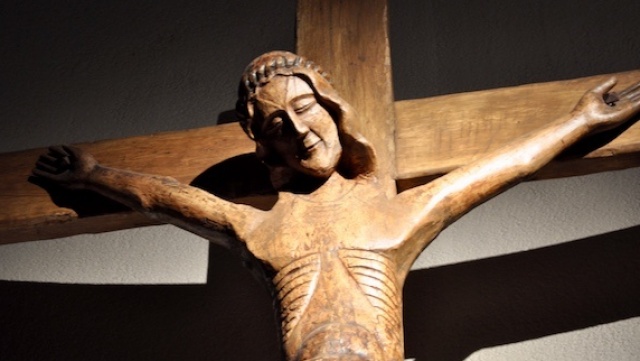
During one of my summer undergraduate study programs in France, I recall visiting the Abbey of Saint-Honorat on the Îles de Lérins in southern France. I was particularly struck by a medieval figure of the crucified Christ in the Abbey Church. The Crucified One, hanging on the Cross with his eyes closed and head tilted to the right, was smiling. The old monk who showed us around that day told us that this was Christ souriant (“Christ smiling”). Several of my classmates from various countries, especially those of other faiths, were quite perplexed in seeing the crucified Christ with a peaceful smile on his face and asked the monk how this could be possible.

I have often wondered why we in our own time don’t depict Jesus smiling or laughing. Yes, there are some well-known prints or depictions of a smiling Christ, but they are few and far between. I dare say that many of our depictions of Christ specialize in capturing the rather bleak, serious, and sad images of Christ that are reflective of the late Middle Ages – a period when the Dance of Death and the Black Plague haunted Europe.

While it is true that the New Testament is silent about Jesus smiling, laughing, or enjoying himself and those around him, the Scriptures are not afraid to tell us that he did express other human emotions. We know that he wept bitter tears at his friend Lazarus’ death. He was not afraid to show his anger in the Temple when people turned it into a shopping mall. He expressed irritation at the traps being set for him by some religious leaders of his time. How many times did he get frustrated with his disciples’ inability to grasp the situation and meaning of his words, parables, predictions of the passion and imminent departure from them? We must ask ourselves: how is it that the Scriptures don’t mention anything about Jesus smiling or his humorous responses to his slow disciples? How could he not have laughed and smiled when he was swarmed by children who obviously loved his company?

What did Jesus look like when he stared at Zacchaeus hiding in that Jericho sycamore tree? I am certain that there were smiles, laughter, and humour. When the crowds took leave of him on that Galilean hillside, having eaten their fill, how could Jesus not have smiled in relief? When Jesus spoke about the hypocrites’ gloomy looks in Matthew’s Gospel, he was also revealing something about himself. Yet there are many in the Church today who have difficulty in the image of a smiling, happy Jesus. They would prefer a stern, dour, tragedy-stricken figure who doesn’t seem to offer much hope!

Jesus’ prayer of rejoicing

Throughout his life, Jesus experienced that the humble of heart found it easier to accept his revolutionary doctrine than did those who were full of their own self-importance. In today’s Gospel, Matthew’s Jesus offers an exultant prayer of praise that defines for us more clearly who he is and with whom he wishes to be identified (11:25-30).

There are three movements in Sunday’s section of Matthew’s Gospel (11:25-30). In the first movement, Jesus addresses himself to the Father, rejoicing that the Father’s special love for the poor and lowly is being manifested in his ministry. In the second movement, Jesus addresses himself in a kind of self-definition. Jesus is the Son to whom full knowledge of the Father is given. The heart of the Son’s mission is to reveal the Father to us. Finally in the third movement, Jesus speaks directly to all those who long for relief, consolation, and refreshment. I cannot help but think that in each moment, Jesus smiled, breathed deeply, and was filled with joy at what was happening among his own disciples. He smiled with compassion as he invited the broken and lowly to find peace.

Priority over relationships

Though this particular message does provide rest and encouragement to the downtrodden, Matthew’s Gospel as a whole is not always so comforting or easy to receive. In Matthew 10:37 we read: “They who love father and mother, son or daughter, more than me are not worthy of me.” Jesus takes priority over the relationships between even parents and children! These texts must be understood in their original context – the losses incurred by first-century Christians who joined the Christian movement and who, in doing so, left behind everything that had given them comfort and strength – parents, siblings, children, indeed all family ties and all possessions, however great or meagre.

Today’s Gospel responds directly to those who lost everything or gave up everything – it is Jesus, the great comforter, the one who opens his arms in welcome to those beaten down by their experience, those who find themselves ostracized and rejected, overburdened and crushed. The saying found in 11:25-26 is identical with Luke 10:21-22 except for minor variations, and introduces a joyous note into this section, so dominated by the theme of unbelief. While the wise and the learned, the scribes and Pharisees, have rejected Jesus’ preaching and the significance of his mighty deeds, the childlike have accepted them.

Accepting the Lord’s yoke

To accept the yoke of Christ upon our shoulders is to be assured of a gentle and humble master; any burden given and accepted in mutual love will seem light. Today’s Gospel also contains one of the most well-known and popular passages from all of the Christian Scriptures. Who of us cannot be moved in some way by the consolation that Jesus offers when he says (11:28-30):

Come to me, all you that are weary and are carrying heavy burdens, and I will give you rest. Take my yoke upon you, and learn from me; for I am gentle and humble in heart, and you will find rest for your souls. For my yoke is easy, and my burden is light.

The word “yoke” is used metaphorically to describe those things that control the lives of people. Peasants always had a yoke. For the most part, their lives as tenant farmers were governed by the wills and whims of the landowners. Their lives were also controlled by religious leaders who grew fat on tithes that they hoarded in the Temple instead of redistributing them to the needy. Pharisees laid the yoke of their 613 commandments upon the followers and others who sought their advice about how to please God. For all Israelites, reciting and living according to Deuteronomy 6:4: “Hear, O Israel! The Lord is our God, the Lord alone. You shall love the Lord your God with all your heart, and with all your soul, and with all your might,” was known as “bearing the yoke of the reign of God.”

In today’s Gospel, Jesus gives himself as a model for his listeners and invites them to “learn from me” (11:29). His invitation echoes that offered by Wisdom in Sirach (51:23, 26): “Draw near to me, you who are uneducated, and lodge in the house of instruction […] Put your neck under her yoke, and let your souls receive instruction.” In place of the yoke of the law, complicated by scribal interpretation, Jesus invites the burdened to take the yoke of obedience to his word, under which they will find rest (cf. Jeremiah 6:16).

Jesus demonstrates a way of life, a yoke, that differs markedly from the one taught by the other religious leaders of his day. He promises a yoke that is easy and a burden that is light. No wonder many poor people found his words enormously appealing! Spiritual elitism repels many more than it attracts. The best guides are those who practice what they preach. Jesus walked his talk, and gives us a wonderful and challenging example to embrace and imitate each day. And I cannot help but imagine Jesus uttering these words of consolation with a gentle smile.

Why Jesus is still attractive today

Jesus was attractive then, and still is attractive now, to millions upon millions. The Messiah came among us, not as a conquering warrior, but in lowliness and peace. Not like the last kings of Judah, who rode in chariots and on horses (Jeremiah 17:25; 22:4), but like the princes of old (Genesis 49:11; Judges 5:10; 10:4), the Messiah will ride on an ass. The evangelists see a literal fulfilment of this prophecy, contained in today’s first reading from Zechariah (9:9-10), in the Saviour’s triumphant entry into Jerusalem (Matthew 21:4-5; John 12:14-15).

Jesus of Nazareth attracted townspeople and country people, poor and rich, fishermen and tax collectors, women like Mary of Magdala and her cohort who provided for him and so many others. He had the ability to wow simple and sophisticated souls alike. I am sure he did it with his powerful words, but also with a gentle smile, with humour, kindness, and just plain love. His divine origins, despite the utter seriousness of his mission towards his Cross and Resurrection, made him an extraordinary human being who was able to bond with others. How could he not have smiled when he uttered the words of today’s Gospel: “Come to me. Take my yoke upon you, and learn from me. For my yoke is easy, and my burden is light.” These are hardly admonitions that necessitate a stern gaze and heavy voice! They are words that flow from one who is a lover and a friend.

Constant challenge of Christian living

After his warning in Romans 7 against the wrong route to fulfilling the objective of holiness expressed in Romans 6:22, Paul points his addressees to the correct way. Christians still retain their flesh, but it is alien to their new being, which is life in the spirit, namely the new self, governed by the Holy Spirit (Romans 8:9; 11-13). Under the direction of the Holy Spirit, Christians are able to fulfil the divine will that formerly found expression in the law (Romans 8:4). The same Spirit who enlivens Christians for holiness will also resurrect their bodies at the last day (8:11). Christian life is therefore the experience of a constant challenge to put to death the evil deeds of the body through life of the spirit (8:13). This life in the spirit is a life lived “bearing the yoke of the reign of God.” It is living life with the easy yoke, light burden, and great affection of a gentle, smiling Lord.

///////////////////////////////////////